

Autonomous Robot Toys Market
Autonomous Robot Toys Market Size, Share, Trends, Growth, and Industry Analysis, By Product Type (Educational Robots, Entertainment Robots, Humanoid Robots), By Age Group (5-10 Years, 10-15 Years, Above 15 Years), By Distribution Channel (Online, Offline), Regional Analysis and Forecast Period 2026-2035
Market Overview
As per Econ Market Research analysis, the Global Autonomous Robot Toys Market generated revenue of US$ 11.5 Billion in 2026 and is forecast to achieve US$ 54.2 Billion by 2035, at a CAGR of 18.8% during the study period 2026–2035. The base year considered is 2025.
Autonomous Robot Toys Market Size 2025-2035 (USD Billion)

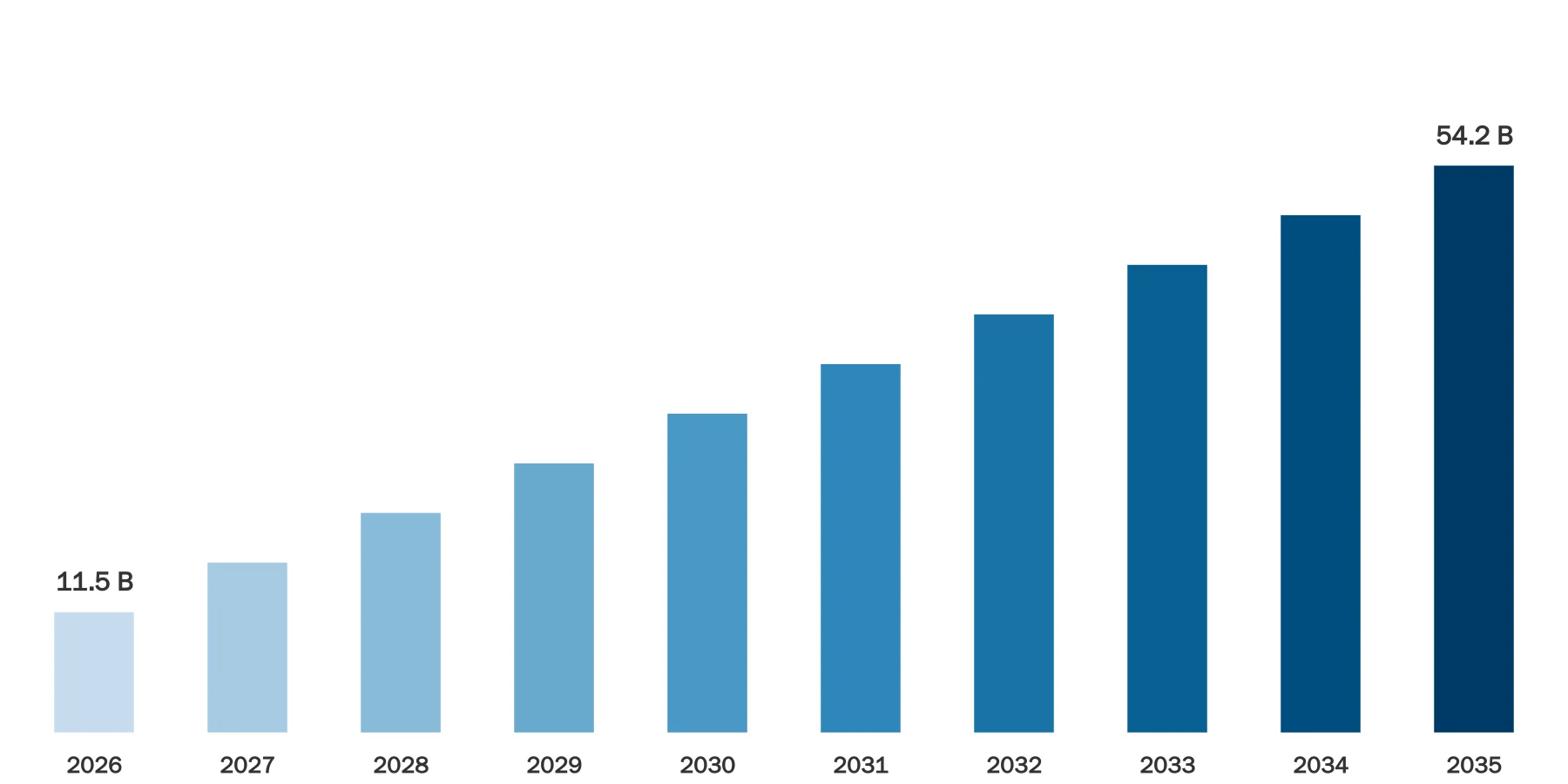
Source: Econ Market Research
Autonomous robot toys have grown in popularity in the educational industry in recent years, providing a fun and engaging approach to educating youngsters. These toys are designed to help students develop their skills, knowledge, and attitudes by providing a hands-on, interactive learning experience. They can range from mobile to Collaborative Robots, with companies constantly proposing unique solutions that combine learning and enjoyment. Furthermore, these providers frequently provide a browser-based learning ecosystem that teachers and students can access from any internet-enabled device. The increasing use of self-driving robot toys for educational reasons is likely to boost market growth in the future years.
Autonomous Robot Toys Market Dynamics
The worldwide autonomous robot toys market is expanding as a result of increased government spending in educational institution improvements, rising recognition of autonomous robot toys as perfect teaching aids, and technological developments. Because of their capacity to engage children, stimulate skill development, and provide an interactive learning experience, these toys have grown in popularity in educational institutions and families. What distinguishes autonomous robot toys is their ability to receive exact information about their surroundings and act on it automatically without human interaction. This attribute will continue to fuel market development as long as there is a high desire for creative educational solutions that meet the changing demands of youngsters.
Market Driver
The educational sector is seeing an increase in demand for Autonomous Robot Toys:
The educational organisations is continuously expanding in response to changing student demands, necessitating the use of innovative technologies in classrooms for maximum results. This move has catapulted self-driving robot toys into the spotlight. Market leaders and well-known firms are constantly creating and improving autonomous robot toys in order to provide engaging and practical learning experiences. These robotic toys are getting more user-friendly and efficient by combining new technology. As a result, increased demand in the educational sector for autonomous robot toys is likely to boost market expansion.
Rapid advancements in the technology of autonomous robot toys:
The future presents several opportunities for market development in the autonomous robot toys sector, propelled by continued technological progress. Leading manufacturers are creating sensor-integrated autonomous robot toys that can travel around their environment without colliding. Furthermore, there is a determined effort on to make these toys more affordable to the general public by lowering pricing. These projects seek to broaden the market',s reach and enable a broader spectrum of customers to reap the benefits of self-driving robot toys. As a result, the market is expected to expand significantly in the future years.
Restraints:
The high cost associated with these toys, including the initial price and ongoing maintenance expenses. This can limit their affordability and accessibility for educational institutions and individual consumers. Additionally, the lack of awareness about autonomous robot toys among the general public poses a challenge. Without sufficient knowledge about their capabilities and benefits, potential customers may be hesitant to invest in these toys. Addressing these restraints will be crucial to unlocking the full potential of the autonomous robot toy market and fostering its widespread adoption.
Opportunities:
Rising technology advancements and breakthroughs in self-driving robot toys create potential market opportunities. These toys', incorporated environment-sensing devices and sensors improve operational efficiency and safety, fueling demand for sophisticated versions. The increased emphasis on area sensing capabilities, autonomous navigation, and self-maintenance brings up new market opportunities. Furthermore, manufacturers', cost-cutting efforts make autonomous robot toys more accessible to a broader market base. These opportunities present the possibility of market expansion and increased adoption of autonomous robot toys in a variety of educational settings as well as among the general public.
Segment Overview:
Based on Type:
Solar Powered, Battery Powered, and Others are the market segments for Autonomous Robot Toys. The Battery Powered section is likely to dominate in the next years, owing to the growing popularity of solar-powered autonomous robot toys. Battery-powered toys have longer battery life and do not require solar charging, making them more convenient and reducing the need for sun exposure. They may also be charged by electricity, just like Bluetooth speakers, ensuring simplicity and safety. As a result, the Battery Powered segment is expected to have a bigger market share, while demand for solar powered toys continues to climb.
Based on Application:
The market for Autonomous Robot Toys is divided into two categories: educational and entertainment. Over the years, Entertainment Autonomous Robot Toys have had a bigger market share, but the educational segment is growing at a noteworthy rate. This growth can be linked to current technological advancements and the incorporation of Artificial Intelligence (AI), notably in the context of education and distant learning, which has gained importance since the Covid epidemic. While the major appeal of these toys is their entertainment value, Educational Autonomous Robot Toys are becoming increasingly popular to a wide variety of age groups due to their capacity to give both learning and leisure experiences.
Autonomous Robot Toys Market Overview by Region:
North America now dominates the global market for autonomous robot toys, with estimates predicting that it will hold the biggest market share. The region is likely to develop significantly over the forecast period, propelled by ongoing technical advancements, the strong presence of leading market players, and the increasing acceptance of autonomous robot toys in educational institutions. Autonomous robot toys are being used by prominent educational institutions in nations such as the United States to boost skill development and create an interactive and enjoyable learning environment for pupils.
In the Asia Pacific region during the projected period, it is forecasted that sales of autonomous robot toys would increase quickly with a sizable CAGR. The adoption of classroom automation is growing, and the government has made large investments in the modernization of the educational system, which can be used to explain this rise. A substantial client base and cultural affinity for robot toys are evident in nations like China and Japan, which are recognized for their engineering and robotics skill, and are likely influenced by their love in Anime and entertainment. Due to the popularity of teaching tools, the accessibility of a wide range of goods at affordable prices, and the quick growth of the educational sector, the markets for autonomous robot toys in China and South Korea are both seeing significant growth.
Autonomous Robot Toys Market Competitive Landscape:
The presence of established firms and new competitors characterizes the competitive landscape of the Autonomous Robot Toys market. Major market players are investing in research and development to improve their autonomous robot toy offerings and acquire a competitive advantage. Collaborations and partnerships between manufacturers and technology providers are becoming increasingly common, with the goal of exploiting each other',s capabilities and generating innovation. New startups are also entering the industry, providing disruptive technologies and innovative solutions. With rising demand for autonomous robot toys, the competitive landscape is projected to heat up, with an emphasis on product differentiation, price, and technological breakthroughs. Some of the prominent players in the market are,
MORAVIA,
Fischertechnik GmbH,
RoboThink Franchising Corporation,
Byrobot,
Robo Wunderkind,
ArcBiotics,
RAWrobotics,
Anki Cozmo Robot,
Petronics,
BLUE FROG ROBOTICS &, BUDDY,
KUKA AG,
Mattel,
The LEGO Group,
Robotical Ltd.,
Parallax Inc.,
Dexter Industries,
HANSON ROBOTICS LTD.
Autonomous Robot Toys Market Recent Developments:
In November 2023, IRIS OHYAMA, Japan',s premier lifestyle solutions provider, has joined forces with SoftBank Robotics, a global leader in AI robotics technology, and forged a strategic partnership with Syrius Technology, the foremost Chinese AMR (Autonomous Mobile Robot) brand. Together, they have unveiled a cutting-edge commercial cleaning robot resulting from their collaborative efforts, bringing forth Syrius Technology',s AMR products and advanced robot software capabilities to enhance public service sector cleaning operations in the region. This joint initiative is geared towards delivering cleaning services that are not only more efficient and convenient but also environmentally friendly and of superior quality, catering to the diverse needs of the public.
In June 2023, MOV.AI has recently disclosed that Hikrobot, a worldwide provider of products and solutions specializing in machine vision and mobile robots, has successfully integrated the MOV.AI Robotics Engine Platform&trade, into its F4-1000 pallet mover. In a collaborative effort involving three parties, the autonomous pallet movement robots powered by MOV.AI from Hikrobot will be utilized by the BOWE GROUP, facilitating swift implementations for specific applications.
Global Autonomous Robot Toys Market Report Segmentation
Autonomous Robot Toys Market Report Scope & Segmentation
| Attributes | Details |
|---|---|
Market Size (Current) | US$ 11.5 Billion in 2026 |
Market Size (Forecast) | US$ 54.2 Billion in 2035 |
Growth Rate | CAGR of 18.8% from 2026 to 2035 |
Forecast Period | 2026 – 2035 |
Base Year | 2025 |
Historical Data Available | Yes |
Regional Scope | Global |
Segments Covered | By Product Type
By Age Group
By Distribution Channel
|
Frequently Asked Questions
Common questions about this report
The study period covers historical insights and forecast projections for the period 2026-2035.
About the Author
Market research expert with years of industry experience

Dipali Bhingare serves as the Market Research Director at Econ Market Research. With a focus on translating complex global economic shifts into actionable business intelligence, she oversees the strategic direction of comprehensive market studies. Her work empowers organizations to navigate volatile industries through data-driven forecasting and deep-dive competitive analysis.
Related Reports
Explore more market insights from the same category