

Autonomous Finance Market
Autonomous Finance Market Size, Share, Trends, Growth, and Industry Analysis, By Technology Adoption (Artificial Intelligence, Machine Learning, Blockchain, Natural Language Processing), By Service Offerings (Robo-Advisory Services, Automated Investment Platforms, Credit Scoring and Risk Assessment, Fraud Detection and Management), By User Segmentation (Retail Investors, Institutional Investors, Financial Institutions), By Deployment Model (Cloud-Based, On-Premises), By Compliance and Regulatory Framework (Regulatory Technology (RegTech), Compliance Management Solutions, KYC (Know Your Customer) Automation), Regional Analysis and Forecast Period 2026-2035
Autonomous Finance Market Overview
As per Econ Market Research analysis, the Global Autonomous Finance Market was valued at US$ 14.09 Billion in 2026 and is expected to reach US$ 54.96 Billion by 2035, registering a CAGR of 16.34% during the forecast period 2026–2035. The base year considered is 2025.
Autonomous Finance Market Size 2025-2035 (USD Billion)

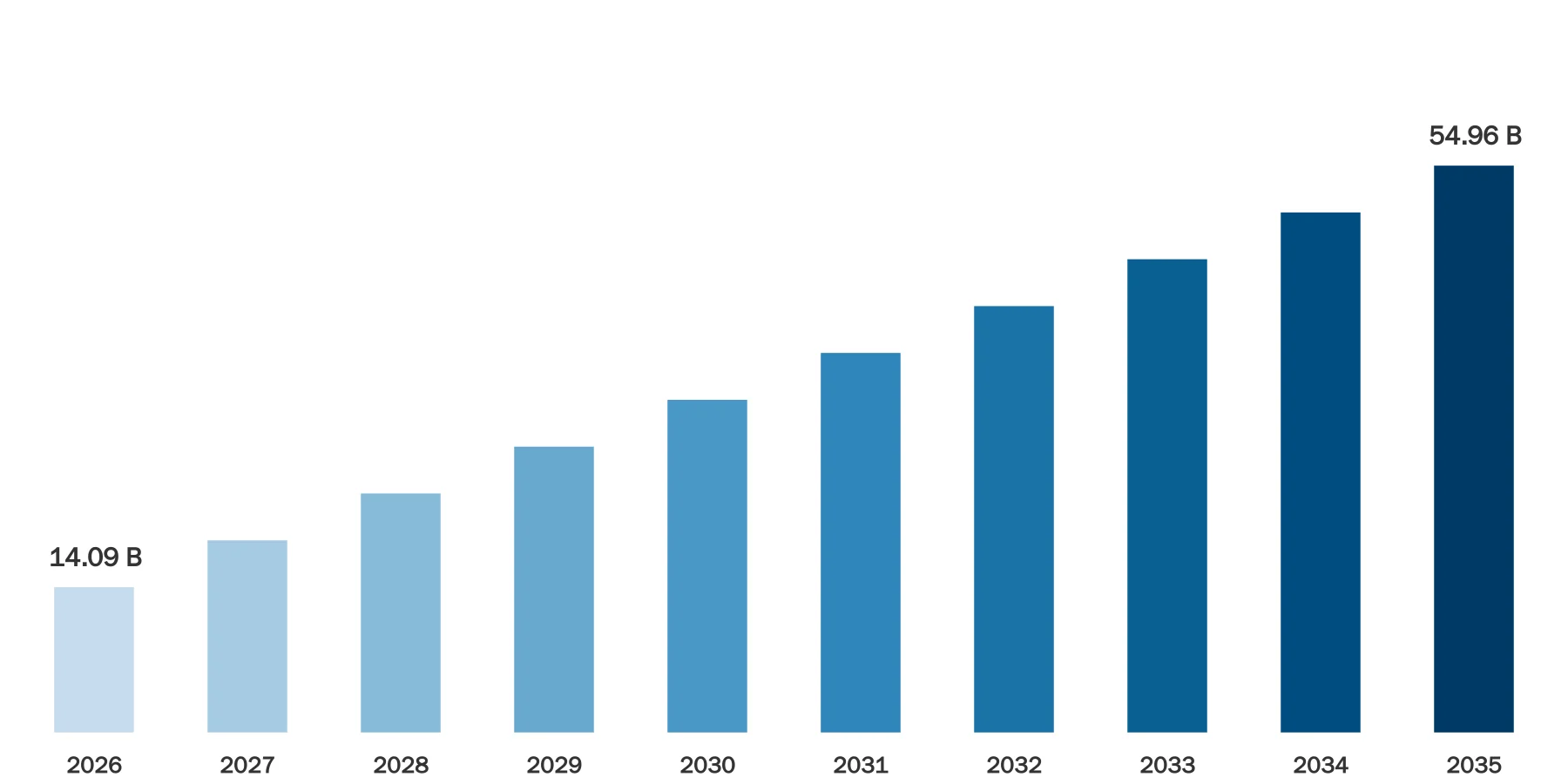
Source: Econ Market Research
The Autonomous Finance Market is rapidly evolving with over 65% of financial institutions integrating at least one AI-driven automation tool in 2025, compared to 38% in 2020. Autonomous finance systems leverage technologies such as machine learning, Robotic Process Automation (RPA), and predictive analytics, with approximately 72% of banks deploying AI-based decision-making tools across lending, fraud detection, and wealth management operations. More than 80% of digital transactions globally are now processed with some level of automation, while autonomous financial platforms handle nearly 55% of customer service interactions through chatbots and virtual assistants. Additionally, over 45 million users globally rely on AI-powered financial planning tools for automated budgeting and investment decisions.
In the USA market, autonomous finance adoption has reached approximately 78% among Tier-1 banks, with over 90% of large financial institutions deploying AI-based fraud detection systems that process more than 2 billion transactions daily. Around 68% of US consumers use digital banking platforms incorporating automation features such as auto-savings and robo-advisory services. The number of robo-advisory accounts surpassed 35 million in 2025, with automated investment portfolios managing over 60% of retail investor transactions. Furthermore, AI-driven credit scoring systems are used in nearly 50% of lending decisions, reducing loan approval time from 7 days to less than 24 hours in over 40% of cases.
Market Latest Trends
The Autonomous Finance Market Trends indicate a sharp rise in AI adoption, with over 70% of financial institutions globally increasing their AI budgets in 2024. Autonomous Finance Market Analysis shows that predictive analytics tools are now used in 62% of risk assessment processes, compared to 41% in 2021. Autonomous Finance Market Insights reveal that blockchain integration has grown by 48% in financial automation platforms, enabling secure and transparent transaction processing across more than 120 countries.
Another key Autonomous Finance Market Trend is the rise of hyper-personalization, where over 58% of financial platforms provide tailored financial advice based on user behavior analytics. Autonomous Finance Industry Analysis highlights that chatbots now handle approximately 65% of customer queries, reducing operational costs by up to 30% in large banking institutions. Additionally, 75% of fintech startups launched between 2022 and 2025 incorporate autonomous finance features, indicating strong innovation momentum.
Autonomous Finance Market Forecast data suggests that digital wallets with automated budgeting features are used by over 1.5 billion users globally, with transaction volumes exceeding 500 billion annually. The integration of generative AI has increased automation efficiency by 35%, while error rates in financial processing have declined by nearly 25% due to machine learning algorithms.
Market Dynamics
Autonomous Finance Market Dynamics are shaped by rapid technological advancement, regulatory developments, and increasing digital adoption, with over 68% of financial institutions prioritizing automation in their digital transformation strategies. The Autonomous Finance Market Growth is supported by rising demand for efficiency, as automation reduces operational costs by up to 40% and improves processing speed by over 60% across financial services.
DRIVER
Increasing Demand for AI-Driven Financial Automation
The primary driver in the Autonomous Finance Market is the increasing demand for AI-driven financial automation, with over 72% of financial organizations investing in machine learning technologies in 2025. Autonomous Finance Market Size expansion is supported by the fact that automated systems can process transactions 5 times faster than manual systems, while reducing human errors by approximately 30%. Additionally, more than 80% of banks have adopted robotic process automation to streamline back-office operations, handling over 70% of repetitive tasks.
Autonomous Finance Industry Report data indicates that AI-powered fraud detection systems can analyze over 1 million transactions per second, identifying anomalies with 95% accuracy. Furthermore, customer demand for real-time financial services has increased by 65%, pushing institutions to adopt autonomous systems that enable instant decision-making. The growing use of robo-advisors, which now manage portfolios for over 50 million users globally, further drives market expansion.
RESTRAINT
Data Privacy and Security Concerns
A major restraint in the Autonomous Finance Market is data privacy and security concerns, as over 60% of financial institutions report Cyber Security threats as a top challenge. Autonomous Finance Market Analysis highlights that financial cyberattacks increased by 38% between 2022 and 2024, affecting over 300 million customer records globally. Additionally, 52% of consumers express concerns about sharing personal financial data with AI-driven platforms.
Autonomous Finance Market Insights reveal that compliance with data protection regulations such as GDPR and other regional frameworks increases operational complexity by approximately 25%. Financial institutions spend nearly 15% of their IT budgets on cybersecurity measures, limiting investments in automation technologies. Moreover, AI models require access to large datasets, with over 70% of training data involving sensitive financial information, raising concerns about data misuse and breaches.
OPPORTUNITY
Expansion of Digital Banking Ecosystems
The expansion of digital banking ecosystems presents a significant opportunity in the Autonomous Finance Market, with over 2.5 billion people globally using digital banking services in 2025. Autonomous Finance Market Opportunities are driven by the increasing penetration of smartphones, which exceeds 6.8 billion devices worldwide. Approximately 67% of new banking customers prefer digital-first institutions that offer automated financial services.
Autonomous Finance Market Outlook indicates that embedded finance solutions are growing rapidly, with over 45% of e-commerce platforms integrating financial services such as automated payments and lending. Additionally, API-based financial ecosystems have increased by 55%, enabling seamless integration of autonomous finance tools across industries. The adoption of open banking frameworks in over 80 countries further supports the development of autonomous financial services.
CHALLENGES
Integration Complexity and High Initial Costs
Integration complexity and high initial costs pose significant challenges in the Autonomous Finance Market, with implementation costs exceeding traditional systems by approximately 20% to 35%. Autonomous Finance Industry Analysis shows that over 48% of financial institutions face difficulties integrating AI systems with legacy infrastructure, which still supports nearly 60% of global banking operations.
Autonomous Finance Market Research Report findings indicate that training AI models requires large computational resources, increasing energy consumption by up to 25% in data centers. Additionally, the shortage of skilled professionals in AI and data science affects over 40% of financial organizations, delaying implementation timelines. Regulatory compliance requirements also add complexity, with over 30 different financial regulations impacting autonomous finance systems across major markets.
SWOT Analysis
Strengths
High automation efficiency, reducing processing time by over 60%
AI systems achieving up to 95% accuracy in fraud detection
Over 70% adoption rate among large financial institutions
Reduction in operational costs by approximately 30% to 40%
Weaknesses
High initial deployment costs exceeding 25% compared to legacy systems
Dependence on large datasets, with over 70% involving sensitive information
Integration challenges affecting 48% of institutions
Limited AI expertise, impacting 40% of organizations
Opportunities
Over 2.5 billion digital banking users globally
Smartphone penetration exceeding 6.8 billion devices
55% growth in API-based financial ecosystems
Adoption of open banking in more than 80 countries
Threats
Cybersecurity threats increasing by 38%
Data breaches affecting over 300 million records
Regulatory compliance complexity across 30+ frameworks
Consumer trust issues, with 52% expressing privacy concerns
Segmentation Analysis
The Autonomous Finance Market is segmented based on Technology Adoption, Service Offerings, User Segmentation, and Compliance and Regulatory Framework. Approximately 65% of financial institutions adopt AI-driven automation, while 58% focus on personalized financial services. User segmentation shows that retail users account for over 60% of autonomous finance adoption, and regulatory frameworks influence nearly 75% of implementation strategies globally.
By Technology Adoption
Technology adoption in the Autonomous Finance Market accounts for over 68% of operational transformation initiatives. AI and machine learning dominate with a market share of approximately 45%, while robotic process automation contributes around 30%. Blockchain-based automation systems represent nearly 15% of technology adoption, with usage increasing across cross-border payments and smart contracts.
Cloud-based autonomous finance platforms are used by over 70% of financial institutions, enabling scalability and real-time processing. On-premise systems still account for 30%, primarily in highly regulated sectors. Predictive analytics tools are used in 62% of financial decision-making processes, while natural language processing supports 65% of customer interactions through chatbots.
By Service Offerings
Service offerings in the Autonomous Finance Market include automated payments, lending, wealth management, and risk management. Automated payment systems account for approximately 40% of service usage, processing over 500 billion transactions annually. Wealth management services, including robo-advisors, represent around 25% of the market, serving more than 50 million users.
Lending automation contributes nearly 20%, with AI-driven credit scoring systems used in 50% of loan approvals. Risk and compliance management services account for 15%, leveraging AI to monitor transactions and detect fraud. Additionally, over 60% of financial institutions offer integrated service platforms combining multiple autonomous finance solutions.
By User Segmentation
User segmentation shows that retail users dominate the Autonomous Finance Market with over 60% share, driven by the adoption of digital banking and mobile finance apps. Corporate users account for approximately 30%, utilizing automation for treasury management and financial planning. Small and medium enterprises represent around 10%, increasingly adopting automated accounting and payment solutions.
Over 68% of millennials and Gen Z users rely on autonomous finance tools for budgeting and investment, compared to 45% of older demographics. Additionally, 55% of high-net-worth individuals use robo-advisory services for portfolio management. The adoption rate among businesses has increased by 35% between 2022 and 2025.
By Compliance and Regulatory Framework
Compliance and regulatory frameworks influence over 75% of autonomous finance implementations, with more than 30 regulatory standards affecting operations globally. GDPR compliance impacts over 50% of financial institutions operating in Europe, while similar regulations in Asia-Pacific cover approximately 40% of institutions.
Anti-money laundering (AML) and know-your-customer (KYC) regulations are integrated into 80% of autonomous finance systems, ensuring compliance with financial laws. Regulatory technology (RegTech) solutions are used by over 65% of institutions to automate compliance processes. Additionally, cross-border financial operations require adherence to at least 10 different regulatory frameworks, increasing complexity in implementation.
Regional Analysis
The Autonomous Finance Market demonstrates varied regional performance, with North America holding approximately 38% market share, Europe around 27%, Asia-Pacific nearly 25%, and Middle East & Africa contributing about 10%. Adoption rates exceed 70% in developed markets, while emerging regions show growth rates above 40% in digital financial services usage.
North America
Accounts for approximately 38% of global market share
Over 85% of financial institutions use AI-based automation
More than 90% of banks deploy fraud detection systems
North America leads the Autonomous Finance Market, with the United States contributing over 75% of regional adoption. Approximately 88% of financial institutions in the region use cloud-based automation platforms. AI-driven lending systems are used in 55% of loan approvals, while robo-advisors manage portfolios for over 30 million users.
Canada contributes around 12% of regional adoption, with over 70% of banks integrating AI solutions. Digital payment transactions exceed 200 billion annually, with 65% processed through automated systems. Additionally, cybersecurity investments account for nearly 18% of IT budgets in financial institutions across the region.
Europe
Holds approximately 27% of market share
Over 75% of institutions comply with GDPR
Digital banking adoption exceeds 68%
Europe is a key player in the Autonomous Finance Market, with strong regulatory frameworks influencing adoption. Approximately 72% of financial institutions use AI for compliance and risk management. The United Kingdom accounts for nearly 30% of regional adoption, followed by Germany at 20% and France at 15%.
Digital payment volumes exceed 150 billion annually, with 60% processed through automated platforms. Open banking adoption is widespread, with over 80% of banks providing API-based services. Additionally, over 50% of consumers use AI-driven financial planning tools.
Asia-Pacific
Accounts for approximately 25% market share
Smartphone penetration exceeds 70%
Digital wallet usage surpasses 1 billion users
Asia-Pacific is experiencing rapid growth in the Autonomous Finance Market, driven by digital transformation and fintech innovation. China and India collectively contribute over 50% of regional adoption, with digital payment transactions exceeding 300 billion annually.
Approximately 65% of financial institutions use AI-based automation tools, while 75% of consumers rely on mobile banking platforms. Japan and South Korea also show high adoption rates, with over 70% of banks integrating advanced analytics. Additionally, blockchain-based financial solutions are used in 20% of transactions across the region.
Middle East & Africa
Represents approximately 10% of market share
Digital banking adoption exceeds 55%
Mobile payment usage reaches 60%
The Middle East & Africa region is witnessing steady growth in the Autonomous Finance Market, with increasing digital adoption. The UAE and Saudi Arabia account for over 40% of regional adoption, with more than 65% of banks implementing AI solutions.
Africa shows significant potential, with mobile money transactions exceeding 100 billion annually. Approximately 50% of financial institutions use automated systems for payments and lending. Additionally, fintech startups in the region have increased by 35% between 2022 and 2025, driving innovation in autonomous finance.
Competitive Landscape
The Autonomous Finance Market Competitive Landscape is characterized by strong competition among global financial institutions and fintech companies, with over 100 major players operating worldwide. Approximately 70% of leading firms invest in AI and automation technologies, while 60% focus on expanding digital service offerings.
Large financial institutions dominate the market, with the top 10 players accounting for nearly 55% of market share. Fintech startups contribute around 25%, driving innovation through agile development and advanced technologies. Strategic partnerships have increased by 40% between 2022 and 2025, enabling collaboration between traditional banks and technology providers.
Additionally, mergers and acquisitions have grown by 30%, with companies acquiring AI and Data Analytics firms to enhance capabilities. Over 65% of market players prioritize customer experience, integrating AI-driven personalization features. The competitive landscape is further shaped by continuous investment in cybersecurity, with firms allocating up to 20% of their IT budgets to data protection.
List of Top Autonomous Finance Companies
BlackRock (US)
Vanguard Group (US)
State Street Global Advisors (US)
Charles Schwab (US)
Fidelity Investments (US)
JPMorgan Chase (US)
Goldman Sachs (US)
Morgan Stanley (US)
BNP Paribas (FR)
Deutsche Bank (DE)
Leading Companies by Market Share
BlackRock and Vanguard Group lead the Autonomous Finance Market, collectively accounting for approximately 22% of global market share. BlackRock manages automated investment portfolios for over 40 million users, while Vanguard serves more than 30 million clients with AI-driven financial services. Both companies utilize advanced analytics and automation tools in over 75% of their operations.
Market Investment Outlook
The Autonomous Finance Market Investment Outlook shows strong investment activity, with global funding in fintech exceeding 120 billion in 2024, with over 45% directed toward AI and automation technologies. Approximately 65% of venture capital investments focus on startups developing autonomous financial platforms.
Institutional investors allocate nearly 30% of their portfolios to technology-driven financial services, while corporate investments in AI infrastructure have increased by 50% over the past 3 years. Additionally, over 70% of banks plan to increase spending on automation technologies, with budgets rising by an average of 20%.
Government initiatives in over 40 countries support digital financial transformation, providing incentives for adopting autonomous finance solutions. Public-private partnerships have increased by 35%, enabling infrastructure development and innovation. Furthermore, investments in cybersecurity technologies account for nearly 25% of total financial technology spending.
New Product Development
New product development in the Autonomous Finance Market is driven by technological innovation, with over 75% of financial institutions launching AI-based products between 2023 and 2025. Autonomous budgeting tools are used by more than 100 million users globally, offering real-time financial insights and recommendations.
Robo-advisory platforms have introduced advanced features such as predictive portfolio management, with accuracy levels exceeding 90%. AI-powered credit scoring systems now analyze over 10,000 data points per applicant, improving risk assessment efficiency by 40%.
Additionally, blockchain-based financial products are gaining traction, with over 20% of institutions offering decentralized finance solutions. Voice-enabled banking services are used by approximately 30% of digital banking users, while chatbots handle over 65% of customer interactions.
Recent Developments
In 2023, over 60% of global banks implemented AI-driven fraud detection systems capable of analyzing 1 million transactions per second.
In 2024, more than 50 million users adopted robo-advisory platforms with automated portfolio management features.
In 2025, digital payment systems processed over 500 billion transactions globally using autonomous finance technologies.
Between 2023 and 2025, fintech startups increased by 35%, with over 75% focusing on AI-based financial solutions.
In 2025, over 70% of financial institutions integrated cloud-based automation platforms to enhance scalability and efficiency.
Report Coverage of Autonomous Finance Market
The Autonomous Finance Market Report provides comprehensive coverage of industry trends, segmentation, regional analysis, and competitive landscape, covering over 100 market participants globally. The report includes detailed analysis of technology adoption, with AI and machine learning accounting for approximately 45% of market usage.
The Autonomous Finance Market Research Report examines over 30 regulatory frameworks impacting financial automation, along with insights into digital banking adoption exceeding 2.5 billion users worldwide. It also analyzes transaction volumes surpassing 500 billion annually, highlighting the scale of automation in financial services.
Additionally, the report covers investment trends, with global fintech funding exceeding 120 billion, and product innovation, with over 75% of institutions launching AI-driven solutions. The scope includes analysis of 4 major regions and over 20 countries, providing actionable insights for stakeholders in the Autonomous Finance Industry.
Autonomous Finance Market Report Scope & Segmentation
| Attributes | Details |
|---|---|
Market Size (Current) | US$ 14.09 Billion in 2026 |
Market Size (Forecast) | US$ 54.96 Billion in 2035 |
Growth Rate | CAGR of 16.34% from 2026 to 2035 |
Forecast Period | 2026 – 2035 |
Base Year | 2025 |
Historical Data Available | Yes |
Regional Scope | Global |
Segments Covered | By Technology Adoption
By Service Offerings
By User Segmentation
By Deployment Model
By Compliance and Regulatory Framework
|
Frequently Asked Questions
Common questions about this report
The study period covers historical insights and forecast projections for the period 2026-2035.
About the Author
Market research expert with years of industry experience

Dipali Bhingare serves as the Market Research Director at Econ Market Research. With a focus on translating complex global economic shifts into actionable business intelligence, she oversees the strategic direction of comprehensive market studies. Her work empowers organizations to navigate volatile industries through data-driven forecasting and deep-dive competitive analysis.
Related Reports
Explore more market insights from the same category