

Automotive Smart Key Market
Automotive Smart Key Market Size, Share, Trends, Growth, and Industry Analysis, By Type (Passive Keyless Access, Remote Keyless Access), By Technology (Radio Frequency (RF), Infrared (IR)), By Application (Single Function, Multi-Function), By Vehicle Type (Passenger Cars, Commercial Vehicles), Regional Analysis and Forecast Period 2026-2035
Market Overview
As per Econ Market Research analysis, the Global Automotive Smart Key Market was estimated at US$ 3.08 Billion in 2026 and is forecast to attain US$ 14.29 Billion by 2035, expanding at a CAGR of 18.4% between 2026 and 2035. The base year for the study is 2025.
Automotive Smart Key Market Size 2025-2035 (USD Billion)

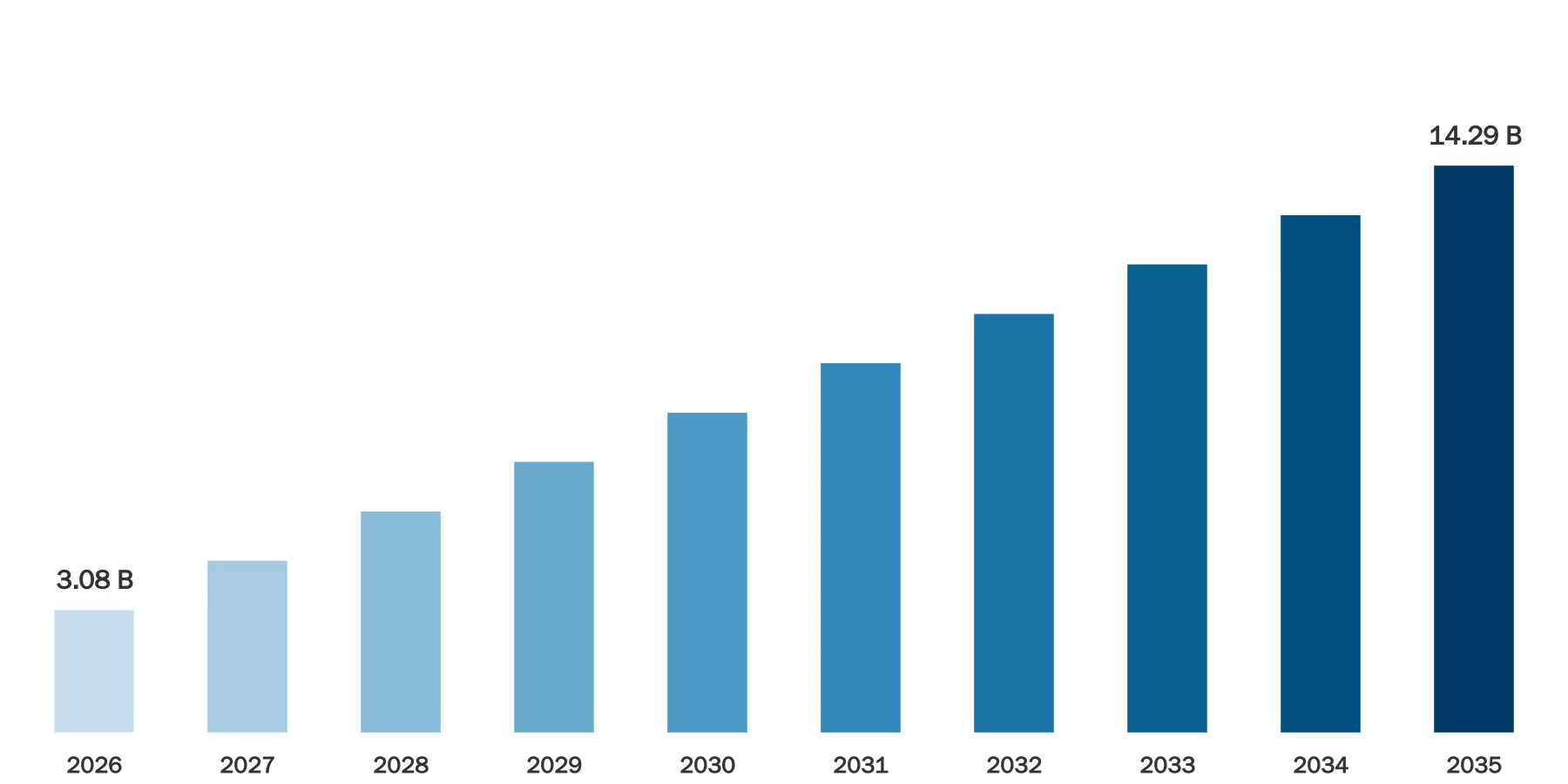
Source: Econ Market Research
With the incorporation of cutting-edge technology into vehicle access systems, the market for automotive smart keys has experienced significant expansion. Smart keys increase user convenience and safety by utilizing electronic components for car security, keyless entry, and ignition. These cutting-edge keys frequently have push-button ignition, proximity sensors, and remote capabilities. The market',s evolution shows a move toward safe and seamless car access solutions, meeting the demands of the contemporary automotive sector for improved security features and a higher level of user experience.
Automotive Smart Key Market Dynamics
The industry is growing quickly because to rapid technical improvements like connected automobile capabilities and biometric authentication. Smart key systems are becoming more and more popular due to growing worries about car theft and the demand for a smooth user experience. The integration of smart key functionalities in electric and driverless vehicles, along with legislative actions encouraging vehicle safety, further propel market rise. The dynamic automotive smart key market is shaped in large part by ongoing innovation, fierce competition among key players, and changing automotive trends.
Automotive Smart Key Market Drivers
Increasing Consumer Demand for Advanced Vehicle Access
From their daily interactions with cars to other aspects of their life, modern customers want smooth, easy-to-use experiences. Increasingly, smart keys which provide remote functions, push-button ignition, and keyless entry are being adopted in cars in line with this expectation. The need for sophisticated vehicle access solutions is being driven by consumers', preference for cars with state-of-the-art technologies that not only make daily tasks easier but also create an air of elegance and modernity. This trend is evident in the way that technology is developing.
Enhanced Security Features
Modern stealing techniques can now easily breach conventional key-based security systems due to technological advancements. These risks are addressed by enhanced security features, like biometric verification and sophisticated encryption in smart key systems, which offer a strong barrier against automobile theft and unauthorized access. The demand is further fueled by consumer awareness and an increasing focus on safety regulations, making strengthened security a key component in the car industry',s search for creative and safe access solutions.
Restraints:
Significant initial costs are associated with integrating cutting-edge technology into cars to allow smart key systems, which may discourage consumers on a tight budget and restrict market penetration. The inability of manufacturers to provide affordable solutions prevents their widespread adoption in a variety of vehicle sectors. Therefore, even with their potential long-term benefits, the perceived financial barrier slows down the seamless integration of smart key technologies into the automobile mainstream, delaying the shift from conventional key systems to more complex and advanced access solutions.
Limited Aftermarket Availability
The aftermarket alternatives for retrofitting are frequently restricted, and many current vehicles lack factory-installed smart key technology. The market',s ability to expand is limited by the scarcity, which makes it difficult for customers to upgrade their cars to include modern access solutions. A barrier for individuals looking to upgrade their cars with contemporary access technologies is created by the lack of universal retrofit solutions for a variety of car makes and models, which restricts the wider accessibility and uptake of sophisticated automotive smart keys.
Opportunities:
Rising Demand for Electric Vehicles
Advanced and customized access solutions are becoming more and more necessary as the EV market grows. Smart keys, which enable features like keyless entry and push-button ignition, can be easily fitted into Electric Vehicle-market/\"">electric vehicles to improve the driving experience. Due to EVs', distinct features, namely their enhanced connectivity, smart keys can be quite helpful in ensuring safe and practical entry. This demand is in line with how the automotive industry is changing, providing astute major manufacturers with a chance to meet the unique needs of the growing electric car market.
Advancements in Biometric Authentication
Smart keys have the potential to provide strong and secure access control as biometric technology develops and incorporates capabilities like fingerprint and facial recognition. This improves car security while simultaneously giving each user a personalized and seamless experience. In the rapidly changing world of connected and autonomous vehicles, biometric authentication is positioned as a major driver for the adoption of sophisticated automotive smart key systems. The opportunity also includes satisfying the growing consumer expectations for cutting-edge, inventive, and user-friendly access solutions.
Segment Overview
By Installation
Based on the installation, the global automotive smart key market is divided into OEM and aftermarket. The OEM category dominates the market with the largest revenue share in 2023. In the OEM market, smart key systems are included into automobiles at the time of first manufacturing. On the manufacturing line, automakers directly integrate smart key technologies into brand-new cars. In the aftermarket market, smart key systems are installed in vehicles after they are manufactured, usually in vehicles that were not factory-equipped with this technology.
By Application
Based on the application, the global automotive smart key market is categorized into single function and multi-function. The multi-function category leads the global automotive smart key market with the largest revenue share in 2023. Multi-function smart keys combine extra features into a single device, going beyond simple keyless entry. In addition to features like remote start, push-button ignition, and trunk release, these keys may also interface with other car systems or smartphone apps to provide more sophisticated control. Usually, single-function smart keys have one main function, such keyless entry. With the help of these keys, users may lock or unlock their car without having to put their actual key into the lock.
By Technology
Based on technology, the global automotive smart key market is segmented into remote keyless entry and passive keyless entry. The passive keyless entry segment dominates the automotive smart key market. Manually manipulating the key fob is no longer necessary with passive keyless entry. PKE systems enable customers to unlock doors and turn on the car without actively hitting any buttons by sensing when the key fob is close to the car. With remote keyless entry, customers can lock or unlock their car from a short distance using a key fob or remote control. The key fob',s button allows users to remotely operate the vehicle',s locking and unlocking systems.
Automotive Smart Key Market Overview by Region
The global automotive smart key market is categorized into North America, Europe, Asia-Pacific, and the Rest of the World. Asia-Pacific emerged as the leading region, capturing the largest market share in 2023. Sales of automobiles have increased dramatically as a result of rapid economic expansion, especially in nations like China and India. Smart key systems are being used in the region because of the consumers', penchant for cutting-edge vehicle amenities and their tech-savvy nature. Furthermore, the growing middle class and pro-government policies foster a positive business climate that strengthens Asia-Pacific',s standing as a major hub for the automotive smart key sector. Throughout the forecast period, North America is anticipated to post a significant CAGR.
Consumers in the region are placing a high value on convenience and security, which is reflected in the strong demand for cutting-edge car technologies like smart key systems. The anticipated expansion is influenced by the development of technology, rising disposable income, and a firmly established automobile sector. Furthermore, the growing popularity of smart key solutions is fueled by the focus on connected and electric vehicles as well as a strong aftermarket presence.
Automotive Smart Key Market Competitive Landscape
In the global automotive smart key market, a few major players exert significant market dominance and have established a strong regional presence. These leading companies remain committed to continuous research and development endeavors and actively engage in strategic growth initiatives, including product development, launches, joint ventures, and partnerships. By pursuing these strategies, these companies aim to strengthen their market position, expand their customer base, and capture a substantial share of the market.
Automotive Smart Key Market Leading Companies:
Denso Corp
Tokai Rika Co. Ltd
Continental AG
Alpha Corp
Toyota Motor Corporation
Hyundai Mobis, and various others.
Automotive Smart Key Market Recent Developments
In December 2023, With a new order, Huf, a leading expert in authorization and secure car access systems, is once again breaking records: A well-known European automaker has hired Huf to design and manufacture a smart key, investing tens of millions of dollars in the vehicle key of the future.
In April 2023, The Universal Smart Key will soon be available, according to Car Keys Express, a global leader in car key replacement with headquarters in the United States. It is anticipated that the product will start shipping in Q4 2023.
Automotive Smart Key Market Report Segmentation
Automotive Smart Key Market Report Scope & Segmentation
| Attributes | Details |
|---|---|
Market Size (Current) | US$ 3.08 Billion in 2026 |
Market Size (Forecast) | US$ 14.29 Billion in 2035 |
Growth Rate | CAGR of 18.4% from 2026 to 2035 |
Forecast Period | 2026 – 2035 |
Base Year | 2025 |
Historical Data Available | Yes |
Regional Scope | Global |
Segments Covered | By Type
By Technology
By Application
By Vehicle Type
|
Frequently Asked Questions
Common questions about this report
The study period covers historical insights and forecast projections for the period 2026-2035.
About the Author
Market research expert with years of industry experience

Related Reports
Explore more market insights from the same category