

Automotive Motors Market
Automotive Motors Market Size, Share, Trends, Growth, and Industry Analysis, Motor Type Outlook (Brushed DC Motor, Brushless DC Motor, Stepper Motor, Traction Motor), Sales Channel Outlook (OEM, Aftermarket), Application Outlook (Safety, Comfort, Performance), Vehicle Type Outlook (Electric Vehicle, Non-Electric Vehicle), Regional Analysis and Forecast Period 2026-2035
Automotive Motors Market Overview
As per Econ Market Research analysis, the Global Automotive Motors Market was valued at approximately US$ 46 Billion in 2026 and is predicted to reach US$ 67.87 Billion by 2035, expanding at a CAGR of 4.42% over the forecast duration. The base year is 2025.
Automotive Motors Market Size 2025-2035 (USD Billion)

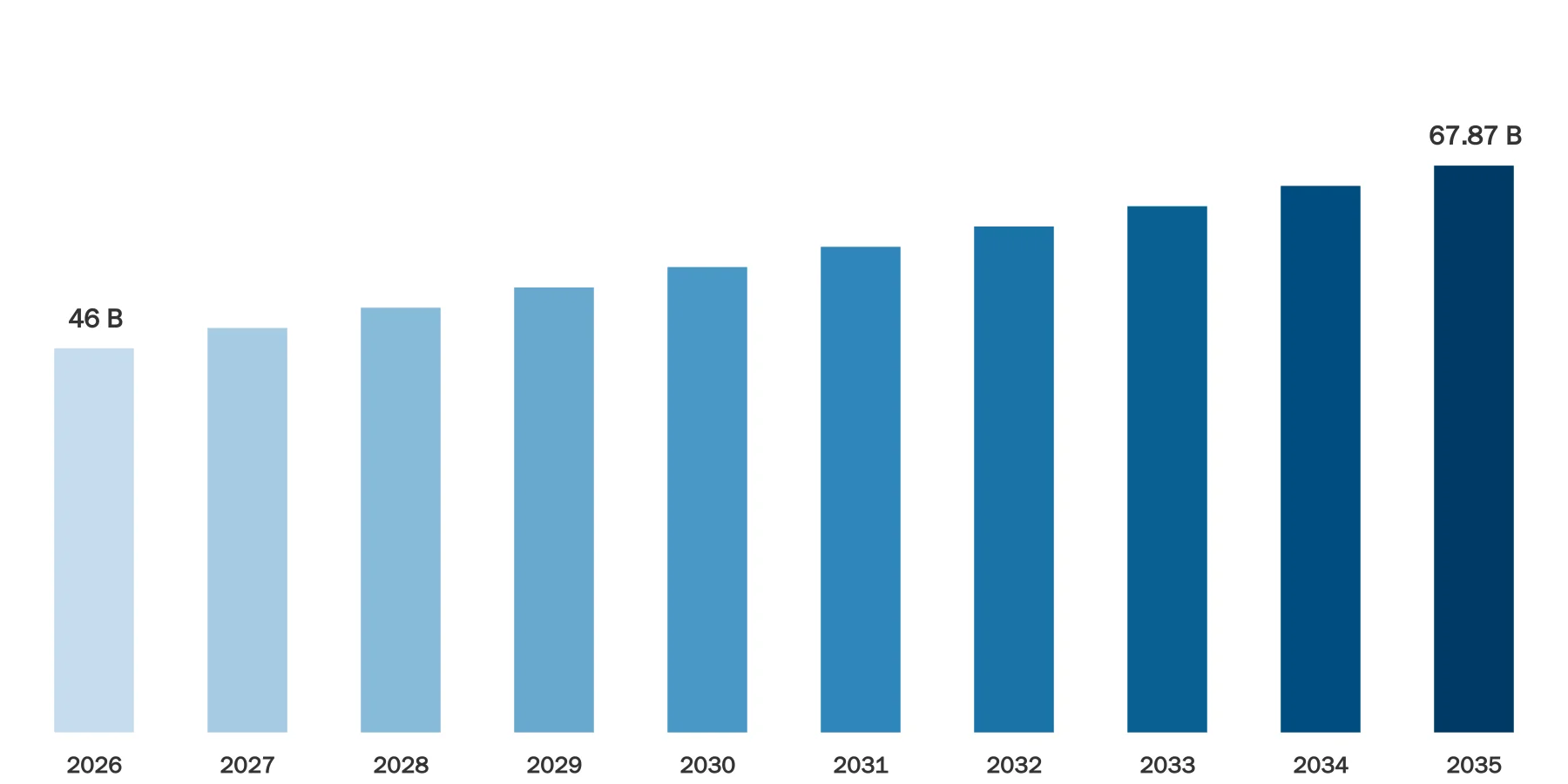
Source: Econ Market Research
An important economic factor, the automotive sector is on the cusp of new technological advancements. The car business is currently being driven by customers', need for expensive and unique features. The availability of skilled labor at reasonable prices, strong R&,D facilities, and affordable steel production all contribute to the global success of the automobile industry. Over the past few years, there has been a steady increase in the number of cars using electric motors. The market for the product is projected to benefit from an increased focus on designing and manufacturing processes that are optimized to offer better products with increased efficiency. Due to the rise in auto production and the number of motors used in a single vehicle, the industry is expanding at an incredible rate.
Market Growth
The automotive sector has shifted its focus to electric vehicles as a way to reduce vehicle emissions, which is driving the market. The cost of producing electric drive trains and fuel-efficient diesel engines may increase in the next years as governments and environmental agencies implement rigorous emission restrictions and laws in response to growing environmental concerns. The increase in average vehicle age brought on by technical improvements, the increase in average vehicle miles traveled, and the rise in public awareness of the need for safe driving practices all contribute to the expansion of the US automotive market.
The factors that contribute to the market',s expansion include rising disposable income, the availability of financing options, an increase in the number of cities, close substitutes for each segment that are outfitted with the best technological innovations, including active and passive safety systems, comfort features, and high-performance powertrains. The vibrant Indian public transportation system and the expanding logistical environment both contribute to the market',s growth. The desire for electric vehicles is another element driving the expansion of the Indian automotive industry.
Market Dynamics
Market Drivers
The demand for electric vehicles has shown to be primarily driven by advancements in the production technology for electric vehicles and an increasing focus on renewable energy sources. The adoption of electric vehicles can aid in reducing issues like reliance on oil, climate change, and environmental pollution. As a result, numerous governments have started and implemented various initiatives to promote the use and creation of electric vehicles. In the near future, it is predicted that this factor will increase demand for automobile motors. Over the projected period, the market for automotive motors is also expected to be driven by rising demand for electric vehicles. Due mostly to its capacity to lower emissions or pollutants, electric vehicles are predicted to have strong demand.
Market Restraints
The raw materials are necessary to make motors are created using steel bars and copper wires. The availability of materials and price fluctuation are worries for motor makers and suppliers. The US automotive market',s expansion is constrained by fluctuating raw material prices. Aside from that, producers are unable to benefit financially from falling material prices due to long-term supply agreements. If the price of the good or material decreases in such circumstances, the manufacturers lose the upper hand and the cost advantage. A sharp increase in the cost of raw materials, including copper by 38%, plastic by 35%, and stainless steel by 45%, had a significant negative impact on the automotive motor market.
Market Opportunities
Eventually, automotive motors must be changed, which is anticipated to have an impact on the market expansion. However, it is anticipated that development potential will be brought about by OEM efforts to introduce motors with minimal wear and tear, a longer life, and greater efficiency. A number of steps are being taken by governments to support these projects. Investing heavily in the creation of energy-efficient motors government organizations. Positive market growth is being contributed to by the increased demand for electric vehicles (EVs) worldwide as a result of growing environmental awareness and emphasis on the use of renewable energy sources. A good view of the market is also being influenced by other factors, such as the development of intelligent automotive motors for carrying out complex tasks and rising consumer spending power.
Competitive Landscape
Along with an analysis of the industry's competitive landscape, key players such as
BorgWarner Inc.
Brose Fahrzeugteile SE &, Co. KG
Bühler Motor GmbH
Continental AG
Johnson Electric Holdings Limited
Mabuchi Motor Co. Ltd.
MAHLE GmbH
MITSUBA Corporation
Mitsubishi Electric Corporation
Nidec Corporation
Ricardo PLC
Robert Bosch GmbH
Siemens AG
Regional Analysis
Airbags, anti-lock braking systems, and start-stop systems are just a few of the safety measures that must be included in cars due to various regulatory rules. Because of the need for motor installation, and these safety feature components, the market demand is expected to rise soon. In terms of revenue, Asia Pacific held the greatest market share in 2018, and it is anticipated that the region will grow at the fastest rate during the forecast period. By 2025, it',s anticipated that North America will surpass Europe as the second-largest region. One of the major reasons propelling the regional market is the substantial presence of manufacturers in Canada and the United States. Because of the expanding importance of the automobile industry, Europe is also projected to be one of the important regional markets.
Segment Analysis
Motor Type Insight
2018 saw the biggest market share for brushed DC motors, which can be attributed to their low cost and straightforward drive control architecture. They',re perfect for a variety of automotive applications because they',re simple to install and employed to give the car exceptional speed and power. Brushed DC motors are utilized by systems such as power windows, cooling fans, windshield wipers, and more. Over the projected period, it is expected that traction motors would increase at the fastest rate. Due to their great efficiency and low power consumption, they are widely utilized in Battery Electric Vehicles (BEV) and Hybrid Electric Vehicles (HEV). By 2031, demand is anticipated to increase as electric car use increases.
Vehicle Type Insight
Over the forecast period, the fastest increase is anticipated in the Electric Vehicle market. The use of electric vehicles has the potential to significantly enhance local air quality, lower carbon emissions, and boost energy security. Because of growing worries over carbon emissions from traditional fuel-powered cars and other kinds of transportation, the industry has moved its focus toward hybrid and electric vehicles. This is then expected to fuel the segment',s expansion in the ensuing years. By 2031, the fastest growth is anticipated to be accounted for by PHEV, nevertheless. Better batteries and quick charging facilities are enhancing BEVs. Additionally, mass production is driving down the price of batteries, making BEVs more competitive.
Sales Channel Insight
Market segments include OEMs and aftermarkets based on the sales channel. In 2018, a sizeable market share was accounted for by the OEM segment. But in 2018, the aftermarket became the leading segment, and it is anticipated to develop at the quickest rate going forward. The motors must be replaced after a given amount of time because of their prolonged use and for better vehicle performance, which is driving the segment.
The aftermarket industry is expected to move toward digitization as a result of quick technology improvements. The industry is evolving, and the aftermarket is selling vehicle parts and services online.
Application Insight
Automotive motors are used for a variety of purposes, including comfort, performance, and safety. In 2018, the comfort application segment dominated the market. Among other types of vehicles, automotive motors are utilized in autos, hybrids, and electric vehicles. The need for passenger and driver comfort has grown along with the need for passenger cars for transportation. Furthermore, sophisticated safety devices, such as the anti-lock brake system, use automobile motors to estimate the wheel speed and identify the route using wavelet signal processing techniques. Automobile component producers work to reduce production costs while enhancing the comfort and safety provided by automobiles.
Automotive Motors Market Report Scope & Segmentation
| Attributes | Details |
|---|---|
Market Size (Current) | US$ 46 Billion in 2026 |
Market Size (Forecast) | US$ 67.87 Billion in 2035 |
Growth Rate | CAGR of 4.42% from 2026 to 2035 |
Forecast Period | 2026 – 2035 |
Base Year | 2025 |
Historical Data Available | Yes |
Regional Scope | Global |
Segments Covered | Motor Type Outlook
Sales Channel Outlook
Application Outlook
Vehicle Type Outlook
|
Frequently Asked Questions
Common questions about this report
The study period covers historical insights and forecast projections for the period 2026-2035.
About the Author
Market research expert with years of industry experience

Related Reports
Explore more market insights from the same category