Automotive Fuel Tank Market Overview
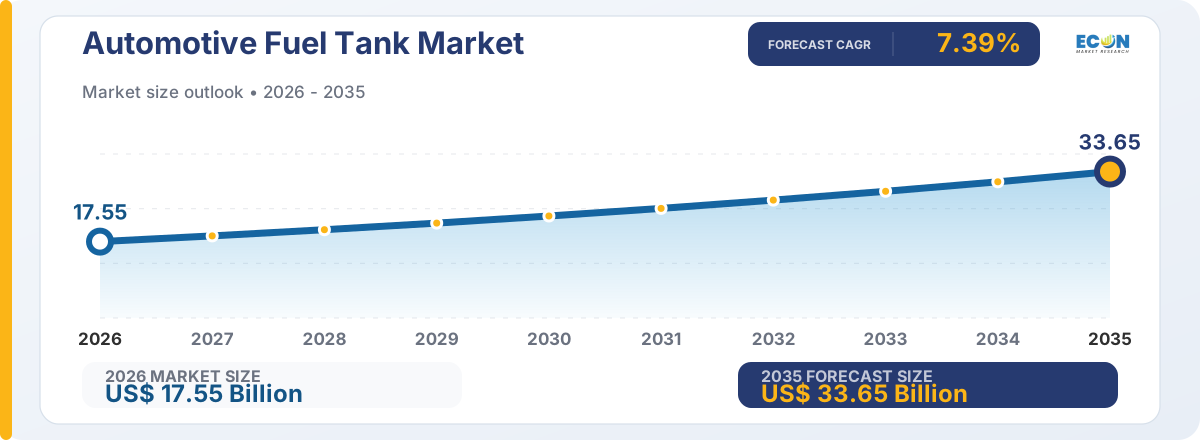
As per Econ Market Research analysis, the Global Automotive Fuel Tank Market was valued at US$ 17.55 Billion in 2026 and is expected to reach US$ 33.65 Billion by 2035, registering a CAGR of 7.39% during the forecast period 2026–2035. The base year considered is 2025.
Automotive Fuel tanks store fuel, like gasoline or diesel, and deliver it to the engine for combustion that makes the vehicle run. Fuel tanks may be fabricated from different materials, for example, steel, aluminum, and plastic, and are designed with specific features that ensure safety, durability, and efficiency.
Increasing demand for vehicles worldwide is once again on the increase, especially from developing nations whose markets have constantly experienced growth in automotive sales. Increased fuel efficiency and reduced emissions on vehicles also led by stringent environmental regulations drove changes in lightweight fuel tank designs. Alternative materials, like high-strength plastics, are also being researched for use in achieving these objectives. There',s a growing trend with traditional fuel tanks being the electric vehicle.
Electric cars do not need to carry any traditional fuel tanks, and this aspect is changing the nature of this business. However, in the near to medium term, demand for traditional fuel tanks may continue to be strong given the domination of Internal Combustion Engine vehicles in most countries and regions. The key drivers for this market include an increasing automotive demand, weight reduction for better fuel efficiency, and innovation in designs. Challenges such as fluctuation in raw material price and gradual shift towards EVs to reduce the demand for fuel tanks in the long run.
Dynamic Insights
The major drivers behind this development are the increasing global automobile demand, especially in emerging markets of Asia-Pacific and Latin America, where ownership is going up rapidly. More pressure is also coming in from the side of enhancing fuel efficiency and emission reduction with the help of lightweight fuel tanks made of advanced materials such as high-strength plastics. These reduce the total weight of the vehicle and improve fuel economy along with stringent environmental norms.
However, the market has its challenges too. As electric vehicle adoption continues to rise, they cannot carry conventional fuel tanks. These gradual shifts toward electric vehicles are likely to slow down the fuel tank market',s growth in the long term. In addition, the raw material prices-whether steel or plastic-fluctuation periods can challenge production, since added expensive pressures come on manufacturers.
Drivers Insights
Rising Vehicle Demand in Emerging Markets
The demand for vehicles in the emerging markets of China, India, and Brazil are growing swiftly, these regions form one of the key drivers for the global market. They have emerged as regions with high growth rates, mainly due to accelerating urbanization, growing middle-class populations, and increasing disposable incomes. This industry in these regions is growing as a significant proportion of the population shifting from two-wheelers to automobiles increases the demand for fuel tanks. The need for more automobile sales gets enhanced in the light of favourable government policies for vehicle purchases, for instance, subsidies or tax benefits in these countries make the sales of automobiles more appealing and are thus increasing the fuel tanks demand for automobiles.
Focus on Lightweight and Fuel-Efficient Designs
With the global push toward reducing carbon emissions and enhancing fuel efficiency, there is an increasing focus on developing lightweight Automotive Components, including fuel tanks. Traditional metal fuel tanks are being replaced by plastic or Composite Materials, which are not only lighter but also resistant to corrosion. The adoption of these advanced materials helps reduce the overall weight of the vehicle, improving fuel economy and meeting stringent environmental regulations. This shift is driven by both regulatory bodies and consumer demand for more eco-friendly vehicles, positioning lightweight fuel tanks as a key factor in the market',s growth.
Restraints Insights
Shift toward Electric Vehicles (EVs)
As the automotive industry transitions toward electric mobility, the demand for conventional fuel tanks is expected to decline. Electric vehicles do not use internal combustion engines (ICEs) and therefore do not require traditional fuel tanks. Governments worldwide are promoting EV adoption through subsidies, tax incentives, and stricter emissions regulations. This transition poses a significant challenge to the fuel tank market, particularly in developed countries where EV adoption is growing rapidly, leading to reduced demand for fuel tanks over time.
Volatile Raw Material Prices
The production of automotive fuel tanks, particularly those made from steel or plastic, is highly sensitive to fluctuations in raw material prices. Steel and plastic are key materials used in manufacturing fuel tanks, and any increase in the prices of these commodities can significantly impact production costs for manufacturers. This volatility creates uncertainty and can affect profit margins, making it difficult for manufacturers to maintain consistent pricing. It also affects the overall supply chain, as manufacturers may have to pass on these increased costs to end consumers, impacting the market',s growth.
Opportunities Insights
Advancements in Composite Materials for Fuel Tanks
With a new innovation in composite materials, developments mark an outstanding opportunity for the automotive fuel tank market. These materials provide superior strength-to-weight ratios, corrosion resistance, and higher durability compared to the conventional metals. And with that being said, the demand for composite materials in the manufacture of fuel tanks is expected to grow as the automotive business continues focusing on decreasing the weight of a vehicle to enhance fuel efficiency. These materials are advanced such that they not only satisfy the regulated standards for emissions but also reduce long-term costs through their durability and low need for maintenance. Their trend might accelerate innovation in designing fuel tanks using new materials of construction and open up more new channels for growth in their manufacturing lines.
Segment Analysis
By Material Type:
Fuel tanks are constructed using aluminum, steel, plastic, and other composite materials. Strength and durability are the main reasons why steel tanks are considered. However, plastic ones are becoming favourites nowadays because of their lightweight, corrosion resistance, and flexibility in designs. Aluminum, light, and resistant to corrosion, is used on particular applications where reduction in weight is very important. Manufacturers are finding alternate material to achieve maximum fuel efficiency and meet the emission norms. The industry is gradually shifting towards green demands and requirements, and the focus there is to use recyclable and environment-friendly material in the manufacturing of a fuel tank.
By Weight:
Fuel tanks are categorized based on weight into segments like less than 7 kg, 7 kg to 10 kg, and more than 10 kg. Lightweight fuel tanks, typically made from plastic and composite materials, are gaining traction as automotive manufacturers aim to reduce the overall weight of vehicles. This focus on weight reduction is driven by the need for improved fuel economy and compliance with stringent environmental regulations. Heavier tanks, often made of steel, are more common in heavy-duty applications like trucks and buses, where durability and strength are critical factors. The weight-based segmentation helps manufacturers design tanks that balance weight, strength, and capacity to suit different vehicle types and performance needs.
By Fuel Type:
Fuel tanks are designed to cater to different fuel types, including diesel, gasoline, and alternative fuels like LPG and CNG. Gasoline and diesel are the most common fuel types, especially for passenger and commercial vehicles. However, the increasing adoption of alternative fuels such as LPG and CNG, particularly in regions focusing on greener solutions, has led to a growing demand for specialized fuel tanks. Each fuel type requires unique design considerations to ensure safety, compatibility, and efficiency. For example, CNG tanks need to withstand high pressure, while gasoline and diesel tanks prioritize fuel containment and evaporation control.
By Tank Capacity:
Fuel tanks are divided into three categories: less than 45 liters, 45-70 liters, and more than 70 liters. The former is usually applied to compact cars and light commercial vehicles, where fuel efficiency and space take a more dominant precedence. The middle size is most common in standard passenger cars and a few commercial vehicles, reaching a more or less balanced range and storage capacity. Above 70 liters, larger capacity tanks are fitted into trucks, buses, and heavy commercial vehicles, whose higher capacity to store fuel allows longer distances covered and longer intervals of operations. The application approach segmented by tank size allows the tank maker to make every design according to the target application of the different categories of vehicles.
By Propulsion Type:
The market is segmented by propulsion type into Internal Combustion Engine (ICE), natural gas, hydrogen, and hybrid vehicles. ICE vehicles, using gasoline or diesel, continue to dominate, but there is a growing shift toward alternative propulsion systems. Natural gas and hydrogen-powered vehicles require specialized tanks designed to handle high-pressure storage. Hybrid vehicles, which combine electric and ICE propulsion, have unique fuel tank designs that optimize space and weight. This segmentation reflects the evolving landscape of vehicle propulsion, where fuel tank designs are adapting to support a range of traditional and alternative fuel technologies.
By Sales Channel:
The automotive fuel tank market can be segmented into OEM and aftermarket. The OEM market is primarily based on vehicles in production, manufacturers supply the fuel tanks directly, selling it with the new vehicles. Therefore, the aftermarket deals with replacement as well as upgrade needs of already in-use vehicles. This segment is largely influenced by factors such as the age of the vehicle, maintenance trends, and consumer preference for high-performance or customized fuel tanks. The OEM segment is stable and directly tied to automotive production, whereas the aftermarket holds opportunities for growth in regions with an aging fleet of vehicles and a high maintenance culture.
By Vehicle Type:
Fuel tanks are required in all categories of vehicles like Light Commercial Vehicles, Heavy Commercial Vehicles, Passenger cars, as well as Hybrid Vehicles. Passenger cars account for the majority market share due to higher demand as this category represents the most widely used type of vehicle and has a very high production volume and great variety of demand. Light commercial vehicles, such as vans and small trucks, focus on fuel efficiency and tank capacity.
Heavy commercial vehicles, including trucks and buses, require bigger and heavier tanks to traverse long distances. Hybrid vehicles, with an ICE-electric propulsion scheme, take its tank designs on special lines based on the criteria of weight and space optimization. Such segmentation has helped them understand the different fuel tank requirements according to vehicle type and application, thus, it influences the product development strategies pursued by manufacturers.
Regional Analysis
Asia-Pacific is the largest market participant in the region mainly due to the robust automotive manufacturing base of the countries involved, including China, Japan, India, and South Korea. Urbanization in the region is on an upward trend, and rapid growth in disposable incomes with higher incidence of vehicle ownership create a multifaceted demand for fuel tanks in this region. However, the expansion of major automotive manufacturers', production capacities in this region gives even further impetus to market growth. Lightweight and fuel-efficient vehicles along with strong emissions regulations promote innovation in fuel tank design.
The developed economies of North America and Europe remain the early markets where focus areas still are reduction in automobile emission and fuel efficiency. In these regions, this demands lightweight, composite materials used in fuel tanks manufacturing, in light of greater pressures from regulations for meeting stricter environmental requirements. Only recently is the growth in electric vehicle (EV) adoption starting to impact fuel tank demand in both countries, but a huge existing fleet of internal combustion engine (ICE) vehicles continues to meet short- to medium-term demand for fuel tanks.
Competitive Landscape
Some of the key players in the market are Magna International, Continental AG, TI Fluid Systems, Kautex Textron, Aptiv PLC, and Yachiyo Industry Co., Ltd. Companies such as these are using advanced technologies while developing the lightweight and robust fuel tanks. These companies have strong capabilities in terms of R&,D that are being utilized for innovating in material science, while the adoption of advanced composite and plastic materials is becoming increasingly favoured due to the weight-saving advantages.
Strategic partnerships and collaborations are also found in this market, mainly because companies aim to upgrade their offering and get wider geographical reach. For example, through collaboration between the manufacture of a vehicle and the fuel tank producer, customized solutions are developed according to specific models of vehicles, thereby ensuring optimum performance and safety. Companies are focusing on sustainability initiatives as it explores recyclable materials and eco-friendly manufacturing processes in response to increased consumer demand for greener automotive solutions.
Regional players also have come up, particularly in developing markets, where they have competitive pricing and localized products following regional preferences. The market remains dynamic in regards to mergers and acquisitions for large industry events and continues to form new and dynamic competitive space. As this industry shifts towards electric and alternative fuel vehicles, the players have to transform their strategy in the market. Competitive intensity needs to be sustained along with innovation and efficiency under challenge conditions created by fluctuations in raw material costs and shifting consumer preferences.
List of Key Players:
TI Fluid Systems
Yachiyo Industry Co., Ltd.
Magna International Inc.
Plastic Omnium
Unipres Corporation
Kautex
ContiTech AG
SMA Serbatoi SpA
FTS CO.,LTD.
Crefact Corporation
Boyd Welding LLC
Elkamet Kunststofftechnik GmbH
Salzburger Aluminium Group
Central Precision Limited
Arrow Radiators (Melksham) Ltd
A. KAYSER AUTOMOTIVE SYSTEMS GmbH
PIOLAX, Inc.
Global Automotive Fuel Tank Report Segmentation:
Automotive Fuel Tank Market Report Scope & Segmentation
| Attributes | Details |
|---|---|
| Market Size (Current)Current market valuation | US$ 17.55 Billion in 2026 |
| Market Size (Forecast)Projected market valuation | US$ 33.65 Billion in 2035 |
| Growth RateCompound Annual Growth Rate | CAGR of 7.39% from 2026 to 2035 |
| Forecast PeriodAnalysis timeline | 2026 – 2035 |
| Base YearReference year for analysis | 2025 |
| Historical Data AvailablePast market data availability | Yes |
| Regional ScopeGeographical coverage | Global |
| Segments CoveredMarket segments analyzed | By Material
By Capacity
By Vehicle Type
|
Leading companies covered in this report
- Plastic Omnium
- Kautex Textron
- TI Fluid Systems
- Yachiyo Industry
- Magna International
- Continental AG
- Futaba Industrial
Frequently Asked Questions
Common questions about this report
The study period covers historical insights and forecast projections for the period 2026-2035.
About the Author
Market research expert with years of industry experience

Dipali Bhingare serves as the Market Research Director at Econ Market Research. With a focus on translating complex global economic shifts into actionable business intelligence, she oversees the strategic direction of comprehensive market studies. Her work empowers organizations to navigate volatile industries through data-driven forecasting and deep-dive competitive analysis.