

Automotive 4D Imaging Radar Market
Automotive 4D Imaging Radar Market Size, Share, Trends, Growth, and Industry Analysis, By Range (Short-Range Radar, Medium-Range Radar, Long-Range Radar), By Frequency (77 GHz, 79 GHz, Others), By Application (Adaptive Cruise Control (ACC), Autonomous Emergency Braking (AEB), Blind Spot Detection (BSD), Lane Change Assist), Regional Analysis and Forecast Period 2026-2035
Market Overview
As per Econ Market Research analysis, the Global Automotive 4D Imaging Radar Market was estimated at US$ 0.72 Billion in 2026 and is forecast to attain US$ 268.83 Billion by 2035, expanding at a CAGR of 93.4% between 2026 and 2035. The base year for the study is 2025.
Automotive 4D Imaging Radar Market Size 2025-2035 (USD Billion)

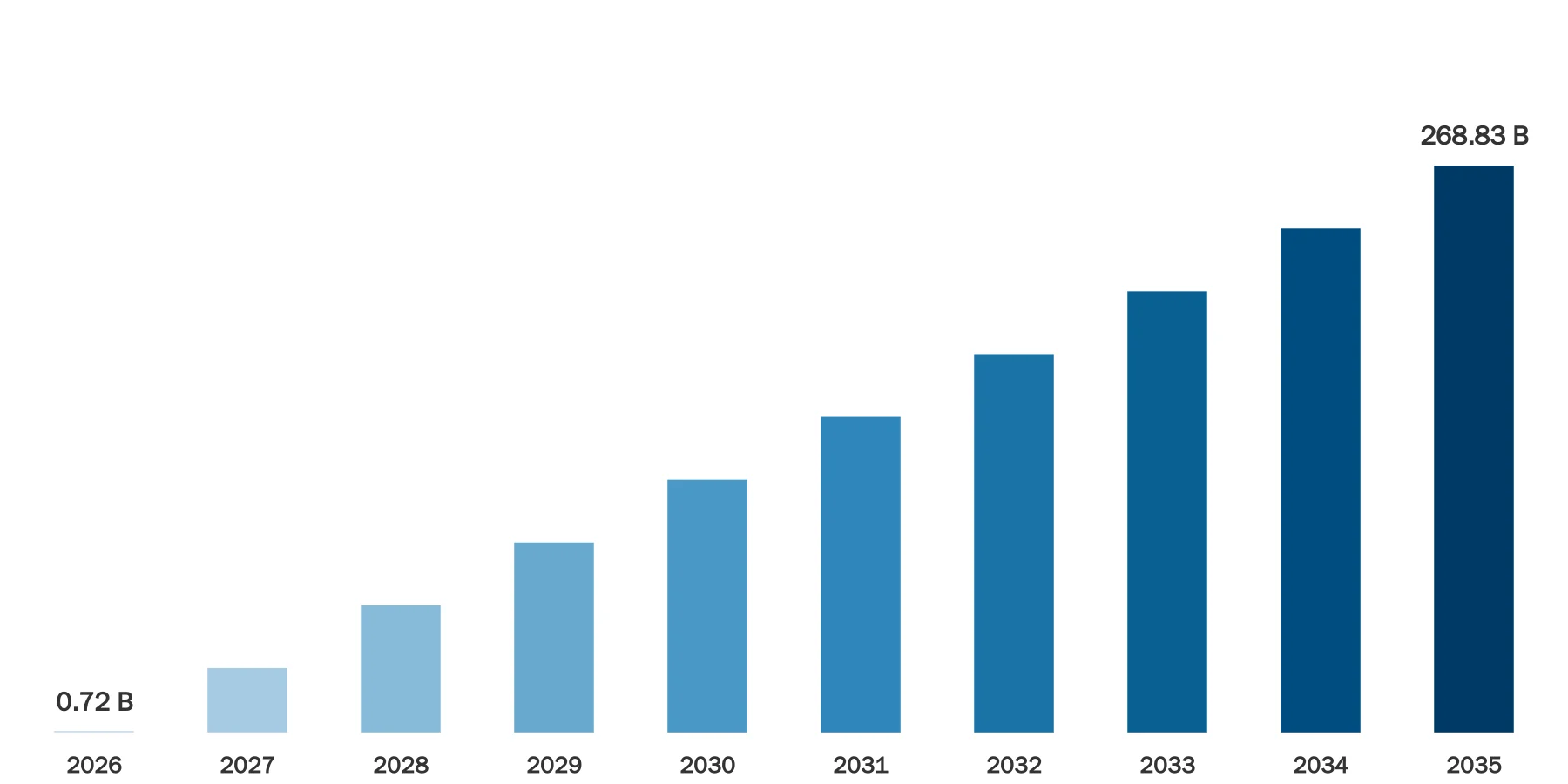
Source: Econ Market Research
Automotive 4D Imaging radar systems leverage radio waves to map the surroundings, capturing objects and obstacles like vehicles and pedestrians. These systems create precise images to enhance navigation and prevent collisions. The market for 4D imaging radar in the automotive industry is rapidly expanding. This is driven by the rising demand for ADAS (Advanced Driver Assistance Systems) and autonomous driving capabilities, fuelled by increased focus on vehicle safety and the pursuit of self-driving technology.
Major players in this competitive landscape include established automotive radar manufacturers and technology companies dedicated to advancing radar capabilities through R&,D while optimizing cost-effectiveness. As the automotive industry continues to evolve towards Autonomous Vehicles, the demand for advanced radar systems capable of providing precise and reliable imaging in various driving conditions is expected to grow, presenting lucrative opportunities for market players. However, challenges such as regulatory hurdles, integration complexity, and cybersecurity concerns remain key considerations for stakeholders in the automotive 4D imaging radar market.
Automotive 4D Imaging Radar Dynamics
Increasing demand for advanced driving safety features, driven by a focus on vehicle safety and preventing accidents, is a major factor driving the use of radar systems in vehicles. Automakers are responding to consumer and regulatory demands for safer vehicles by installing more sophisticated radar systems that offer real-time, high-detail imaging to improve situational awareness and actively prevent collisions.
Technological advancements in radar sensors are fuelling market growth in 4D imaging radar systems for cars. Companies are investing heavily to make these sensors better, more dependable, and affordable. They are designing radar sensors with better resolution, longer detection ranges, and better ways to sense the environment. This is opening up new possibilities for using radar technology in cars.
However, the market dynamics also face challenges such as regulatory complexities, integration hurdles, and cybersecurity concerns. Regulatory requirements vary across regions, impacting the standardization and deployment of radar systems in vehicles. Additionally, integrating radar sensors with other onboard systems poses technical challenges, requiring collaboration among automakers, technology providers, and regulatory bodies to ensure seamless integration and interoperability. Furthermore, the increasing connectivity of vehicles raises cybersecurity concerns, necessitating robust cybersecurity measures to protect radar systems from cyber threats and ensure the safety and reliability of autonomous driving technologies.
Automotive 4D Imaging Radar Drivers
Increasing Emphasis on Vehicle Safety
Due to the increasing frequency of road accidents worldwide, vehicle safety is a top priority. Modern cars are incorporating advanced driver assistance systems (ADAS), which rely heavily on automotive 4D imaging radar. These radars deliver instantaneous, high-quality images, powering features like automatic braking, cruise control, and lane-keeping assist. The growing importance of safety for regulators and consumers has led to a surge in demand for ADAS-equipped vehicles, driving demand for automotive 4D imaging radar as well.
Technological Advancements
Advancements in radar sensor technology, such as enhanced resolution, detection range, and environmental sensing abilities, are driving the growth of the radar sensor market. These improvements widen the applications of radar technology in vehicles, especially in advanced driver-assistance systems (ADAS) and autonomous driving systems. Additionally, as the technology develops, the cost of radar sensors is expected to decrease, expanding their availability to a larger range of vehicles, further boosting market expansion.
Restraints:
Regulatory Complexities
Different regions have different rules for automotive radar systems, making it hard to create standards and use them. This means that manufacturers have to deal with different laws, which can slow things down and cost more money. On top of that, there are often strict tests and certifications that need to be done to show that the systems follow safety rules, which makes the rules even more complicated and slows down how well the market does.
Integration Hurdles
Combining radar sensors with other car systems can be tricky. It takes a lot of engineering skill and money to make them work seamlessly with cameras, lidar, and control units that are already in place. As cars become more complex and connected, making sure they all work together without problems becomes even harder. This can slow down development and cost carmakers more money.
Opportunities:
Expansion of Autonomous Driving Technologies
The increasing focus on Self-driving Cars has a positive impact on the market for automotive 4D imaging radar. This technology is used in autonomous vehicles to create detailed images of the surrounding environment. The investment by automakers and technology companies in self-driving solutions is likely to increase the demand for radar sensors. These sensors allow accurate and dependable imaging in all driving situations. Automotive radar systems are crucial for autonomous cars to navigate their surroundings safely. This creates opportunities for companies in this market.
Segment Overview
By Automation Level
By automation level, the market is divided into five levels ranging from Level 1 to Level 5, reflecting the degree of automation in vehicles. Level 1 involves basic driver assistance features like cruise control, while Level 5 represents fully autonomous vehicles capable of navigating without human intervention. Each level presents distinct requirements for radar systems in terms of precision, range, and processing capabilities.
By Range Type
In terms of range type, the market is categorized into short-range radar (up to 50 meters), medium-range radar (50 to 100 meters), and long-range radar (100 to 300 meters). Short-range radar systems are primarily used for close-range detection of objects such as parking assistance and blind-spot monitoring. Medium-range radar systems extend the detection range for applications like adaptive cruise control and collision warning. Long-range radar systems provide extended detection capabilities suitable for highway driving and advanced autonomous features such as highway autopilot.
By Applications
The market segmentation also includes applications such as passenger monitoring, left-child identification, and exterior sensing. Passenger monitoring applications involve monitoring the occupants of the vehicle, including the driver, for safety and comfort purposes. Left-child identification systems detect the presence of children in the vehicle, ensuring their safety by triggering alerts or activating child restraint systems as needed. Exterior sensing applications focus on detecting and tracking obstacles, pedestrians, and other vehicles in the vehicle',s vicinity to enable features like automatic emergency braking, pedestrian detection, and lane-keeping assistance.
Automotive 4D Imaging Radar Overview by Region
North America is a major market for automotive technology, especially for advanced driver assistance systems (ADAS) and autonomous driving. Big car companies and tech companies are investing heavily in these technologies in the region. Also, strict safety rules and consumer interest in new car features are making radar-based sensors more popular there.
Europe is also a big market for cars, known for its strong auto industry and focus on safety and the environment. European automakers prioritize the integration of radar sensors for applications such as collision avoidance and pedestrian detection, driving market growth. In the Asia Pacific region, rapid urbanization, expanding automotive production, and increasing disposable incomes fuel market expansion.
Countries like China, Japan, and South Korea witness significant investments in automotive technology, with a focus on enhancing vehicle safety and performance through radar-based systems. Additionally, the proliferation of electric vehicles (EVs) and connected car technologies further drives demand for radar sensors in the region. Emerging economies in Latin America, the Middle East, and Africa are also witnessing growth opportunities in the automotive radar market, propelled by infrastructure development, rising consumer awareness of vehicle safety, and government initiatives promoting road safety standards. However, regional variations in regulatory frameworks, infrastructure maturity, and consumer preferences pose challenges for market penetration and product adoption.
Automotive 4D Imaging Radar Market Competitive Landscape
Leading companies such as Bosch GmbH, Continental AG, Denso Corporation, and Aptiv PLC dominate the market with their extensive product portfolios, technological expertise, and global presence. These companies invest significantly in research and development to enhance radar sensor performance, reliability, and cost-effectiveness, thereby maintaining their competitive edge.
Moreover, strategic collaborations, partnerships, and mergers and acquisitions are common strategies employed by market players to expand their market reach, access new technologies, and strengthen their competitive position. New businesses and start-ups are entering the radar market and developing unique solutions that meet specific application and customer needs. The growth of self-driving cars, electric vehicles, and smart mobility is driving investment and shaping the competitive landscape. Traditional automakers and tech companies are both looking to lead this fast-changing market.
Automotive 4D Imaging Radar Market Leading Companies:
Robert Bosch GmbH
ZF Friedrichshafen AG
Continental AG
Aptiv PLC
Denso Corporation
Valeo S.A.
Magna International Inc.
Panasonic Corporation
Analog Devices Inc.
Renesas Electronics Corporation
NXP Semiconductors
Automotive 4D Imaging Radar Recent Developments
April 2023, Arbe Robotics Ltd. a prominent figure in perception radar solutions worldwide, disclosed that Sensrad AB, a company providing a distinctive 4D Imaging Radar sensor utilizing Arbe',s chipset, has secured a strategic investment from Gapwaves AB (publ), as indicated in Gapwaves', independent announcement earlier today. Sensrad emerges as a recent spin-out venture from Qamcom Group AB.
Nov 2023, NXP Semiconductors N.V. (NASDAQ: NXPI) has revealed its investment in and partnership with Zendar Inc., a software startup committed to transforming Autonomous Vehicle systems through high-resolution radar technology. This investment is geared towards enhancing and expediting the development of high-resolution radar solutions for autonomous driving (AD) and advanced driver assistance systems (ADAS), thereby complementing NXP',s existing top-tier radar portfolio.
Automotive 4D Imaging Radar Report Segmentation
Automotive 4D Imaging Radar Market Report Scope & Segmentation
| Attributes | Details |
|---|---|
Market Size (Current) | US$ 0.72 Billion in 2026 |
Market Size (Forecast) | US$ 268.83 Billion in 2035 |
Growth Rate | CAGR of 93.4% from 2026 to 2035 |
Forecast Period | 2026 – 2035 |
Base Year | 2025 |
Historical Data Available | Yes |
Regional Scope | Global |
Segments Covered | By Range
By Frequency
By Application
|
Frequently Asked Questions
Common questions about this report
The study period covers historical insights and forecast projections for the period 2026-2035.
About the Author
Market research expert with years of industry experience

Related Reports
Explore more market insights from the same category