

Automated Optical Inspection Systems Market
Automated Optical Inspection Systems Market Size, Share, Trends, Growth, and Industry Analysis, By Type (2D AOI Systems, 3D AOI Systems), By Technology (Inline AOI, Offline AOI), By Application (Semiconductor Manufacturing, PCB and Packaging, Consumer Electronics, Automotive Electronics, Others), Regional Analysis and Forecast Period 2026-2035
Automated Optical Inspection Systems Market Overview
As per Econ Market Research analysis, Global Automated Optical Inspection Systems Market size stood at US$ 1.68 Billion in 2026 and is projected to reach US$ 12.35 Billion by 2035, growing at a CAGR of 24.5% over the forecast period 2026–2035. 2025 is taken as the base year.
Automated Optical Inspection Systems Market Size 2025-2035 (USD Billion)

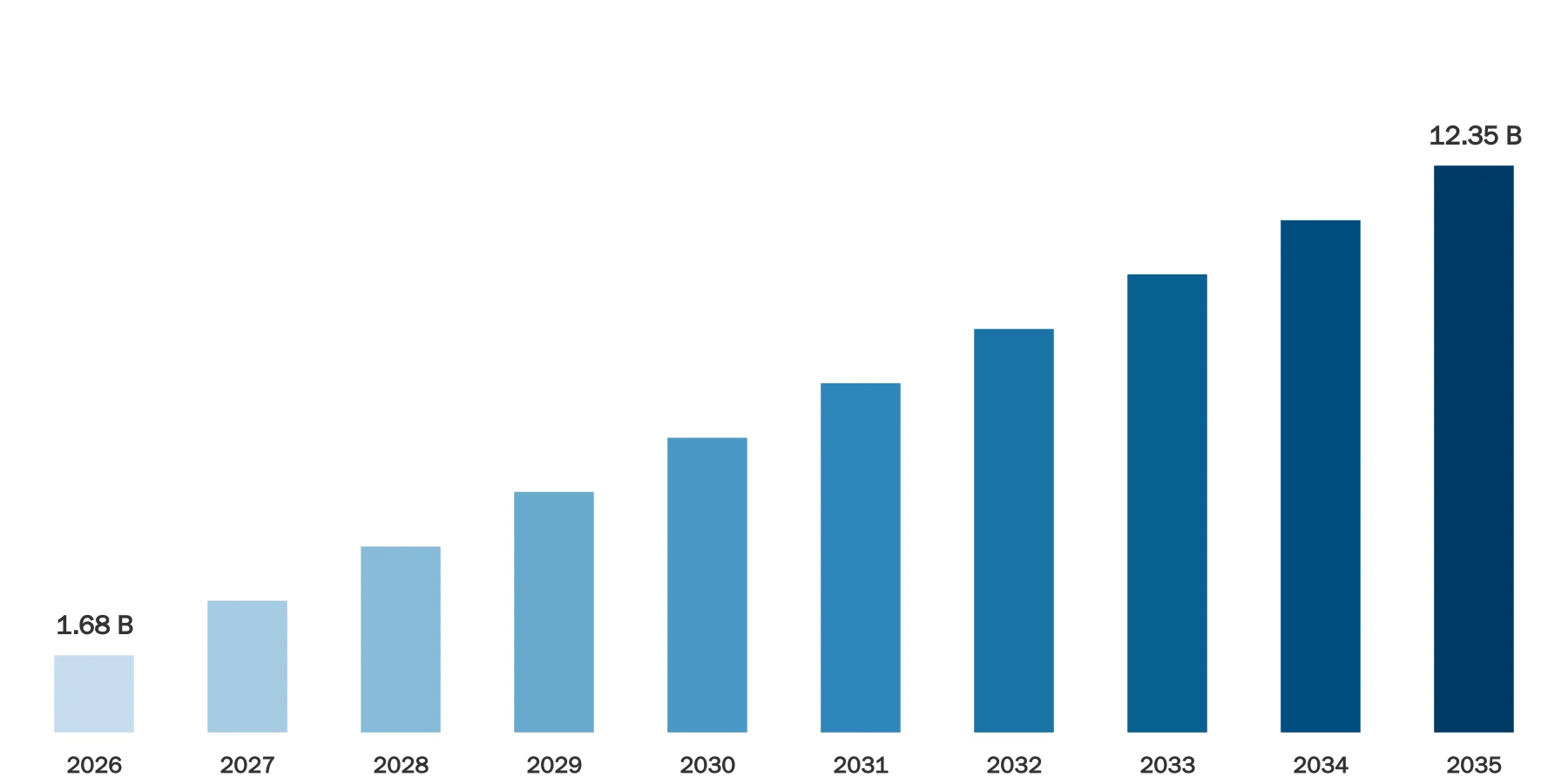
Source: Econ Market Research
High-tech devices called automated optical inspection (AOI) systems are used in production to find flaws in goods like electronics, PCBs, and assemblies. To quickly check products for faults and ensure quality control while reducing human error, these systems use cameras and image analysis software. By automating the inspection process, AOI Systems improves overall product quality while also increasing production efficiency and product dependability. In recent years, the market for automated optical inspection (AOI) systems has expanded significantly due to the rising need for high-quality, defect-free products across numerous industries. With a particular focus on sectors including electronics, automotive, aerospace, and Medical Devices, AOI Systems are cutting-edge technical solutions created to inspect and discover flaws or anomalies in manufactured goods.
The persistent quest for quality and dependability in manufacturing processes is one of the major forces behind this market',s expansion. In order to automate inspection operations that were previously time-consuming and prone to error when carried out by humans, manufacturers are turning to AOI Systems. These systems use high-tech cameras and image recognition software to detect flaws including missing parts, misplaced parts, soldering problems, and other anomalies rapidly and precisely.
Additionally, the necessity for accurate and effective inspection tools has increased due to the miniaturization and growing complexity of electronic components, making AOI Systems crucial in PCB assembly and semiconductor manufacturing. The development of Industry 4.0 and smart factories, which place a premium on automation and data-driven decision-making, has increased demand for AOI Systems. The AOI Systems market is anticipated to maintain its strong growth trajectory as manufacturers around the world seek to improve product quality, lower production costs, and boost efficiency. It offers cutting-edge solutions that are essential in ensuring the integrity and dependability of contemporary manufacturing processes.
Automated Optical Inspection Systems Market Dynamics
Dynamic variables that affect the market for Automated Optical Inspection (AOI) Systems drive its development and evolution. A major motivator is the constant pursuit of product dependability and quality across industries. Manufacturers increasingly use AOI Systems to automate the inspection process, reducing human error and maintaining consistent quality as they place a higher priority on defect-free products.
The demand for AOI Systems is driven by the ongoing miniaturization and complexity of electronic components, particularly in PCB assembly and semiconductor production. These methods are crucial for maintaining high precision and spotting minute flaws. Manufacturing processes are changing as a result of the introduction of Industry 4.0 and the emergence of smart factories. AOI Systems contributes to the automation of quality control procedures and provides real-time data, both of which are essential to this paradigm change. A wider variety of flaws may now be accurately detected by AOI Systems because to the quick technological progress in AI and machine learning.
The market must also overcome obstacles including the high initial cost of AOI Systems and the requirement for qualified employees to operate and maintain them. Additionally, the industry is extremely competitive, with a wide range of vendors offering different solutions, which promotes ongoing product development. The quest for quality, technical breakthroughs, and the push towards production automation are what drive the AOI Systems market. Despite difficulties, its significance in preserving product integrity and effectiveness places it as a key element of contemporary production processes.
Automated Optical Inspection Systems Market Drivers
The Drive for Superior Product Quality
The consistent dedication to guaranteeing high product quality is the main factor driving the market for automated optical inspection (AOI) systems in a time when consumer expectations for quality have increased. The importance of quality to customer satisfaction, brand reputation, and adherence to industry standards is well understood by manufacturers in a wide range of industries, including electronics, automotive, aerospace, and medical equipment. The margin for error gets smaller as goods get smaller and more complicated, thus careful examination is essential.
By providing an automated and extremely accurate method of examining manufactured goods, AOI Systems rises to the challenge. They are able to quickly and reliably identify flaws that would escape human examination, such as misaligned components, soldering problems, missing parts, and other oddities. Maintaining consistent quality standards also becomes a significant difficulty when global supply chains become increasingly integrated and products cross international borders. The rigorous inspection capabilities that AOI Systems offer are complemented by their facilitation of standardization across manufacturing sites, which guarantees that quality is maintained regardless of location.
AI and Machine Learning Boosting Inspection Capabilities
The ongoing development and incorporation of cutting-edge technologies, especially Artificial Intelligence (AI) and machine learning, is one of the key factors driving the market for automated optical inspection (AOI) systems. The inspection process is being revolutionized by these cutting-edge technologies, which also increase the flexibility and power of AOI Systems. The precision and scope of fault identification in AOI Systems have been greatly improved by AI and machine learning. These systems can increase their ability to discover and categorize problems with unmatched precision by utilizing sophisticated algorithms that can learn from enormous datasets.
Because of this, they are able to identify a wider variety of anomalies, such as small changes and flaws that would be overlooked by conventional rule-based algorithms or human inspectors. Moreover, AI-powered AOI Systems have the capacity to adapt and self-improve over time. They can continually refine their defect recognition abilities, reducing false positives and false negatives, which not only enhances inspection accuracy but also minimizes production disruptions. This adaptability makes them ideal for industries where product designs and manufacturing processes frequently evolve.
Restraints:
These systems are fundamentally capital-intensive, requiring expenditures for hardware, software, integration with current production lines, and the training of trained labor. This large initial cost can be an extremely difficult barrier to entry for many small and medium-sized organizations (SMEs) and companies with limited financial resources. The capital cost covers not only the acquisition of AOI equipment but also the necessary infrastructure changes, such as devoted space, power supply upgrades, and occasionally even HVAC adjustments to maintain stable operating conditions.
The long-term financial commitment can rise as well due to the need for routine maintenance, software upgrades, and calibration. This financial burden can be particularly daunting for SMEs, which may struggle to allocate funds for AOI Systems, especially if they operate in industries with thin profit margins. As a result, these companies might postpone or forgo AOI implementation, potentially compromising product quality and competitiveness.
Integration Complexity
AOI Systems must easily integrate into existing manufacturing processes, which can be a challenging task. Demanding requirements include compatibility with diverse product kinds and production phases. It is vital for AOI Systems to adjust to these variances without sacrificing the quality of their inspections because manufacturing lines frequently handle a wide variety of goods with different sizes, shapes, and materials.
A lot of planning and knowledge are needed to synchronize AOI Systems with other automated equipment and control systems. Production halts and downtime might result from incompatibilities or integration process errors. It may be more expensive and take longer to upgrade or reorganize current manufacturing lines to make room for AOI equipment. These modifications could entail modifying conveyor systems, changing workflow designs, or adding more power and data.
Opportunities:
Industry 4.0 Adoption
Integration with the quickly changing environment of Industry 4.0 and smart manufacturing is one of the most attractive areas in the market for automated optical inspection (AOI) systems. AOI Systems is prepared to play a crucial part in this change as manufacturing companies all over the world move towards digital transformation. Smart factories, which feature automated processes, real-time data analytics, and interconnected devices, rely on AOI technologies to guarantee product quality and process effectiveness. As they provide real-time inspection data that empowers decision-making, lowers faults, and increases overall productivity, AOI Systems may smoothly fit into various contexts.
A significant possibility for AOI technology is the potential to work in combination with other elements of smart manufacturing, including IoT sensors and robotic automation systems. Furthermore, AOI Systems can facilitate predictive maintenance within smart manufacturing setups. By continuously monitoring and analyzing their own performance, these systems can identify potential issues before they lead to critical failures, reducing downtime and maintenance costs.
Expanding Beyond Electronics
The expansion of automated optical inspection (AOI) systems used outside of conventional electronics manufacturing represents a promising market potential. In the past, AOI Systems was mostly connected to electronics, particularly PCB assembly and semiconductor manufacturing. However, there is a lot of room for AOI technology to grow in non-traditional business areas including the automotive, aerospace, and medical device sectors.
AOI Systems can be used to check important items like engine parts, circuits, and vehicle assembly in the automobile industry, where safety and accuracy are crucial. These systems can support higher safety requirements by assisting in ensuring the dependability and quality of automotive products. In aerospace manufacturing, AOI Systems can play a crucial role in scrutinizing intricate components, such as aircraft wiring harnesses and avionics. The precision and speed of AOI technology can aid in identifying defects and maintaining the stringent quality requirements of the aerospace sector.
Segment Overview
By Type
Based on type, the global automated optical inspection systems market is divided into 2D AOI and 3D AOI. The 3D AOI category dominates the market with the largest revenue share. 3D AOI systems add a crucial dimension by incorporating depth perception. They use technologies like laser profiling or structured light to capture detailed 3D images of objects, making them exceptionally suited for inspecting complex, non-flat surfaces and components with varying heights. This includes tasks like inspecting solder joints on components with irregular shapes or identifying lifted leads on integrated circuits. 2D AOI systems excel at detecting defects on flat surfaces and are widely used in electronics manufacturing, especially for printed circuit board (PCB) inspection. They can identify issues such as missing components, soldering defects, and misalignment with high accuracy.
By Technology
Based on the technology, the global automated optical inspection systems market is categorized into inline and offline. The inline category leads the global automated optical inspection systems market with the largest revenue share. These systems are integrated directly into the manufacturing process, typically positioned within the production line itself. They provide real-time inspection as products move along the assembly line, enabling immediate feedback and corrections.
Inline AOI systems are highly efficient for continuous and high-volume production, as they quickly identify defects, allowing for prompt interventions to rectify issues and prevent the production of faulty products. offline AOI systems are separate from the production line and are employed for batch or post-production inspection. These systems are particularly useful when a more detailed or comprehensive examination of products is required, as they can operate at a slower pace with greater precision. Offline AOI systems are often used for in-depth analysis, root cause investigation, and quality control of samples from a larger production run.
By Industry
Based on industry, the global automated optical inspection systems market is segmented into consumer electronics, telecommunications, automotive, medical devices, aerospace &, defense, industrial, and energy &, power. The automotive segment dominates the automated optical inspection systems market. The automotive industry relies on AOI systems to inspect various components, including engine parts, wiring harnesses, and Automotive Electronics. AOI technology contributes to enhanced safety and reliability in vehicles by identifying defects and ensuring the quality of critical components.
In the telecommunications sector, AOI technology is employed to assess the quality of printed circuit boards (PCBs), connectors, and other critical components used in network infrastructure equipment. It helps maintain the integrity of communication devices and ensures consistent performance. AOI systems play a vital role in the production of medical devices, ensuring the precision and integrity of components like sensors, PCBs, and medical equipment. They help maintain the high quality and safety standards required in the healthcare sector. In aerospace and defense manufacturing, AOI technology is used to inspect complex and critical components such as aircraft wiring, avionics, and defense electronics. It aids in compliance with stringent industry standards and regulations.
Automated Optical Inspection Systems Market Overview by Region
The global automated optical inspection systems market is categorized into North America, Europe, Asia-Pacific, and the Rest of the World. North America emerged as the leading region, capturing the largest market share in 2022. North America is a natural center for the adoption of modern manufacturing technologies like AOI systems due to its highly developed and inventive technology landscape. In order to guarantee product quality, consistency, and compliance with strict standards, the region is home to a wide range of technology-driven sectors, including electronics, automotive, aerospace, and healthcare.
Research and development are given a lot of attention in North America, which encourages innovation and propels the ongoing development of AOI systems. Leading IT firms and academic institutions in the area work together to develop cutting-edge AOI technology, pushing the limits of automation and flaw detection precision. Furthermore, the region's commitment to quality control and consumer safety is a significant driver for AOI system adoption. North American manufacturers prioritize the production of high-quality, reliable products, and AOI systems play a pivotal role in achieving these standards. Additionally, North America',s robust manufacturing sector, particularly in the United States, Canada, and Mexico, creates substantial demand for AOI systems across various industries. As these sectors continue to grow and evolve, the need for automated quality control solutions like AOI systems is expected to increase.
Automated Optical Inspection Systems Market Competitive Landscape
In the global automated optical inspection systems market, a few major players exert significant market dominance and have established a strong regional presence. These leading companies remain committed to continuous research and development endeavors and actively engage in strategic growth initiatives, including product development, launches, joint ventures, and partnerships. By pursuing these strategies, these companies aim to strengthen their market position, expand their customer base, and capture a substantial share of the market.
Key Players
CyberOptics Corporation
Daiichi Jitsugyo Asia Pte. Ltd.
GOPEL electronic GmbH
Koh Young Technology Inc.
MIRTEC Co., Ltd.
Nordson Corporation
OMRON Corporation
Saki Corporation
Test Research, Inc. (TRI)
Viscom AG
Yamaha Motor IM
Omron Automation (AOI division)
ViTrox Corporation Berhad
Camtek Ltd.
Automated Optical Inspection Systems Market Recent Developments
In February 2022, Saki Corporation introduces a new 3D AOI system. The new 3Di series of high-speed, high-precision, next-generation in-line 3D automated optical inspection (3D AOI) systems were developed by Saki Corporation, an innovator in the field of automated optical and X-ray inspection equipment, for complex inspection of high-density printed circuit boards and boards with a combination of very small and tall components.
Automated Optical Inspection Systems Market Report Scope & Segmentation
| Attributes | Details |
|---|---|
Market Size (Current) | US$ 1.68 Billion in 2026 |
Market Size (Forecast) | US$ 12.35 Billion in 2035 |
Growth Rate | CAGR of 24.5% from 2026 to 2035 |
Forecast Period | 2026 – 2035 |
Base Year | 2025 |
Historical Data Available | Yes |
Regional Scope | Global |
Segments Covered | By Type
By Technology
By Application
|
Frequently Asked Questions
Common questions about this report
The study period covers historical insights and forecast projections for the period 2026-2035.
About the Author
Market research expert with years of industry experience

Dipali Bhingare serves as the Market Research Director at Econ Market Research. With a focus on translating complex global economic shifts into actionable business intelligence, she oversees the strategic direction of comprehensive market studies. Her work empowers organizations to navigate volatile industries through data-driven forecasting and deep-dive competitive analysis.
Related Reports
Explore more market insights from the same category