Asset Tokenization Market Overview
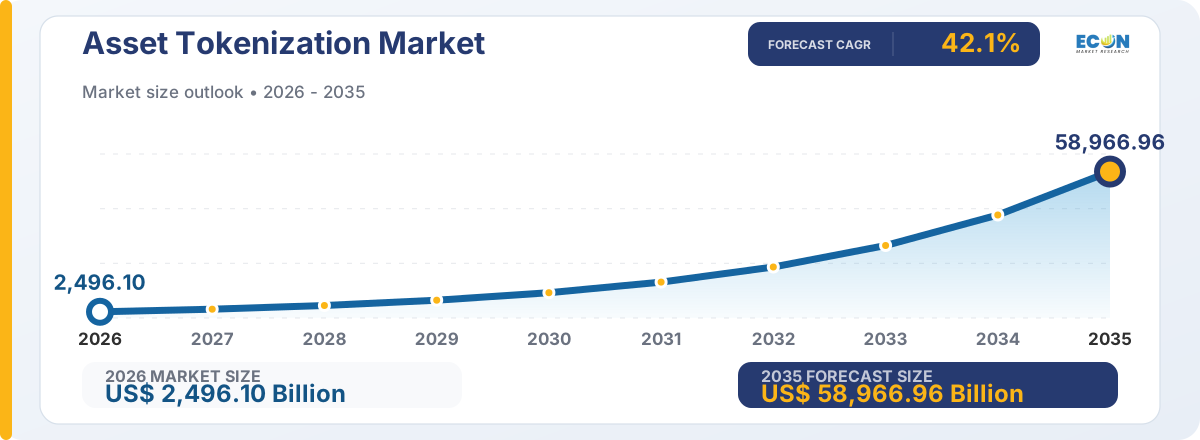
As per Econ Market Research analysis, the Global Asset Tokenization Market was recorded at US$ 2496.1 Billion in 2026 and is projected to expand to US$ 58966.96 Billion by 2035, registering a CAGR of 42.1% over the forecast period. The base year used is 2025.
The Asset Tokenizatio Market is transforming global financial infrastructure by converting physical and financial assets into blockchain-based digital tokens. More than $24 billion worth of real-world assets were tokenized on blockchain networks by 2026, reflecting strong adoption across real estate, treasury securities, commodities, and private credit markets. Over 350 blockchain platforms and financial technology providers currently support token issuance, digital custody, and secondary trading services. Tokenized assets enable fractional ownership structures where a single property or investment fund can be divided into 1,000–100,000 digital tokens, increasing liquidity and accessibility. Approximately 65% of tokenized assets currently originate from financial instruments such as bonds, funds, and treasury securities, while real estate accounts for nearly 25% of blockchain-based asset representation, demonstrating the expanding adoption of asset tokenization technology across global capital markets.
The United States plays a central role in the Asset Tokenizatio Market due to its large institutional investor base and advanced blockchain infrastructure. By 2025, tokenized treasury instruments alone accounted for over $5.5 billion in blockchain-based financial assets, representing one of the largest tokenized asset categories globally. More than 120 fintech startups and blockchain platforms in the U.S. focus specifically on tokenization technology, compliance solutions, and digital securities issuance. Institutional participation is increasing, with over 70% of major U.S. asset management firms exploring blockchain-based asset issuance programs. The country also leads in regulatory sandbox initiatives with more than 20 pilot programs involving tokenized funds, tokenized securities, and tokenized real estate portfolios, enabling experimentation with blockchain settlement mechanisms that operate 24 hours a day and 7 days a week, significantly improving asset transfer efficiency.
Key Insights
Growth Drivers: Approximately 72% institutional investors show interest in tokenized securities, 65% fintech firms prioritize blockchain asset infrastructure, 58% financial institutions plan tokenized fund launches, 54% investors prefer fractional asset ownership, and 49% private equity firms support digital token issuance strategies.
Major Market Challenges: Nearly 63% regulatory barriers affect tokenized asset platforms, 52% investors cite compliance complexity, 47% financial institutions face custody infrastructure limitations, 44% market participants report liquidity fragmentation, and 39% blockchain interoperability challenges influence tokenized asset transactions.
Emerging Trends: About 68% asset managers evaluate tokenized funds, 61% financial markets integrate blockchain settlement, 56% fintech platforms support fractionalized investment models, 48% digital exchanges develop tokenized trading systems, and 42% global banks test blockchain-based asset registries.
Regional Analysis: Roughly 41% tokenization platforms operate in North America, 29% originate in Europe, 18% emerge in Asia-Pacific fintech ecosystems, 7% are developed in Middle East digital finance hubs, and 5% originate in African blockchain innovation networks.
Competitive Landscape: Nearly 36% market presence belongs to digital securities platforms, 29% to blockchain infrastructure providers, 18% to decentralized finance protocols, 10% to tokenized asset custodians, and 7% to specialized digital asset exchanges.
Market Segmentation: Approximately 34% tokenized assets represent financial instruments, 25% real estate assets, 15% commodities and precious metals, 12% art and Collectibles, 9% intellectual property assets, and 5% luxury goods tokenization projects.
Recent Development: Around 52% new tokenization projects involve private credit assets, 38% involve government bonds and treasury funds, 33% involve tokenized real estate portfolios, 24% involve digital art assets, and 19% involve tokenized commodities platforms.
Market Latest Trends
The Asset Tokenizatio Market is experiencing rapid transformation as blockchain technology enables financial institutions to digitize traditionally illiquid assets. As of 2026, more than $24 billion worth of real-world assets have been tokenized on public blockchain networks, representing a significant expansion from less than $10 billion recorded three years earlier. The majority of tokenized assets currently consist of private credit instruments, treasury securities, and real estate assets, which together account for approximately 70% of total blockchain-based asset issuance.
Another major trend in the Asset Tokenizatio Market is the integration of tokenized assets with decentralized finance infrastructure. Over 45 decentralized trading platforms now support tokenized securities and real-world asset tokens, allowing investors to participate in fractional ownership models with investments starting as low as $50 to $100 per tokenized share. This accessibility significantly expands investor participation compared with traditional private asset markets where minimum investments often exceed $50,000.
Institutional adoption is also accelerating within the Asset Tokenizatio Industry Analysis. Approximately 80% of large financial institutions worldwide are conducting blockchain pilot projects related to tokenized securities settlement and asset custody. Tokenized treasury funds alone account for more than $5 billion in blockchain-issued financial instruments, demonstrating the increasing participation of global banks and asset managers.
Real estate tokenization remains one of the fastest-growing segments in the Asset Tokenizatio Market Outlook. The global real estate market is estimated to exceed $280 trillion in total asset value, and tokenization platforms aim to digitize 10–15% of these assets through blockchain-based fractional investment mechanisms, enabling global investors to participate in property ownership through tokenized shares.
Market Dynamics
The Asset Tokenizatio Market Analysis highlights the role of blockchain infrastructure, regulatory frameworks, and institutional participation in shaping digital asset ecosystems. Tokenization converts ownership rights into blockchain tokens recorded through distributed ledger technology. These tokens enable automated settlement processes, smart contract-based compliance management, and transparent transaction tracking.
Currently, more than 350 blockchain tokenization platforms globally support asset issuance, digital custody, and token trading systems. Over 150 institutional financial organizations have launched pilot programs exploring tokenized bonds, tokenized funds, and tokenized treasury instruments. In addition, blockchain-based financial settlements reduce settlement cycles from 2–3 days in traditional markets to less than 10 minutes on distributed ledger networks, significantly improving operational efficiency.
Tokenization technology also improves liquidity for historically illiquid asset classes such as private equity funds and real estate assets. By dividing a single property into thousands of fractional tokens, investors can trade digital ownership units through regulated digital exchanges, creating secondary markets that previously did not exist for many asset categories.
DRIVER
Rising demand for blockchain-based fractional asset ownership
The Asset Tokenizatio Market Growth is strongly driven by demand for fractional ownership structures that allow investors to purchase small shares of high-value assets. Traditional asset classes such as commercial real estate often require investment thresholds exceeding $100,000, limiting access to institutional investors. Tokenization platforms enable fractional investment models where assets can be divided into 1,000–100,000 blockchain tokens, each representing a proportional ownership stake. This model significantly expands market accessibility to accredited and retail investors. More than 60 tokenized real estate projects worldwide currently offer fractional investment opportunities through blockchain platforms. Additionally, tokenized securities enable 24-hour trading and near-instant settlement, reducing transaction processing time from 48–72 hours to less than 5 minutes in some blockchain systems.
RESTRAINT
Regulatory uncertainty in digital securities markets
Despite strong technological potential, regulatory complexity remains a significant restraint in the Asset Tokenizatio Industry Report. More than 60 countries currently lack comprehensive legal frameworks governing digital securities issuance, creating uncertainty for investors and platform providers. Regulatory compliance requirements such as know-your-customer verification, anti-money laundering controls, and securities licensing procedures increase operational costs for tokenization platforms. In many jurisdictions, tokenized securities must comply with traditional securities regulations, requiring additional approvals before public trading can occur. Furthermore, only 30% of global financial regulators have published official guidelines for tokenized asset issuance, limiting the scalability of tokenization projects across international markets.
OPPORTUNITY
Expansion of institutional tokenized funds
Institutional participation represents a major opportunity within the Asset Tokenizatio Market Opportunities landscape. Global asset managers collectively oversee more than $100 trillion in investment portfolios, and even a small percentage allocation toward tokenized securities could significantly expand blockchain-based financial markets. Several financial institutions have already launched tokenized treasury funds, private credit funds, and money-market funds using blockchain infrastructure. Tokenized treasury instruments alone account for more than $5 billion in on-chain financial assets, demonstrating growing demand from institutional investors seeking transparent settlement systems and improved liquidity. As regulatory clarity improves, institutional adoption is expected to increase significantly across global capital markets.
CHALLENGE
Limited liquidity in secondary tokenized asset markets
Liquidity remains a major challenge within the Asset Tokenizatio Market Research Report. While tokenization enables fractional ownership, many tokenized assets still experience low trading volumes due to limited secondary market participation. Research indicates that over 70% of tokenized real-world asset tokens have minimal daily trading activity, with most investors holding tokens for extended periods rather than actively trading them. Limited exchange listings and regulatory restrictions on cross-border trading also contribute to liquidity challenges. In addition, valuation transparency remains complex for assets such as private credit funds and intellectual property rights, where standardized pricing models are difficult to establish.
Segmentation Analysis
The Asset Tokenizatio Market segmentation includes multiple asset classes and investor categories that drive blockchain-based financial ecosystems. Asset classes represent the underlying physical or financial assets converted into blockchain tokens, while investor types represent the primary participants purchasing tokenized ownership shares. Financial instruments and real estate assets currently dominate tokenization projects due to their large asset base and institutional investor demand. Meanwhile, retail investor participation is increasing through fractional tokenized investment platforms that allow individuals to purchase digital asset shares with relatively small capital commitments.
By Asset Class
Real Estate
Real estate represents one of the largest segments within the Asset Tokenizatio Market Size, accounting for approximately 25% of all tokenized asset projects globally. The global real estate sector exceeds $280 trillion in total asset value, making it a major candidate for blockchain-based fractional ownership models. Tokenized real estate platforms typically divide a property into 1,000–50,000 digital tokens, allowing investors to purchase fractional ownership stakes. In 2023 alone, tokenized real estate assets reached approximately $15 billion in blockchain-based market capitalization, reflecting strong adoption among property developers and institutional investors. Real estate tokenization also reduces transaction settlement times from 30–60 days in traditional property transfers to less than 24 hours through blockchain smart contracts.
Art and Collectibles
The tokenization of art and collectibles is emerging as a specialized segment in the Asset Tokenizatio Market Analysis. High-value artworks frequently exceed $10 million per piece, limiting ownership to a small group of collectors and institutions. Tokenization platforms allow these artworks to be divided into hundreds or thousands of fractional tokens, enabling broader investor participation. More than 1,500 digital tokens representing physical artworks and rare collectibles have been issued across blockchain platforms. Fractional art tokenization enables investors to hold ownership stakes valued at $100–$1,000 per token, significantly lowering entry barriers for art investment markets.
Commodities
Commodities such as gold, silver, and energy resources represent another growing segment in the Asset Tokenizatio Industry Analysis. Blockchain-based commodity tokens allow investors to hold digital ownership units backed by physical commodities stored in secure vaults. Gold tokenization platforms currently represent nearly 40% of commodity tokenization projects, with millions of blockchain tokens linked to physical gold reserves. Commodity tokenization also improves liquidity by enabling 24-hour global trading of digital commodity tokens without requiring physical delivery or complex settlement procedures.
Intellectual Property
Intellectual property tokenization enables creators and businesses to monetize digital rights associated with patents, copyrights, and trademarks. More than 50 blockchain projects globally focus on tokenizing intellectual property assets, including music royalties, patent licensing agreements, and digital media rights. Tokenization platforms allow creators to issue thousands of royalty-sharing tokens, distributing future income streams to token holders based on ownership percentages. This approach enables investors to participate in creative industries while providing artists and innovators with alternative financing mechanisms.
Financial Instruments
Financial instruments currently represent the largest share of the Asset Tokenizatio Market Share, accounting for approximately 34% of all tokenized assets. Tokenized bonds, treasury securities, and private credit funds are increasingly issued through blockchain platforms. Tokenized treasury instruments alone account for more than $5 billion in digital securities, demonstrating the rapid adoption of blockchain infrastructure within institutional financial markets. Financial institutions also benefit from blockchain settlement mechanisms that reduce transaction processing times from two days to less than ten minutes.
Luxury Goods
Luxury goods tokenization enables fractional ownership of high-value physical items such as luxury watches, rare automobiles, and designer collectibles. Individual luxury assets often exceed $100,000 in value, making fractional ownership attractive for collectors and investors. Blockchain platforms tokenize these items into hundreds or thousands of digital ownership units, allowing investors to participate in the luxury collectibles market with smaller capital commitments. Luxury goods tokenization currently represents approximately 5% of global tokenized asset projects, but adoption continues to expand among digital investment platforms.
Others
Additional asset classes within the Asset Tokenizatio Market Outlook include agricultural assets, infrastructure investments, renewable energy projects, and carbon credits. More than 200 tokenization projects worldwide focus on alternative assets, including farmland tokenization and renewable energy revenue streams. These projects allow investors to purchase digital ownership units representing energy production rights, agricultural yields, or carbon offset credits, creating new financial instruments within blockchain ecosystems.
By Investor Type
Institutional Investors
Institutional investors represent the largest investor segment in the Asset Tokenizatio Market Insights, accounting for approximately 55% of tokenized asset investments. Large financial institutions, hedge funds, and asset management firms are actively exploring blockchain infrastructure to improve operational efficiency. Institutional tokenization projects frequently involve government bonds, treasury funds, and private credit instruments, which collectively represent billions of dollars in digital securities issuance.
Accredited Retail Investors
Accredited retail investors account for approximately 30% of tokenized asset investments globally. These investors meet regulatory requirements related to income thresholds or net worth qualifications and therefore gain access to tokenized private assets such as real estate funds and venture capital portfolios. Accredited investors benefit from blockchain-based platforms that provide transparent ownership records and automated dividend distribution through smart contracts.
Retail Investors
Retail investors represent nearly 15% of tokenized asset market participation, although this segment continues to expand rapidly as fractional investment platforms gain popularity. Retail investors typically purchase small ownership shares ranging from $50 to $500 per tokenized asset, enabling participation in markets that previously required large capital commitments.
Regional Insights
The Asset Tokenizatio Market Outlook shows strong regional variation driven by regulatory frameworks, fintech innovation, and institutional investor participation.
North America
North America represents the largest regional segment in the Asset Tokenizatio Market Share, accounting for approximately 41% of global tokenization platforms and projects. The region benefits from advanced fintech infrastructure, strong venture capital investment, and high institutional adoption of blockchain technology. The United States leads the regional market with more than 120 tokenization startups and digital asset infrastructure providers. Tokenized treasury securities and tokenized private credit funds represent the largest asset classes within the region. Blockchain settlement infrastructure allows asset transfers to occur in less than 10 minutes compared with 2–3 days in traditional financial systems. In addition, regulatory sandbox initiatives across multiple U.S. states enable experimentation with tokenized securities issuance and Digital Asset Custody services.
Europe
Europe accounts for approximately 29% of global Asset Tokenizatio Market activity, driven by regulatory clarity and strong fintech ecosystems. Several European financial regulators have introduced digital asset frameworks enabling tokenized securities issuance and blockchain-based trading platforms. The region hosts more than 90 fintech companies focused on asset tokenization infrastructure, including digital securities exchanges and blockchain settlement networks. Real estate tokenization projects in Europe frequently involve residential property portfolios where ownership stakes are divided into 10,000 or more digital tokens, allowing international investors to participate in European property markets.
Asia-Pacific
Asia-Pacific represents approximately 18% of the global Asset Tokenizatio Market Size, with strong innovation in blockchain infrastructure and digital finance. Countries such as Singapore, Japan, and South Korea operate regulatory sandbox programs supporting blockchain-based financial products. More than 70 tokenization platforms operate across Asia-Pacific, focusing primarily on tokenized real estate, private equity funds, and digital securities issuance. The region also hosts several large cryptocurrency exchanges that support tokenized asset trading, enabling 24-hour digital securities markets across global investor networks.
Middle East & Africa
The Middle East & Africa region represents approximately 7% of global Asset Tokenizatio Market development, driven by digital finance initiatives and government-backed blockchain projects. Several Middle Eastern financial centers are developing blockchain frameworks for tokenized real estate investments and infrastructure funding. More than 30 blockchain startups in the region focus on tokenized asset issuance platforms, particularly in property development projects. In Africa, tokenization platforms are exploring agricultural asset tokenization and renewable energy investment tokens, enabling fractional ownership structures for infrastructure projects.
Top Asset Tokenizatio Companies
Securitize Inc
tZERO Technologies
Tokeny Solutions
Centrifuge
Ondo Finance
Franklin Templeton
Polymath (Polymesh)
Vertalo
RealT
R3 (Corda)
Top Market Leaders
Securitize Inc – estimated to support over 300 digital securities issuances and tokenized investment funds globally, representing one of the largest tokenized asset infrastructure providers.
tZERO Technologies – operates a blockchain-based digital securities trading platform supporting hundreds of tokenized financial instruments and thousands of investor accounts worldwide.
Market Investment Outlook
The Asset Tokenizatio Market Investment Outlook is driven by increasing venture capital investment and institutional adoption of blockchain-based financial infrastructure. Global fintech venture funding in blockchain and digital asset infrastructure exceeded $30 billion in cumulative investments across more than 1,000 startups, reflecting strong investor confidence in tokenization technology. Asset managers overseeing more than $100 trillion in global investment portfolios are actively exploring tokenized asset issuance strategies to improve settlement efficiency and reduce operational costs.
Tokenized treasury securities and private credit funds represent the largest investment segments within the market, collectively accounting for nearly 60% of blockchain-based financial asset issuance. Institutional investors also benefit from smart contract automation that reduces administrative costs associated with dividend payments, compliance reporting, and ownership record management.
Another investment opportunity involves tokenized infrastructure assets such as renewable energy projects. Several blockchain platforms allow investors to purchase digital tokens representing Solar Energy production rights or carbon credit certificates, creating new investment opportunities aligned with environmental sustainability initiatives.
New Product Development
Innovation within the Asset Tokenizatio Market continues to accelerate as financial institutions and fintech startups introduce new blockchain-based investment products. Tokenized treasury funds, tokenized real estate investment trusts, and tokenized private credit instruments represent some of the most recent product developments. Financial institutions have launched digital securities platforms capable of supporting thousands of investors simultaneously while processing transactions in less than 10 seconds.
Another innovation involves the integration of smart contract-based dividend distribution systems. These systems automatically distribute interest payments or rental income to token holders according to their ownership percentage. For example, tokenized property investments can distribute monthly rental income to 1,000 or more investors through blockchain-based payment systems.
Cross-chain interoperability technologies are also emerging as a major innovation in the Asset Tokenizatio Market Trends. These technologies enable tokenized assets issued on one blockchain network to be traded on another blockchain network, expanding market liquidity and investor participation.
Recent Developments
A major digital asset platform launched tokenized treasury funds representing over $5 billion in blockchain-based government securities available for institutional investors.
A global fintech consortium introduced a tokenization platform capable of issuing 10,000 digital asset tokens per financial instrument, enabling fractional ownership for large investment funds.
A blockchain real estate platform tokenized over 300 residential properties across 30 cities, allowing investors to purchase fractional ownership shares.
A global banking consortium launched a blockchain settlement network supporting 24-hour trading of tokenized bonds and securities.
A digital securities exchange expanded its infrastructure to support more than 1,000 tokenized financial instruments and over 50,000 registered investors across international markets.
Asset Tokenization Market Report Scope & Segmentation
| Attributes | Details |
|---|---|
| Market Size (Current)Current market valuation | US$ 2496.1 Billion in 2026 |
| Market Size (Forecast)Projected market valuation | US$ 58966.96 Billion in 2035 |
| Growth RateCompound Annual Growth Rate | CAGR of 42.1% from 2026 to 2035 |
| Forecast PeriodAnalysis timeline | 2026 – 2035 |
| Base YearReference year for analysis | 2025 |
| Historical Data AvailablePast market data availability | Yes |
| Regional ScopeGeographical coverage | Global |
| Segments CoveredMarket segments analyzed | By Asset Class
By Investor Type
By Tokenization Platform
By Offering
|
Leading companies covered in this report
- Key Players: Securitize Inc
- tZERO Technologies
- Tokeny Solutions
- Centrifuge
- Ondo Finance
- Franklin Templeton
- Polymath (Polymesh)
- Vertalo
- RealT
- and R3 (Corda)
Frequently Asked Questions
Common questions about this report
The study period covers historical insights and forecast projections for the period 2026-2035.
About the Author
Market research expert with years of industry experience