Architectural Glass Market Overview
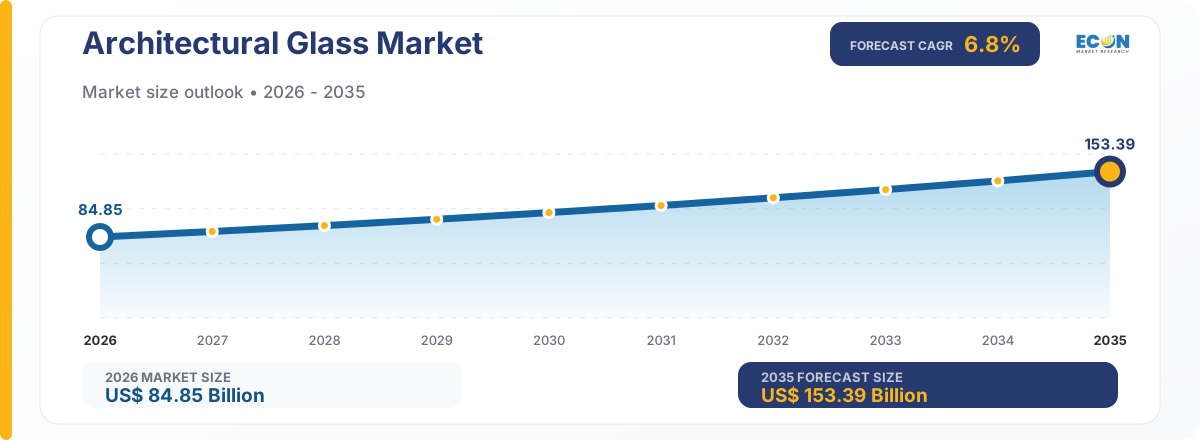
As per Econ Market Research analysis, the Global Architectural Glass Market valuation stood at US$ 84.85 Billion in 2026 and is expected to reach US$ 153.39 Billion by 2035, growing at a steady CAGR of 6.8% from 2026 to 2035. 2025 serves as the base year.
Architectural glass finds extensive applications in windows, facade, doors, partitions, and interior elements of building structures in residential, commercial, and industrial sectors. In modern architecture, it offers versatility and performance characteristics with heat control, soundproofing, and UV protection. Advanced coatings and the treatment process have evolved the architectural glass to provide high insulation and strength, which, in turn, reduces the energy costs and supports the sustainability of construction.
Demand for architectural glass is going up due to the expansion of construction activities, rapid urbanization, and interest in green building practices globally. The trend of recent times has been Smart Glass that changes its opacity with electrical input, thus adding the benefit of energy saving with light and temperature control. The key markets in this segment are Asia-Pacific, North America, and Europe, driven by urban growth and regulatory support for energy-efficient buildings. Rising investments in infrastructure, a shift toward sustainable materials, and consumer preferences for an eco-friendly design further propel the market growth, making architectural glass a vital component in the future of sustainable building solutions.
Dynamic Insights
The architectural glass market is driven by rapid urbanization, a construction boom, and the increasing use of green building. As cities grow and transform, the demand for high-performance glass that meets aesthetic as well as functional needs has been increasing. This glass is not only aesthetically pleasing but also serves to insulate, dampen sound, and block UV. Advanced architectural glass is one of the attractive options for builders and developers, because stringent energy efficiency regulations in major economies such as the U.S., Europe, and China push for the use of energy-efficient materials.
While price fluctuations of materials, like silica, soda ash, and recycled glass, significantly influence production costs, which do hinder market growth, new applications for ",smart glass,", where transparency can change in response to either light or temperature, now open new doors to energy conservation. The growing consumers', environmental consciousness also enhances the growth in the adoption of ecological variants of glass, with energy consumption in buildings being considerably minimized by such alternatives.
Drivers Insights
Rising Demand for Energy-Efficient Buildings
As concerns regarding climate change and energy prices continue to increase, the governments and industries of the world have been concentrating on energy-saving building materials. Energy saving architectural glass plays a key role in energy loss minimization and decreased heating and cooling costs with low-emissivity (Low-E) coatings that inhibit heat transfer.
In most areas, building codes and regulations call for at least a specific level of efficiency, which is met with added aesthetics in architectural glass products. This trend is highly prevalent within the commercial and residential markets, where insulated glass products are in high demand for window, facade, and door applications to support sustainability efforts and minimize carbon footprints.
Urbanization and Infrastructure Development
New residential and commercial construction is needed in rapidly urbanizing areas, especially in emerging economies such as India, China, and Brazil. The growth of populations and cities requires modern infrastructure that is energy-efficient and aesthetically pleasing. Architectural glass, being strong and versatile, is necessary for building safe, sustainable, and visually appealing structures. This high-performance architectural glass is gaining demand in developing regions for megaprojects and smart city projects due to its ability to align with both functional and aesthetic requirements of modern urban architecture.
Restraints Insights
High Production Costs and Raw Material Price Volatility
Specialized processes and materials go into high-quality architectural glass manufacturing. The production of glass itself depends on raw materials that are made up of silica, soda ash, and recycled glass whose prices keep fluctuating constantly. This will therefore shoot up the costs of producing, which is passed to the bottom line for the manufacturers, meaning the small players cannot sustain this situation hence dampening the market growth. The costs are then passed on to consumers, which can further limit the adoption rate of the market in price-sensitive regions.
Environmental and Health Concerns Related to Glass Waste
Although architectural glass is an essential component of sustainable building, waste management is a significant concern. Glass cannot be recycled because of its specific chemical makeup, especially when it has coatings and treatments that are commonly used in building. Incorrect disposal will also contribute to environmental pollution. The energy required for glass production contributes to the production of greenhouse gases. As consumers and regulators become more environmentally conscious, these factors may force firms to go greener at a cost which will eat into margins in the short term.
Opportunities Insights
Growth in Smart Glass Technologies
Innovative developments in smart glass, where opacity changes with environmental alterations or electrical inputs, have high promise in the architectural glass market. Smart glass allows a building to control how much heat and light will penetrate into it, therefore offering energy efficiency, thus very suitable for climates where temperatures fluctuate highly. The application is in the commercial, residential, and automotive sectors and can also be used in design and functionality flexibility. It has the potential to appreciate in value over the next several years because the trend for smart homes and buildings is growing and consumers are keen on automated and responsive technologies.
Segment Analysis
By Type
Architectural glass can be categorized further into types, that is, residential, commercial, and industrial buildings. Residential buildings utilize architectural glass on windows, doors, and facades for aesthetic reasons, insulation, and for soundproofing. As energy efficiency increases, house owners prefer using low-e glass to cut down heat transfer, which saves more energy and eventually reduces cost. The feature that is most essential to the commercial building in modern open designs is architectural glass, which is used almost universally in office complexes, hotels, and retail environments.
Architectural glass',s use in the commercial marketplace is preferred because of the natural lighting properties with the minimal glare. In the case of industrial buildings, this architectural glass is mainly preferred based on its strength and toughness. Architectural glass is reinforced or coated in factories, warehouses, and production facilities to offer extra resilience and safety in the event of breakage.
By Application
Based on application, low-E, special, and other forms are segmented architectural glass markets. Low-E is the most favoured one in energy-efficient construction, as it reflects heat without inhibiting natural light. Its insulation qualities lower heating and cooling costs and make it particularly valuable in residential and commercial constructions, especially in very cold or hot regions. There is special glass, with its options like tinted, tempered, laminated, and self-cleaning glass, which serves the functions of enhanced safety, privacy, and UV protection. Laminated glass would have impact resistance, fitting into high-risk areas, however, tinted glass often controls light and even privacy.
Regional Analysis
High-performance glass such as Low-E and insulated is gaining importance in North America with the emphasis of building codes on energy efficiency, particularly in the commercial segment. The practice of sustainable construction also finds application here and further boosts demand. Similarly, in Europe, significant demand is being reported due to strict environmental regulations and the achievement of energy efficiency, particularly under the European Green Deal. Countries like Germany, France, and the UK are setting the pace in the application of environmentally friendly materials in their buildings, which boosts the uptake of advanced glass products.
Asia-Pacific is witnessing rapid urbanization and industrialization in China and India, which would increase demand for architectural glass across residential, commercial, and industrial projects. The growth is driven by government-backed infrastructure projects and growing living standards, and interest in aesthetic and energy-efficient glass solutions is on the rise. With cities expanding and mega-projects like smart cities taking off, the region will maintain high demand. The demand for architectural glass is on the rise in Latin America and the Middle East &, Africa as cities are developed and the construction industry grows. Latin American countries, focusing on sustainable urbanization, are choosing energy-efficient glass, while Middle Eastern countries, with their ambitious projects and extreme climatic conditions, are looking for Solar Control Glass to regulate heat.
Competitive Landscape
The market is dominated by the following key players: Saint-Gobain, Guardian Glass, AGC Glass, and Pilkington, which have a wide range of products and advanced technologies in glass manufacturing. These companies are investing heavily in research and development to create energy-efficient, smart, and high-performance glass products that meet the evolving demands of the construction industry. Strategic collaborations and partnerships with architects, builders, and designers are common among these firms to enhance their product offerings and expand their market reach. Regional players are also prominent in the competitive landscape, where often local needs and preferences are focused on.
Customized solutions tailored to architectural requirements or climatic conditions are often presented by such manufacturers and, of course, create competitive advantages in certain markets. Increasingly, however, companies are focusing on more sustainable products: recycled materials and innovative production methods reducing environmental impact. With the technology of smart glass, a new level of competition unfolds for traditional glass manufacturers since they are now compelled to innovate and alter their present offerings. Architectural glass is a highly dynamic market: companies compete with each other on the bases of technological advancement, sustainability, and customer service in order to cater to the varied demands of the construction sector from all over the world.
List of Key Players:
Saint-Gobain S.A
Schott AG
Jinjing
CSG
Xinyi
KIBING
Taiwan Glass
AGC
NSG
Sisecam
SYP Glass Group Company Limited
Guardian glass
Central Glass
Yaohua
Recent Developments:
In May 2024, Asahi India Glass Limited (AIS), the leading glass manufacturer in India, has formed a 20-year offtake agreement with INOX Air Products (INOXAP), the largest producer of industrial and medical gases in the country, to supply Green Hydrogen to AIS',s new float glass facility in Soniyana, located in Chittorgarh, Rajasthan. This initiative marks the establishment of India&rsquo,s first Green Hydrogen Plant specifically for the float glass industry, setting a precedent for sustainable glass manufacturing.
In March 2023, Vitro Architectural Glass has introduced the Vitro X Innovation Partnerships, a strategic program designed to identify and create innovative solutions for current and future challenges in the glass industry. This initiative aims to support forward-thinking companies in bringing ground-breaking products and technologies to market.
Global Architectural Glass Report Segmentation
Architectural Glass Market Report Scope & Segmentation
| Attributes | Details |
|---|---|
| Market Size (Current)Current market valuation | US$ 84.85 Billion in 2026 |
| Market Size (Forecast)Projected market valuation | US$ 153.39 Billion in 2035 |
| Growth RateCompound Annual Growth Rate | CAGR of 6.8% from 2026 to 2035 |
| Forecast PeriodAnalysis timeline | 2026 – 2035 |
| Base YearReference year for analysis | 2025 |
| Historical Data AvailablePast market data availability | Yes |
| Regional ScopeGeographical coverage | Global |
| Segments CoveredMarket segments analyzed | By Type
By Coating Type
By End-Use Sector
|
Leading companies covered in this report
- Asahi India Glass (AIS)
- Saint-Gobain
- Nippon Sheet Glass (NSG)
- Cardinal Glass
- CSG Holding
Frequently Asked Questions
Common questions about this report
The study period covers historical insights and forecast projections for the period 2026-2035.
About the Author
Market research expert with years of industry experience