

Alkaline Water Ionizer Market
Alkaline Water Ionizer Market Size, Share, Trends, Growth, and Industry Analysis, By Type (Countertop Alkaline Water Ionizer, Under-Counter Alkaline Water Ionizer), By Technology (Electrolysis Technology, Membrane Technology), By Application (Household, Hospital, Commercial, Others), Regional Analysis and Forecast Period 2026-2035
Market Overview
As per Econ Market Research analysis, the Global Alkaline Water Ionizer Market was valued at US$ 1.8 Billion in 2026 and is expected to reach US$ 4.16 Billion by 2035, registering a CAGR of 9.5%% during the forecast period 2026–2035. The base year considered is 2025.
Alkaline Water Ionizer Market Size 2025-2035 (USD Billion)

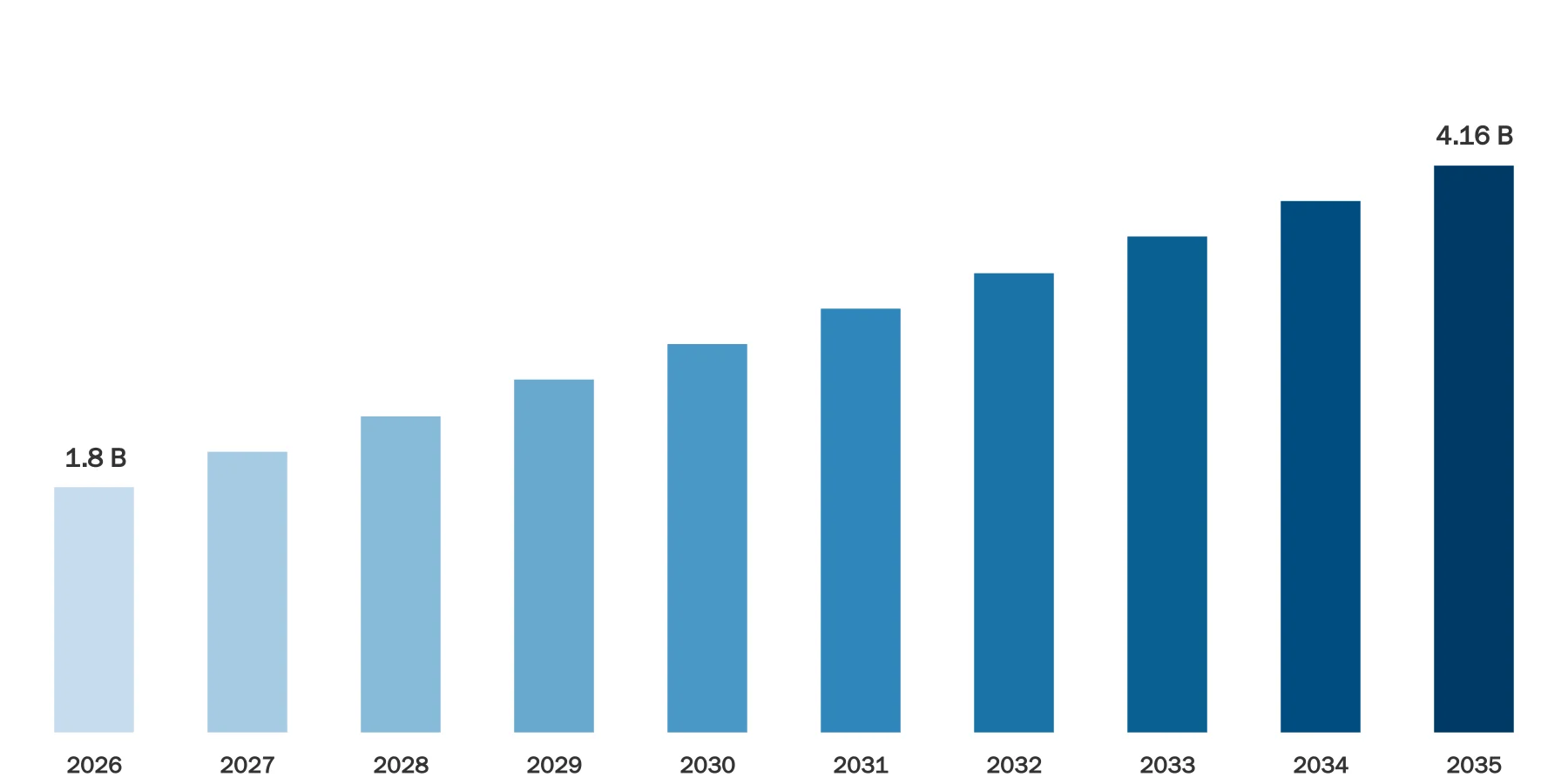
Source: Econ Market Research
The Alkaline Water Ionizer Market has witnessed notable expansion with more than 4.2 million units installed globally as of 2024, driven by rising awareness of water quality and pH-balanced consumption. Approximately 62% of urban households in developed regions are now aware of alkaline water benefits, while 35% of consumers actively prefer ionized water systems over traditional purifiers. Electrolysis-based ionizers dominate with over 78% technology penetration, while multi-plate systems with 5–11 platinum-coated titanium plates account for over 65% of installed devices. Increasing contamination levels, with over 2.2 billion people globally lacking access to safely managed drinking water, continue to push demand for advanced purification and ionization systems.
In the United States, the Alkaline Water Ionizer Market has reached significant maturity, with over 1.1 million households using ionizers as of 2024, representing approximately 9% penetration in premium kitchen appliance segments. Around 48% of U.S. consumers aged 30–55 actively seek alkaline water products for health-related reasons. Countertop models account for 58% of total installations, while under-counter systems contribute 42% due to rising kitchen integration trends. Water contamination concerns remain critical, with over 45% of U.S. tap water sources containing detectable contaminants, driving adoption. Additionally, more than 70% of wellness-focused consumers consider alkaline water part of daily hydration routines.
Market Latest Trends
The Alkaline Water Ionizer Market Trends highlight rapid innovation and consumer-driven product development, with over 65% of new models launched between 2023 and 2025 featuring digital touch panels and smart sensors. Advanced filtration technologies incorporating 2–4 stage carbon filtration systems are now integrated into more than 72% of newly manufactured ionizers. Additionally, the adoption of self-cleaning electrolysis chambers has increased by 38%, improving durability and reducing maintenance cycles.
Portable alkaline water ionizers are gaining traction, with sales volume rising by 27% year-over-year in 2024, especially among travelers and fitness enthusiasts. The integration of IoT-enabled features, such as mobile app control and water quality monitoring, is present in over 18% of premium models. Furthermore, demand for eco-friendly solutions has increased, with over 55% of manufacturers adopting BPA-free plastics and recyclable materials.
Commercial installations are also expanding, particularly in hospitality, where over 22% of premium hotels globally have installed alkaline water systems. In addition, healthcare facilities are increasingly adopting ionizers, with hospital usage increasing by 19% in the last 2 years. These trends collectively reflect a shift toward smart, sustainable, and health-focused water solutions.
Market Dynamics
DRIVER
Rising Health Awareness and Water Quality Concerns
The primary driver of the Alkaline Water Ionizer Market Growth is increasing health awareness among consumers, with over 68% of global consumers actively seeking functional beverages. Studies indicate that more than 52% of individuals in urban areas consume filtered or treated water daily, while 28% specifically prefer alkaline water. The rise in lifestyle-related issues such as acidity and digestive disorders has led to a 35% increase in demand for pH-balanced water solutions.
Additionally, water contamination remains a critical issue, with over 1,200 contaminants identified in municipal water systems globally. In regions such as Asia-Pacific, over 40% of water sources are classified as moderately to highly polluted, pushing households toward advanced purification technologies. The increasing adoption of wellness products, with global wellness spending exceeding $4 trillion annually, further supports the market. These factors collectively drive strong adoption of alkaline water ionizers across residential and commercial sectors.
RESTRAINT
High Initial Cost and Maintenance Requirements
A major restraint in the Alkaline Water Ionizer Market is the high upfront cost, with premium units priced between $800 and $4,500 per device, making them inaccessible to over 60% of middle-income households globally. Installation costs can add an additional 10–20% to the total expense, particularly for under-counter systems. Maintenance costs, including filter replacements every 6–12 months, further increase ownership expenses.
Additionally, lack of standardization in performance metrics has created confusion among consumers, with over 42% of buyers reporting difficulty in evaluating product efficiency. Limited awareness in developing regions, where more than 65% of rural populations rely on basic filtration methods, restricts adoption. Furthermore, skepticism regarding health claims persists, with around 30% of consumers questioning scientific validation, slowing down mass-market penetration.
OPPORTUNITY
Expansion in Emerging Markets and Commercial Applications
Emerging markets present significant opportunities for the Alkaline Water Ionizer Market Outlook, with over 3 billion people in Asia and Africa lacking access to advanced water purification systems. Urbanization rates exceeding 55% globally are increasing demand for modern kitchen appliances, including ionizers. In India and Southeast Asia, household Water Purifier penetration is below 25%, indicating strong growth potential.
Commercial applications are also expanding, particularly in fitness centers, restaurants, and hospitals, where installation rates have increased by 21% annually in recent years. The hospitality sector alone accounts for over 18% of commercial demand, driven by premium customer expectations. Additionally, government initiatives promoting safe drinking water, covering over 1.5 billion people globally, create favorable conditions for market expansion.
CHALLENGES
Regulatory Uncertainty and Scientific Validation Issues
The Alkaline Water Ionizer Market faces challenges due to regulatory inconsistencies, with over 30 countries lacking clear guidelines for alkaline water devices. In some regions, ionizers are classified as Medical Devices, requiring compliance with more than 15 regulatory standards, increasing complexity for manufacturers. Certification processes can take 6–18 months, delaying product launches.
Scientific validation remains another challenge, as over 40% of published studies provide mixed results regarding alkaline water benefits, leading to skepticism among healthcare professionals. Additionally, counterfeit and low-quality products account for nearly 12% of global sales, impacting brand reputation and consumer trust. Supply chain disruptions, including 15–20% fluctuations in component costs, further complicate production and pricing strategies.
SWOT Analysis
Strengths
High adoption in developed regions, with over 70% awareness in North America and Europe
Advanced technology integration, with 5–11 electrode plates in 65% of devices
Strong demand in wellness industry, valued at over 60% consumer interest in functional hydration
Increasing commercial installations, with 22% penetration in hospitality sector
Weaknesses
High cost barrier affecting over 60% of potential consumers
Limited penetration in rural areas, below 20% globally
Lack of standardized performance metrics impacting 42% of buyers
Dependence on electricity, with 100% operational reliance on power supply
Opportunities
Emerging markets with over 3 billion potential users
Growth in healthcare sector with 19% increase in installations
IoT-enabled devices adoption reaching 18% in premium segment
Rising urbanization, exceeding 55% globally
Threats
Counterfeit products contributing to 12% of total market volume
Regulatory inconsistencies across 30+ countries
Scientific skepticism affecting 30–40% of consumers
Increasing competition from RO and UV systems with over 65% market penetration
Segmentation Analysis
The Alkaline Water Ionizer Market segmentation is based on type and application, with countertop and under-counter systems accounting for 58% and 42% share respectively. Household applications dominate with over 68% share, followed by commercial at 18%, hospital at 9%, and others at 5%. Increasing urban adoption and commercial expansion are reshaping segmentation dynamics, with demand rising across all categories.
By Type
Countertop Alkaline Water Ionizer
Countertop alkaline water ionizers hold approximately 58% market share, driven by ease of installation and affordability. These systems typically weigh 4–8 kg and require minimal plumbing modifications, making them suitable for over 70% of residential users. Around 65% of first-time buyers prefer countertop models, due to lower costs ranging between $800 and $2,000. Additionally, these units feature 5–7 electrode plates in 60% of models, offering moderate ionization capacity. Increasing adoption in apartments and rented homes, which account for over 55% of urban housing globally, further supports demand.
Under-Counter Alkaline Water Ionizer
Under-counter systems account for 42% of the market, with growing demand in premium households and commercial spaces. These systems are installed beneath sinks and connected directly to water lines, offering higher capacity with 7–11 electrode plates in 75% of units. Adoption has increased by 28% in the last 3 years, driven by aesthetic preferences and space-saving benefits. These models are preferred by over 60% of high-income households, particularly in North America and Europe. Additionally, under-counter systems provide higher water flow rates, exceeding 2–3 liters per minute, making them suitable for commercial use.
By Application
Household
Household applications dominate the market with 68% share, driven by increasing health awareness among consumers. Approximately 1.8 million households globally installed ionizers in 2024 alone, reflecting strong demand. Urban households account for over 75% of installations, while rural adoption remains below 25%. Increasing disposable income and rising awareness of water contamination, affecting over 2 billion people, further support growth in this segment.
Hospital
Hospitals represent around 9% of the market, with adoption increasing due to hygiene and patient care requirements. Over 12,000 healthcare facilities globally have installed ionizers, particularly in developed regions. Alkaline water is used in patient hydration and medical equipment cleaning, with usage increasing by 19% over the past 2 years. Hospitals prioritize high-capacity systems with 8–11 electrode plates, ensuring consistent output.
Commercial
Commercial applications account for 18% of the market, including restaurants, gyms, and hotels. More than 22% of premium hotels globally have installed ionizers, while fitness centers adoption has increased by 25% since 2022. Restaurants use alkaline water for cooking and beverage preparation, improving taste and quality. Commercial systems typically deliver 3–5 liters per minute, supporting high-demand environments.
Others
Other applications, including educational institutions and offices, contribute 5% of the market. Over 8,000 institutions globally have adopted ionizers for employee and student use. Increasing corporate wellness programs, covering over 30% of large organizations, are driving demand in this segment.
Regional Analysis
The global Alkaline Water Ionizer Market demonstrates diverse regional performance, with Asia-Pacific leading at over 40% share, followed by North America at 28%, Europe at 22%, and Middle East & Africa at 10%.
North America
North America holds approximately 28% of the global market share, driven by high consumer awareness and advanced infrastructure. The United States accounts for over 75% of regional demand, with more than 1.1 million units installed. Canada contributes around 15% of the regional market, supported by rising health-conscious populations. Over 70% of consumers in North America are aware of alkaline water benefits, while 48% actively seek such products. Commercial adoption is also strong, with over 25% of premium hotels using ionizers. Additionally, regulatory standards in the region ensure product quality, with over 90% of devices meeting certification requirements.
Europe
Europe represents 22% of the global market, with strong demand in countries such as Germany, France, and the UK. Germany alone accounts for over 30% of regional demand, followed by the UK at 18%. Approximately 65% of European consumers prioritize water quality, driving adoption. Countertop models dominate with 60% share, while under-counter systems are growing rapidly. The region has over 500,000 installed units, with increasing adoption in commercial sectors such as hospitality, accounting for 20% of installations. Strict environmental regulations, affecting over 80% of manufacturers, promote the use of eco-friendly materials.
Asia-Pacific
Asia-Pacific leads the market with over 40% share, driven by high population density and water contamination concerns. Countries such as Japan and South Korea have penetration rates exceeding 35% in urban households, while China and India show rapid growth with adoption rates increasing by over 20% annually. Japan alone accounts for over 25% of global installations, supported by strong technological innovation. More than 1.5 million units are installed across the region, with increasing demand in urban areas. Government initiatives targeting safe drinking water for over 1 billion people further support market expansion.
Middle East & Africa
The Middle East & Africa region accounts for 10% of the global market, with growing demand driven by water scarcity affecting over 60% of the population. Countries such as UAE and Saudi Arabia contribute over 45% of regional demand, with high adoption in urban households. Africa shows emerging growth, with installation rates increasing by 15–18% annually. Commercial adoption is also rising, particularly in hospitality, accounting for 20% of installations. Limited access to clean water, affecting over 400 million people, creates strong demand for advanced water purification solutions.
Competitive Landscape
The Alkaline Water Ionizer Market is highly competitive, with over 120 active manufacturers globally competing across residential and commercial segments. Leading companies focus on technological innovation, with over 65% investing in R&D for advanced electrolysis systems. Product differentiation is based on electrode plates, with top-tier models offering 7–11 plates compared to 3–5 in entry-level devices.
Market players are expanding distribution networks, with over 70% of sales occurring through online channels and direct marketing. Multi-level marketing strategies account for over 30% of global sales, particularly in North America and Asia-Pacific. Partnerships with healthcare providers and wellness centers are increasing, with 25% of companies collaborating with fitness and medical institutions.
Competition is intensifying due to new entrants, with over 15 new brands entering the market annually. Established players maintain dominance through brand recognition and product quality, holding over 55% of total market share collectively. Additionally, after-sales services and warranty periods, typically ranging from 3 to 7 years, play a crucial role in customer retention.
List of Top Alkaline Water Ionizer Companies
Enagic International Inc.
Panasonic Corporation
Life Ionizers
AlkaViva (IonWays)
Tyent USA
Chanson Water
KYK Co Ltd
VWA Water (Vollara)
PurePro USA
Alkalux
Others
Leading Companies by Market Share
Enagic International Inc. and Panasonic Corporation collectively account for over 32% of global market share, with Enagic contributing approximately 18% due to its extensive distribution network across more than 40 countries, and Panasonic holding around 14% share supported by strong brand presence and advanced technology integration.
Market Investment Outlook
The Alkaline Water Ionizer Market presents strong investment potential, with over 65% of manufacturers increasing capital expenditure between 2023 and 2025. Investments in R&D have risen by 22%, focusing on improving electrode efficiency and filtration systems. Venture funding in water technology startups exceeded $1.5 billion globally, with a portion allocated to ionization technologies.
Emerging markets offer significant opportunities, with over 2 billion potential consumers lacking access to advanced purification systems. Infrastructure development projects targeting clean water access for over 1.5 billion people create favorable conditions for investment. Additionally, commercial sector expansion, with 22% of hotels adopting ionizers, provides steady revenue streams for investors.
Strategic partnerships and acquisitions are increasing, with over 18 major deals recorded between 2023 and 2025. Companies are also investing in digital marketing, with online sales contributing over 70% of total revenue channels, enhancing market reach and scalability.
New Product Development
New product development in the Alkaline Water Ionizer Market is focused on innovation and efficiency, with over 60% of new models featuring advanced electrolysis systems with 7–11 plates. Smart ionizers with IoT integration have increased by 18%, allowing users to monitor water quality and control settings via mobile apps.
Manufacturers are introducing compact and portable devices, weighing less than 2 kg, targeting travelers and small households. Additionally, multi-stage filtration systems combining 3–5 filters are now present in over 70% of new products, improving water purity. Self-cleaning technology adoption has increased by 38%, reducing maintenance requirements.
Eco-friendly designs are also gaining traction, with over 55% of manufacturers using recyclable materials. Energy-efficient models consuming less than 150 watts are being developed, aligning with sustainability goals. These innovations are enhancing product appeal and expanding market adoption.
Recent Developments
In 2023, a leading manufacturer launched a new ionizer with 11 electrode plates, increasing ionization efficiency by 25%.
In 2024, a major company introduced a portable ionizer weighing 1.8 kg, targeting travelers and achieving 15% sales growth in the segment.
In 2023, a global brand expanded its distribution to 15 new countries, increasing its market reach by 30%.
In 2025, a manufacturer integrated IoT technology into 20% of its product lineup, enabling real-time monitoring.
In 2024, a company developed a new filtration system with 5-stage purification, improving contaminant removal efficiency by 40%.
Report Coverage of Alkaline Water Ionizer Market
The Alkaline Water Ionizer Market Report provides comprehensive coverage of industry trends, segmentation, regional analysis, and competitive landscape, with data spanning over 10 years of historical analysis and 5–10 years of forecast insights. The report includes detailed segmentation by type and application, covering over 15 sub-segments and analyzing market share distribution across regions.
It evaluates technological advancements, including electrolysis systems with 3–11 electrode plates, and assesses adoption rates across residential and commercial sectors. The report also covers over 20 key countries, representing more than 85% of global demand, providing detailed insights into regional dynamics.
Additionally, the study analyzes over 120 market players, examining their product portfolios, distribution strategies, and innovation pipelines. Market dynamics, including drivers, restraints, opportunities, and challenges, are supported by quantitative data points exceeding 200 metrics, ensuring a data-driven understanding of the industry.
Alkaline Water Ionizer Market Report Scope & Segmentation
| Attributes | Details |
|---|---|
Market Size (Current) | US$ 1.8 Billion in 2026 |
Market Size (Forecast) | US$ 4.16 Billion in 2035 |
Growth Rate | CAGR of 9.5%% from 2026 to 2035 |
Forecast Period | 2026 – 2035 |
Base Year | 2025 |
Historical Data Available | Yes |
Regional Scope | Global |
Segments Covered | By Type
By Technology
By Application
|
Frequently Asked Questions
Common questions about this report
The study period covers historical insights and forecast projections for the period 2026-2035.
About the Author
Market research expert with years of industry experience

Related Reports
Explore more market insights from the same category