

Aircraft MRO Market
Aircraft MRO Market Size, Share, Trends, Growth, and Industry Analysis, By MRO Type (Engine MRO, Component MRO, Airframe MRO, Line Maintenance), By Aircraft Type (Fixed Wing, Rotary Wing), By End-User (Commercial Aviation, Business andamp; General Aviation, Military Aviation), Regional Analysis and Forecast Period 2026-2035
Aircraft MRO Market Overview
As per Econ Market Research analysis, the Global Aircraft MRO Market valuation stood at US$ 96.44 Billion in 2026 and is expected to reach US$ 151.64 Billion by 2035, growing at a steady CAGR of 5.1% from 2026 to 2035. 2025 serves as the base year.
Aircraft MRO Market Size 2025-2035 (USD Billion)

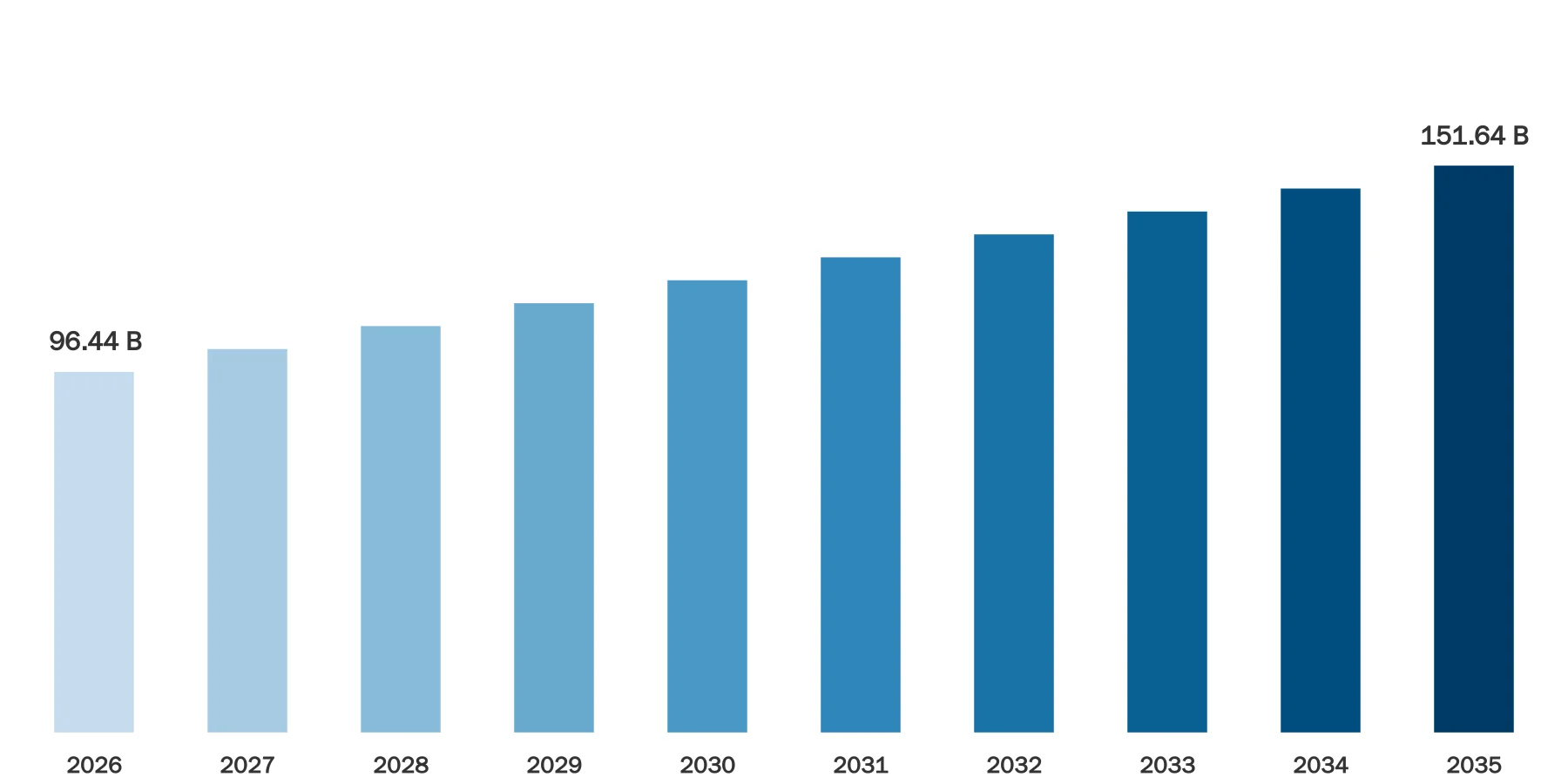
Source: Econ Market Research
Aircraft MRO includes wide range of services, including regular maintenance checks, component repairs, and major overhauls, all aimed at keeping aircraft in optimal condition. The market is driven by the continual need for airlines and aircraft operators to comply with strict safety regulations, maintain high levels of operational reliability, and extend the lifespan of their fleets. With the global aviation industry experiencing growth and technological advancements, the demand for MRO services is expected to increase significantly in the coming years.
The Aircraft MRO (Maintenance, Repair, and Overhaul) market has several major participants, including companies that offer maintenance services (MRO service providers), manufacturers of aircraft (OEMs), and independent maintenance providers. The growth of air fleets, aging aircraft, and the use of new technologies (like predictive maintenance and digitalization) are changing the market landscape, creating opportunities for expansion and innovation. However, there are also challenges to consider, such as rising costs of operation, a shortage of skilled workers, and complex regulations.
Aircraft MRO Dynamics
As air travel surges, global airlines are expanding their aircraft fleets, fuelling the need for Maintenance, Repair, and Overhaul (MRO) services to maintain and repair these growing fleets. Technological innovations, like predictive maintenance and digitalization, are transforming the MRO industry, allowing for more efficient and cost-effective maintenance techniques.
The increasing complexity of aircraft systems requires specialized skills, driving up the demand for qualified labor in the MRO sector. Stringent regulations imposed by aviation authorities mandate compliance with safety standards and maintenance protocols, further increasing the demand for MRO services to ensure aircraft safety and airworthiness.
Furthermore, the trend towards outsourcing maintenance activities to third-party service providers is gaining traction among airlines seeking to reduce costs and focus on their core operations. However, challenges such as fluctuating fuel prices, geopolitical tensions, and the impact of global events like the COVID-19 pandemic can disrupt airline operations and influence MRO spending patterns.
Aircraft MRO Drivers
Growing Global Fleet Size
As the world',s appetite for air travel grows, airlines are buying more planes. This, in turn, creates a greater need for aircraft maintenance, repair, and overhaul (MRO) services. This trend is especially noticeable in developing countries, where more people can afford to fly and cities are expanding, leading to increased air travel demand. This means more potential customers for MRO companies. Also, as new planes come out with cutting-edge technology, they need special maintenance skills, which further increases the demand for MRO services.
Technological Advancements
Technological innovations are reshaping the landscape of the aircraft MRO market, offering opportunities for improved efficiency and cost-effectiveness. Advancements such as predictive maintenance, Augmented Reality, and digitalization enable MRO providers to anticipate and address maintenance issues before they lead to operational disruptions.
Predictive maintenance, for example, uses Data Analytics and sensors to monitor aircraft components in real-time, allowing for proactive maintenance scheduling and reducing downtime. Augmented reality applications facilitate remote troubleshooting and training, enhancing the effectiveness of MRO operations. Furthermore, digitalization streamlines processes such as inventory management and work order tracking, improving overall operational efficiency.
Restraints:
Skilled Labor Shortages
Aircraft maintenance and repair (MRO) companies struggle to find enough skilled workers, especially technicians and engineers with specialized knowledge. As the need for MRO services grows, the industry needs more qualified people to do maintenance work well. However, there is a shortage of skilled workers in the industry because of things like an aging workforce, a lack of training programs, and competition from other businesses. This shortage not only makes it harder for MRO companies to meet growing demand, but it also drives up labor costs and could lead to quality problems if maintenance tasks are not performed by properly trained staff.
Regulatory Complexity
The aircraft MRO market is subject to stringent regulatory requirements imposed by aviation authorities worldwide. Compliance with safety standards and maintenance regulations is essential to ensure the airworthiness of aircraft and the safety of passengers and crew. However, navigating the complex regulatory landscape can pose challenges for MRO providers, particularly smaller companies or those operating in multiple jurisdictions.
Compliance costs, administrative burdens, and the need for continuous monitoring of regulatory changes add complexity to MRO operations and can constrain market growth. Additionally, regulatory uncertainties or changes in requirements may impact MRO planning and investment decisions, leading to disruptions or delays in service delivery.
Opportunities:
Adoption of New Technologies
Modern aircraft maintenance (MRO) welcomes substantial growth and innovation due to the integration of advanced technologies. These technologies, including predictive maintenance, data analytics, and Artificial Intelligence, empower MRO teams to make informed decisions based on data rather than reactive approaches. Predictive maintenance, for instance, leverages data analysis and machine learning to anticipate equipment failures and streamline maintenance schedules, minimizing aircraft downtime and enhancing reliability.
Similarly, the integration of artificial intelligence and automation technologies can streamline MRO processes, enhance productivity, and reduce labor costs. MRO providers that invest in research and development to develop and deploy innovative technologies stand to gain a competitive advantage in the market, attract new customers, and unlock new revenue streams.
Segment Overview
By Service Type
The market is categorized into several service types, including engine overhaul, airframe maintenance, line maintenance, modification, and components. Engine overhaul involves the comprehensive inspection, repair, and refurbishment of aircraft engines to ensure optimal performance and longevity. Airframe maintenance encompasses a range of structural repairs, inspections, and upgrades to the aircraft',s frame and fuselage.
Line maintenance involves routine checks and minor repairs performed on aircraft between flights to maintain airworthiness and operational readiness. Modification services entail the installation of new components or systems to enhance aircraft performance, efficiency, or compliance with regulatory requirements. Components services involve the repair, overhaul, and replacement of individual aircraft components such as landing gear, avionics, and hydraulic systems.
By Organization Type
The market is segmented into airline/operator MRO, independent MRO, and original equipment manufacturer (OEM) MRO. Airline/operator MRO refers to maintenance operations conducted in-house by airlines or aircraft operators to service their own fleets. Independent MRO providers offer maintenance services to multiple airline clients on a contract basis, specializing in specific aircraft types or services. OEM MRO involves maintenance services provided by the original equipment manufacturers of aircraft or components, leveraging their expertise and proprietary knowledge to ensure the quality and reliability of maintenance activities.
By Aircraft Type
The market is segmented into narrow-body, wide-body, regional jet, and others. Narrow-body aircraft typically have a single aisle and are designed for short to medium-haul flights, serving as workhorses for airlines operating domestic and regional routes. Wide-body aircraft feature multiple aisles and larger passenger capacities, catering to long-haul international travel and cargo operations. Regional jets are smaller aircraft designed for short-haul regional flights, often serving smaller airports with limited runway infrastructure.
Aircraft MRO Overview by Region
North America dominates the market, driven by a large fleet size, the presence of major MRO service providers, and robust regulatory standards. Europe follows closely, supported by a strong aerospace industry, extensive network of MRO facilities, and emphasis on innovation and sustainability. Asia-Pacific emerges as a key growth region, fuelled by rising air travel demand, increasing fleet modernization efforts, and investments in MRO infrastructure.
The Middle East and Africa region exhibits steady growth, driven by expanding aviation hubs, government initiatives to develop aerospace industries, and growing partnerships with international MRO players. Latin America presents opportunities for market expansion, buoyed by improving economic conditions, infrastructure investments, and efforts to enhance regional connectivity.
Aircraft MRO Market Competitive Landscape
Major MRO service providers such as Lufthansa Technik, ST Engineering, and AAR Corp dominate the market with extensive capabilities, global presence, and comprehensive service offerings covering all aspects of aircraft maintenance. OEMs like Boeing and Airbus also play a significant role in the MRO market, providing aftermarket support for their aircraft through proprietary service networks and partnerships with third-party MRO providers.
Independent MRO companies, ranging from large international players to smaller regional specialists, compete based on factors such as cost-effectiveness, technical expertise, customer service, and specialization in specific aircraft types or services. The competitive landscape is further shaped by factors such as technological innovation, regulatory compliance, strategic alliances, and mergers and acquisitions.
Aircraft MRO Market Leading Companies:
GE Aerospace
Rolls-Royce plc
Safran Group
Pratt &, Whitney (RTX Corporation)
Lufthansa Technik AG
Delta TechOps
AAR Corporation
ST Engineering
Honeywell Aerospace
Collins Aerospace
MTU Aero Engines AG
Aircraft MRO Recent Developments
Jan 2024, Thales, a prominent player in the defence sector, announced its intention to leverage its reliable high-tech expertise in India. The company aims to establish an avionics Maintenance, Repair, and Overhaul (MRO) facility in Delhi, with the goal of delivering top-notch services to its aviation clientele.
June 2023, During the International Paris Air Show (SIAE), Capgemini and Amazon Web Services (AWS) unveiled the introduction of Lifecycle Optimization for Aerospace. This initiative is geared towards expediting the integration of circular economy principles within the aviation sector by automating inspection procedures, enhancing lifecycle analysis of aircraft components, and providing guidance for decisions aimed at prolonging their operational lifespan.
Aircraft MRO Report Segmentation
Aircraft MRO Market Report Scope & Segmentation
| Attributes | Details |
|---|---|
Market Size (Current) | US$ 96.44 Billion in 2026 |
Market Size (Forecast) | US$ 151.64 Billion in 2035 |
Growth Rate | CAGR of 5.1% from 2026 to 2035 |
Forecast Period | 2026 – 2035 |
Base Year | 2025 |
Historical Data Available | Yes |
Regional Scope | Global |
Segments Covered | By MRO Type
By Aircraft Type
By End-User
|
Frequently Asked Questions
Common questions about this report
The study period covers historical insights and forecast projections for the period 2026-2035.
About the Author
Market research expert with years of industry experience

Dipali Bhingare serves as the Market Research Director at Econ Market Research. With a focus on translating complex global economic shifts into actionable business intelligence, she oversees the strategic direction of comprehensive market studies. Her work empowers organizations to navigate volatile industries through data-driven forecasting and deep-dive competitive analysis.
Related Reports
Explore more market insights from the same category