

AI Training Dataset Market
AI Training Dataset Market Size, Share, Trends, Growth, and Industry Analysis, By Type (Text, Image/Video, Audio), By Vertical (IT andamp; Telecommunications, Healthcare, Automotive, BFSI, Retail andamp; E-commerce, Government), Regional Analysis and Forecast Period 2026-2035
AI Training Dataset Market Overview
As per Econ Market Research analysis, the Global AI Training Dataset Market was recorded at US$ 7.48 Billion in 2026 and is projected to expand to US$ 52.41 Billion by 2035, registering a CAGR of 24.16% over the forecast period. The base year used is 2025.
AI Training Dataset Market Size 2025-2035 (USD Billion)

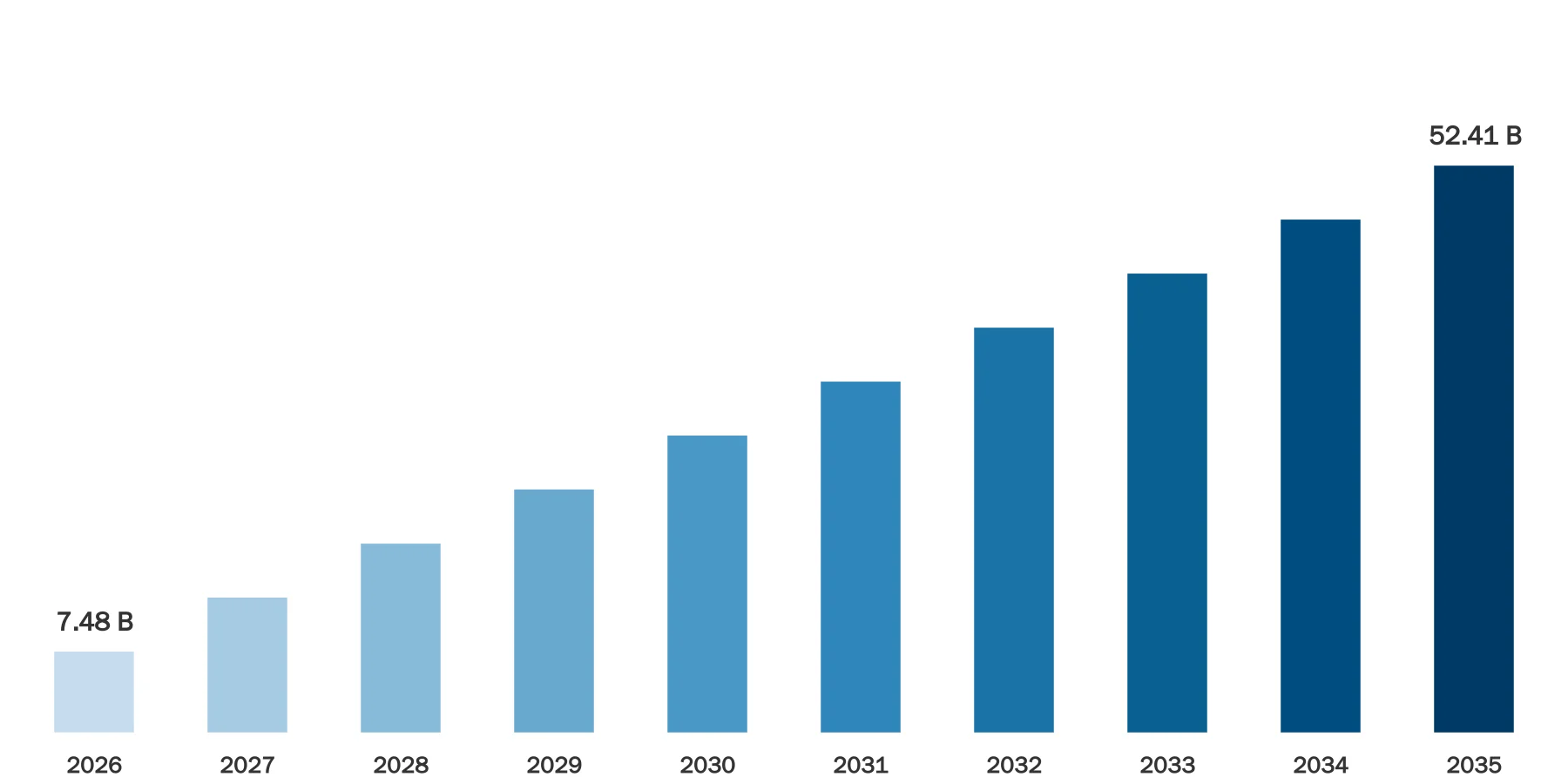
Source: Econ Market Research
AI training datasets are like the building blocks for AI systems. They help AI algorithms learn things like recognizing images, understanding language, and making predictions. As AI becomes more common in different areas like healthcare, finance, and retail, the need for good training datasets is also growing. This is because good datasets lead to better AI models, which can solve real-world problems more effectively.
In recent years, the Global AI Training Dataset Market has experienced significant growth, fuelled by the rapid advancement of AI technologies and the increasing adoption of AI solutions across industries. Organizations are increasingly recognizing the importance of high-quality training data in developing robust AI models that can deliver meaningful insights and drive business value. This has led to a surge in the availability of diverse and specialized datasets catering to specific use cases and applications.
Key players in the market include data providers, AI companies, research institutions, and technology giants, all of whom play crucial roles in curating, refining, and distributing training datasets. Additionally, the market is characterized by collaborations and partnerships between stakeholders to leverage their respective expertise and resources in addressing the growing demand for training data.
AI Training Dataset Dynamics
One of the key drivers is the increasing adoption of AI technologies across industries, leading to a growing demand for high-quality training data to develop and improve AI models. Additionally, advancements in AI algorithms and techniques, such as deep learning and reinforcement learning, are driving the need for larger and more diverse datasets to train complex models effectively.
Moreover, the proliferation of connected devices and the Internet of Things (IoT) is generating vast amounts of data, which can be leveraged to create valuable training datasets for AI applications. This influx of data from sources like sensors, mobile devices, and social media platforms presents opportunities for data providers and AI companies to capitalize on the growing market demand.
Despite the promise of AI, it faces obstacles like data privacy worries, biases in the information used to train AI models, and the need to label and annotate data. These challenges can limit the availability and quality of training data, which affects the creation and performance of AI models. To deal with these challenges, it',s important for businesses and organizations to work together to create solid data management frameworks, ensure clear data practices, and include ethical concerns in the development of AI.
AI Training Dataset Drivers
Rapid Advancements in AI Technologies
The increasing capabilities of AI, driven by advancements in techniques like deep learning and natural language processing, are creating a growing demand for high-quality training data. AI algorithms now handle increasingly complex tasks, requiring varied and specialized datasets for effective training. Additionally, evolving AI methods like transfer learning and federated learning necessitate datasets that encompass diverse scenarios and fields to optimize performance. This creates opportunities for data providers and AI companies to develop and offer curated datasets tailored to specific use cases and applications, thereby driving growth in the AI training dataset market.
Growing Adoption of AI Across Industries
The rise of AI in industries like healthcare, finance, retail, and cars has made training datasets a must-have. Businesses are using AI more and more to automate operations, make better decisions, and get useful information from huge amounts of data. So, there is a greater need for good training data to build AI models that can handle industry-specific problems and tasks. This trend is further accelerated by the emergence of new AI applications and use cases, such as predictive maintenance, personalized medicine, and Autonomous Vehicles, which require specialized datasets to train AI algorithms accurately.
Restraints:
Data Privacy Concerns
Data privacy concerns are a key barrier to market growth for AI training datasets. As data collection and processing become more common, so does concern about data privacy and security. Organizations must follow strict laws like the General Data Protection Regulation (GDPR) in Europe and the California Consumer Privacy Act (CCPA) in the United States, which control how personal data is collected, stored, and used. These regulations can restrict access to valuable datasets, limit data sharing and collaboration, and increase the cost and complexity of compliance, thereby hindering the availability and quality of training data for AI development.
Bias and Fairness in Datasets
AI training dataset quality is limited by biases and fairness issues. Datasets often reflect existing societal biases, leading to AI models that perpetuate unfairness and discrimination. These biases can stem from unbalanced data, incorrect labeling, or built-in preferences within algorithms. To overcome these issues, it is essential to carefully select and curate data, ensure diverse representation, and conduct thorough testing and validation. This helps identify and reduce biases, resulting in more accurate and fair AI models. However, achieving fairness and equity in datasets remains a complex and ongoing challenge, requiring collaboration between data scientists, domain experts, and ethicists to develop unbiased AI models that promote fairness, transparency, and accountability.
Opportunities:
Expansion of IoT and Connected Devices
The proliferation of Internet of Things (IoT) devices and connected sensors is generating vast amounts of data, which can be leveraged to create valuable training datasets for AI applications. IoT devices collect data from various sources, such as environmental sensors, wearable devices, and industrial equipment, providing real-time insights into physical environments and processes. This influx of data presents opportunities for data providers and AI companies to capitalize on the growing market demand for IoT-generated datasets. By curating and analysing IoT data, stakeholders can develop specialized datasets for predictive maintenance, smart city solutions, and Industrial Automation, among other applications, driving growth in the AI training dataset market.
Segment Overview
By Type
The AI training dataset market is categorized into three main segments based on the type of data: text, image/video, and audio. Text datasets include textual information such as documents, articles, and social media posts, which are used for natural language processing tasks like sentiment analysis, chatbots, and language translation. Image and video datasets comprise visual data such as photos, videos, and satellite imagery, which are essential for computer vision applications like object detection, facial recognition, and autonomous vehicles. Audio datasets consist of sound recordings, speech samples, and audio files, which are utilized for speech recognition, voice assistants, and audio analysis tasks. Each type of dataset plays a critical role in training AI models across a wide range of applications, driving innovation and advancements in AI technology.
By End-Use
The AI training dataset market is segmented by end-use industries, encompassing IT, automotive, government, healthcare, BFSI (banking, financial services, and insurance), retail &, e-commerce, and others. In the IT sector, training datasets are utilized for developing AI-powered software, applications, and platforms, enabling tasks such as data analysis, recommendation systems, and virtual assistants.
The automotive industry leverages training datasets for developing autonomous driving systems, driver assistance technologies, and vehicle diagnostics, enhancing safety and efficiency on the roads. Government agencies utilize training datasets for various applications, including public safety, urban planning, and disaster response, leveraging AI technologies to improve citizen services and governance.
In the healthcare sector, training datasets are used for medical imaging analysis, disease diagnosis, drug discovery, and personalized medicine, contributing to advancements in healthcare delivery and patient outcomes. BFSI organizations employ training datasets for fraud detection, risk assessment, customer service automation, and algorithmic trading, enhancing operational efficiency and decision-making in financial services. Retail &, e-commerce companies utilize training datasets for customer behaviour analysis, inventory management, demand forecasting, and personalized marketing, driving customer engagement and sales.
AI Training Dataset Overview by Region
North America leads the AI market, primarily due to the strong presence of tech giants, AI companies, and research institutions in the United States. Advanced infrastructure, cutting-edge technologies, and supportive government policies drive innovation and development in the region. Europe is another major market, fuelled by significant investments in AI, strict data protection laws, and widespread adoption across various industries.
The Asia Pacific region is experiencing rapid growth, fuelled by emerging economies like China, India, and Japan investing heavily in AI infrastructure, talent development, and innovation ecosystems. Additionally, government initiatives, rising tech start-ups, and a burgeoning digital economy contribute to the market expansion in the region. Latin America and the Middle East &, Africa regions are witnessing increasing adoption of AI technologies, albeit at a slower pace compared to other regions. Factors such as growing awareness, improving infrastructure, and strategic partnerships with global players are driving market growth in these regions. However, challenges related to data privacy, infrastructure limitations, and talent shortages remain significant barriers to widespread adoption.
AI Training Dataset Market Competitive Landscape
Established players such as Google, Microsoft, IBM, Amazon, and Facebook dominate the market with their vast resources, proprietary datasets, and advanced AI capabilities. These companies offer comprehensive AI solutions, cloud platforms, and AI-as-a-service offerings, leveraging their extensive datasets and AI algorithms to address diverse industry needs. Additionally, niche players and start-ups are emerging, specializing in specific verticals, applications, or types of training data. These players often focus on data curation, labeling, and annotation services, catering to niche markets or addressing specific challenges such as bias mitigation or data privacy.
Collaboration and partnerships between industry stakeholders are prevalent, with companies forming strategic alliances to enhance their dataset offerings, expand market reach, and accelerate AI innovation. Moreover, mergers and acquisitions are common in the market as companies seek to consolidate their positions, acquire specialized expertise, and gain access to proprietary datasets and technologies.
AI Training Dataset Market Leading Companies:
Amazon Web Services (AWS)
Appen Limited
Cogito Tech LLC
Deep Vision Data
Samasource Inc.
Google LLC
Alegion Inc.
Clickworker GmbH
TELUS International
Scale AI Inc.
Microsoft Corporation
AI Training Dataset Recent Developments
Jan 2024, The National Artificial Intelligence Research Resource (NAIRR) pilot, initiated by the U.S. National Science Foundation and its partners, marks the initial phase toward establishing a shared research infrastructure. This endeavour aims to enhance accessibility to essential resources, fostering responsible AI exploration and advancement while promoting inclusivity.
AI Training Dataset Report Segmentation
AI Training Dataset Market Report Scope & Segmentation
| Attributes | Details |
|---|---|
Market Size (Current) | US$ 7.48 Billion in 2026 |
Market Size (Forecast) | US$ 52.41 Billion in 2035 |
Growth Rate | CAGR of 24.16% from 2026 to 2035 |
Forecast Period | 2026 – 2035 |
Base Year | 2025 |
Historical Data Available | Yes |
Regional Scope | Global |
Segments Covered | By Type
By Vertical
|
Frequently Asked Questions
Common questions about this report
The study period covers historical insights and forecast projections for the period 2026-2035.
About the Author
Market research expert with years of industry experience

Related Reports
Explore more market insights from the same category