

Agricultural Robots Market
Agricultural Robots Market Size, Share, Trends, Growth, and Industry Analysis, By Type (Unmanned Aerial Vehicles (UAVs)/Drones, Milking Robots, Driverless Tractors, Automated Harvesting Systems, Others), By Application (Harvest Management, Field Farming, Dairy Management, Soil Management, Irrigation Management, Others), By Offering (Hardware, Software, Services), Regional Analysis and Forecast Period 2026-2035
Agricultural Robots Market Overview
As per Econ Market Research analysis, the Global Agricultural Robots Market generated revenue of US$ 22.9 Billion in 2026 and is forecast to achieve US$ 123.4 Billion by 2035, at a CAGR of 23.4% during the study period 2026–2035. The base year considered is 2025.
Agricultural Robots Market Size 2025-2035 (USD Billion)

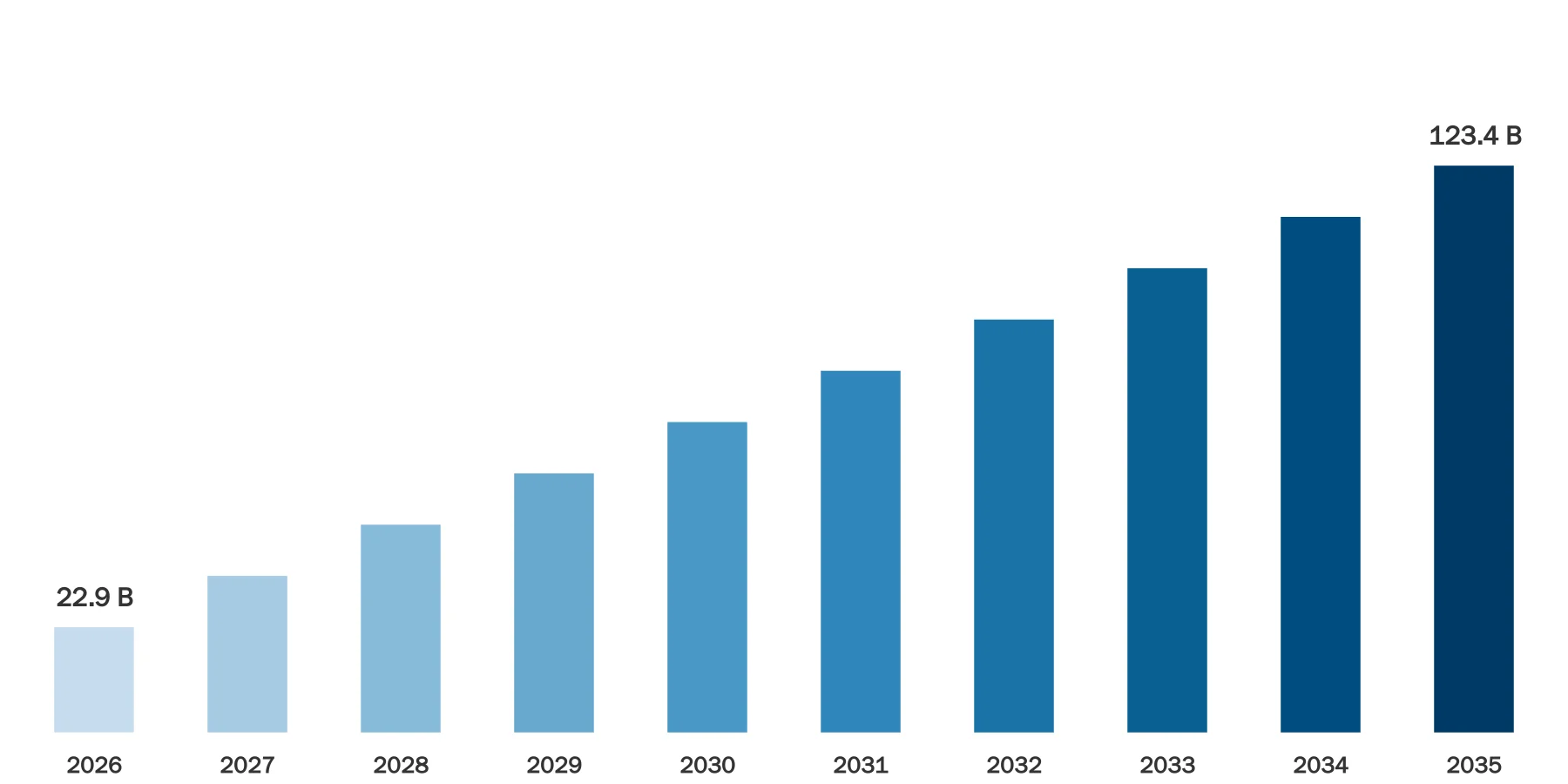
Source: Econ Market Research
A new era of efficiency and sustainability has begun in the agriculture sector as a result of the adoption of agricultural robots. These robots, which are equipped with cutting-edge technologies, have revolutionized conventional agricultural methods and provide a number of advantages for both farmers and the environment. Agri-bots, often known as agricultural robots, are mechanized devices created to carry out various farming-related duties. These robots greatly improve the accuracy and productivity of agricultural activities, from planting and growing to harvesting and monitoring. With this technology, the sector can handle pressing issues including shortages of labor, escalating operating costs, and the demand for environmentally friendly practices.
Furthermore, agricultural robots contribute to the concept of ",precision agriculture.", By collecting real-time data on soil conditions, weather patterns, and crop health, these robots enable farmers to make informed decisions, resulting in optimal resource allocation and increased yield. This data-driven approach enhances overall efficiency while reducing the need for excessive chemical usage, leading to more sustainable farming practices.
The agricultural robots market represents a transformative leap forward for the agriculture industry. By combining cutting-edge technology with traditional farming practices, these robots are redefining how we cultivate, manage, and harvest crops. With their potential to enhance efficiency, productivity, and sustainability, agricultural robots are poised to play a pivotal role in shaping the future of food production.
Agricultural Robots Market Dynamics
Advancements in technology, including AI, machine learning, and sensor technology, have enabled the development of sophisticated robots capable of performing complex tasks with precision. This has spurred innovation and attracted investments from both traditional agribusinesses and tech companies. The persistent global challenges of population growth and food security are pushing for increased agricultural productivity. Agricultural robots offer precision and automation, addressing labor shortages and enhancing yield potential. Also, the rising awareness of sustainability and environmental concerns is prompting a shift towards more efficient and eco-friendly farming practices.
Agricultural robots enable the targeted application of resources, reducing waste and chemical usage. Moreover, government initiatives and subsidies aimed at modernizing agriculture further propel the adoption of agricultural robots. However, challenges like high initial costs, regulatory hurdles, and the need for farmer training remain. Competitive dynamics also play a role as companies vie to establish their market presence, resulting in rapid technological advancements and diverse robot offerings.
Agricultural Robots Market Drivers
Enhanced Productivity and Precision
The enhanced productivity and precision offered by agricultural robots constitute a key driver in the agricultural robots market. These robots are revolutionizing traditional farming methods by leveraging advanced technologies to accomplish tasks with unprecedented accuracy and efficiency. By automating various agricultural operations such as planting, seeding, and harvesting, agricultural robots mitigate the risk of human error and significantly expedite processes. Their exact navigation and application capabilities ensure uniform distribution of seeds, fertilizers, and other inputs, leading to optimal crop growth and yield. Moreover, these robots can operate tirelessly and consistently, minimizing downtime and maximizing output.
Labor Shortages and Workforce Transformation
Agricultural robots reduce reliance on manual labor by seamlessly executing various tasks autonomously or under remote control. This not only alleviates the strain caused by labor shortages but also empowers farmers to optimize their workforce by redirecting human efforts towards more strategic and managerial roles. Farmers can focus on decision-making, data analysis, and overseeing multiple robotic systems, thereby increasing operational efficiency. Furthermore, the integration of agricultural robots complements the changing demographic landscape, where younger generations with digital literacy and technological skills are entering the agricultural sector. These individuals can harness the potential of robotic technologies, ushering in a new era of farming that is both technologically advanced and appealing to the modern workforce.
Restraints:
One of the significant restraints affecting the agricultural robots market is the high upfront investment required for purchasing and implementing robotic systems. The costs associated with acquiring advanced robotics technology, sensors, navigation systems, and other necessary components can be substantial. This financial barrier poses a challenge for smaller or resource-limited farmers who may find it difficult to justify the initial expenditure, even though the long-term benefits may be significant.
Limited Adaptability to Diverse Farming Environments
Agricultural robots often need to operate in diverse and challenging farming environments, ranging from large open fields to densely planted orchards. Designing robots that can effectively navigate and perform tasks in various terrains, weather conditions, and crop types remains a significant technical challenge. The lack of adaptability to specific farming scenarios may limit the versatility and applicability of robotic systems, constraining their adoption in certain regions or industries.
Opportunities:
Rise of Data-Driven Farming
The digital transformation of agriculture presents an opportunity for agricultural robots to play a pivotal role in data-driven farming. These robots are equipped with sensors and AI capabilities that collect and analyze real-time data from fields. This data-driven approach enables farmers to make informed decisions about planting, irrigation, pest control, and more. As the agricultural sector increasingly embraces Data Analytics, agricultural robots can serve as valuable tools for optimizing production and resource management.
Customization and Adaptability
The opportunity for customization and adaptability in the agricultural robots market represents a transformative shift towards more efficient and specialized farming practices. Agricultural robots equipped with advanced technologies, such as AI and machine learning, can be programmed and configured to perform specific tasks tailored to the requirements of different crops. Furthermore, the adaptability of agricultural robots enables their integration into specialized and niche markets. With the ability to fine-tune robotic systems, farmers can tap into these markets and diversify their agricultural production, potentially leading to increased profitability.
Segment Overview
By Type
Based on type, the global agricultural robots market is categorized into driverless tractors, unmanned aerial vehicles (UAVs), milking robots, automated harvest robots, material management, and others. The automated harvest robots category dominates the agricultural robots market with the largest revenue share. The dominance of the automated harvest robots category in the agricultural robots market reflects a significant shift in modern farming practices towards increased efficiency and productivity. These specialized robots are designed to perform the critical task of harvesting crops with precision, speed, and reduced reliance on manual labor.
Automated harvest robots offer several key advantages that contribute to their market dominance. They address the longstanding issue of labor shortages in agriculture. Automated harvest robots improve overall operational efficiency. They can work tirelessly for extended periods, allowing farmers to harvest crops faster and more consistently than traditional manual methods. As technology continues to advance and these robots become more sophisticated and affordable, their dominance is likely to persist, shaping the future of crop harvesting and agricultural productivity.
By Farming Environment
Based on the farming environment, the global agricultural robots market is divided into indoor and outdoor. The outdoor category leads the global market with the largest revenue share. Outdoor agricultural robots are tailored for open-field farming environments, where they can navigate diverse terrains and changing weather conditions. These robots are capable of performing tasks like soil preparation, planting, irrigation, fertilization, pest management, and harvesting in large-scale outdoor settings. Outdoor robots often utilize GPS, sensors, and rugged design to navigate, monitor, and interact with crops. Where, Indoor agricultural robots are primarily designed to operate within controlled environments such as greenhouses, vertical farms, and indoor hydroponic systems. They can handle activities like planting, seeding, transplanting, and tending to crops in soilless systems.
By Application
Based on application, the global agricultural robots market is segmented into dairy management, irrigation management, harvest management, soil management, inventory management, and others. The soil management segment dominates the agricultural robots market. Soil management is a fundamental aspect of modern agriculture, and agricultural robots are driving transformative changes in this domain.
Agricultural robots specializing in soil management have reshaped traditional cultivation methods by leveraging cutting-edge technology to enhance soil health and optimize crop production. These robots offer precision and efficiency in various soil-related tasks, including precise nutrient application, seed planting, and weed management. By utilizing advanced sensors and data analytics, these robots can assess soil conditions in real-time and tailor their actions accordingly. This level of precision minimizes resource wastage, reduces the need for Agrochemicals, and ensures crops receive optimal care.
Agricultural Robots Market Overview by Region
The global agricultural robots market is categorized into North America, Europe, Asia-Pacific, and the Rest of the World. Asia Pacific emerged as the leading region, capturing the largest market share. Asia Pacific is home to some of the world',s most populous and agriculturally significant countries, such as China, India, and Japan. The pressing need to feed growing populations has spurred a proactive approach to embracing technological innovation, making agricultural robots a compelling solution to address labor shortages and increase productivity.
The robust technology and manufacturing ecosystem in the Asia Pacific fosters innovation and cost-effective production of agricultural robots. This enables local companies to develop and deploy cutting-edge robotic solutions that cater to the unique needs of regional farmers. Also, government support and initiatives aimed at modernizing agriculture also play a role in Asia Pacific',s leadership. Subsidies, research funding, and policy frameworks encouraging the adoption of technology in farming provide a conducive environment for agricultural robot deployment.
Agricultural Robots Market Competitive Landscape
In the global agricultural robots market, a few major players exert significant market dominance and have established a strong regional presence. These leading companies remain committed to continuous research and development endeavors and actively engage in strategic growth initiatives, including product development, launches, joint ventures, and partnerships. By pursuing these strategies, these companies aim to strengthen their market position, expand their customer base, and capture a substantial share of the market.
Key Players
Clearpath Robotics Inc.
AgEagle Aerial Systems Inc.
Trimble Inc.
Deere & Company
AgJunction
DeLaval
Abundant Robots
Grownetics, Inc.
Aurora s.r.l.
Gamaya
Yanmar Holdings Co., Ltd.
Kubota Agricultural Machinery India Pvt. Ltd.
AGCO Corporation
Harvest Automation
Harvest CROO Robotics LLC
Agricultural Robots Market Recent Developments
In February 2022, Verdant Robotics Delivers its First Multi-Action Autonomous Farm Robot for Specialty Crops. Verdant Robotics has announced the extension of its robot-as-a-service (RaaS) model to enable access for additional speciality crop growers to answer farmers', desires for more profitable and sustainable growing practices.
In February 2022, Naio Technologies launches new Orio agriculture robot at World Ag Expo 2022. According to Ingrid Sarlandie, COO of Naio Technologies, ",The Orio is a sustainable alternative to using herbicides that respects soils, enhances working conditions, and collects data for smart farming. By merging cutting-edge robots and AI technologies, Orio provides a sustainable, useful, and smart agricultural solution.
Agricultural Robots Market Report Scope & Segmentation
| Attributes | Details |
|---|---|
Market Size (Current) | US$ 22.9 Billion in 2026 |
Market Size (Forecast) | US$ 123.4 Billion in 2035 |
Growth Rate | CAGR of 23.4% from 2026 to 2035 |
Forecast Period | 2026 – 2035 |
Base Year | 2025 |
Historical Data Available | Yes |
Regional Scope | Global |
Segments Covered | By Type
By Application
By Offering
|
Frequently Asked Questions
Common questions about this report
The study period covers historical insights and forecast projections for the period 2026-2035.
About the Author
Market research expert with years of industry experience

Dipali Bhingare serves as the Market Research Director at Econ Market Research. With a focus on translating complex global economic shifts into actionable business intelligence, she oversees the strategic direction of comprehensive market studies. Her work empowers organizations to navigate volatile industries through data-driven forecasting and deep-dive competitive analysis.
Related Reports
Explore more market insights from the same category