Aerospace Raw Materials Market Overview
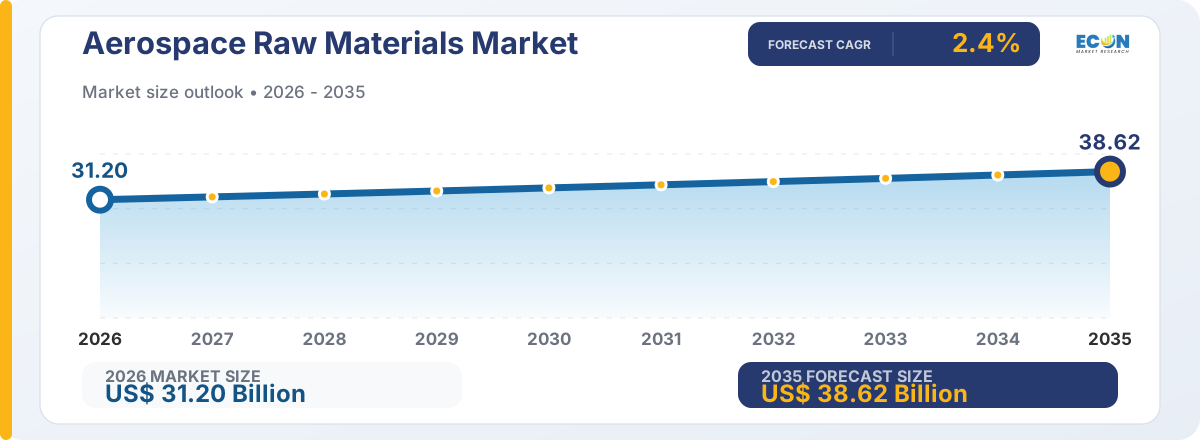
As per Econ Market Research analysis, the Global Aerospace Raw Materials Market reached a valuation of US$ 31.2 Billion in 2026 and is anticipated to grow to US$ 38.62 Billion by 2035, at a CAGR of 2.4% during the forecast timeline 2026–2035. The base year considered is 2025.
The Aerospace Raw Materials Market is driven by the global production of over 1,800 commercial aircraft annually as of 2024, with more than 60% of structural components requiring High Performance Alloys and composites. Approximately 75% of modern aircraft structures incorporate aluminum alloys, while composites account for nearly 50% of weight in next-generation aircraft such as wide-body jets. Titanium usage has increased by 30% over the last decade due to its high strength-to-weight ratio. The aerospace sector consumes over 8 million metric tons of raw materials annually, including steel, superalloys, and advanced composites, making Aerospace Raw Materials Market Analysis critical for supply chain planning.
The USA Aerospace Raw Materials Market accounts for nearly 40% of global aircraft production, with over 700 aircraft delivered annually by domestic manufacturers. The country consumes more than 3 million metric tons of aerospace-grade aluminum and 500,000 metric tons of titanium annually. Approximately 65% of defense aircraft programs rely on domestically sourced materials, while 35% depend on imports. The USA hosts over 2,000 aerospace manufacturing facilities, contributing to high demand for composites, which represent nearly 45% of materials used in advanced fighter jets. Aerospace Raw Materials Market Research Report data shows steady demand from both commercial and defense sectors.
Market Latest Trends
The Aerospace Raw Materials Market Trends highlight increasing adoption of Carbon Fiber Composites, which now account for nearly 50% of structural weight in advanced aircraft models. Demand for titanium alloys has grown by 25% due to their corrosion resistance and high temperature tolerance up to 600°C. Additive Manufacturing is gaining traction, with over 20% of aerospace manufacturers integrating 3D printing for raw material optimization and waste reduction of up to 30%.
Recycling initiatives are expanding, with nearly 35% of aluminum used in aerospace now sourced from recycled materials. Digital supply chain systems are implemented by over 60% of aerospace OEMs to track raw material usage and reduce procurement delays by 15%. Aerospace Raw Materials Market Insights also indicate increased use of hybrid materials combining composites and metals, improving fuel efficiency by 10–15%. The shift toward sustainable aviation fuels indirectly boosts demand for lightweight materials, reducing aircraft weight by up to 20%.
Market Dynamics
The Aerospace Raw Materials Market Analysis shows strong dependency on aircraft production rates, which exceeded 1,800 units globally in 2024. Material demand fluctuates based on defense budgets, with over 25 countries increasing military aircraft procurement by 10–20 units annually. Supply chain disruptions affect nearly 30% of raw material deliveries, particularly titanium and composites. Aerospace Raw Materials Market Outlook indicates increasing reliance on high-performance materials capable of withstanding temperatures above 1,000°C in engine components.
DRIVER
Increasing Demand for Lightweight Aircraft Materials
The primary driver in the Aerospace Raw Materials Market Growth is the increasing demand for lightweight materials, reducing aircraft weight by up to 20%. Aluminum alloys still dominate with a 70% usage rate in traditional aircraft, but composites now account for nearly 50% in advanced aircraft structures. Fuel efficiency improvements of 15–25% are achieved through weight reduction, directly influencing material selection. Over 80% of new aircraft programs prioritize lightweight materials, while titanium usage has increased by 30% in structural and engine components. Aerospace Raw Materials Market Opportunities are expanding due to growing aircraft fleets exceeding 28,000 active commercial planes globally.
RESTRAINT
Volatility in Raw Material Supply Chains
The Aerospace Raw Materials Market faces restraints due to supply chain volatility, with nearly 35% of manufacturers reporting delays in material procurement. Titanium supply is heavily concentrated, with over 60% sourced from limited global regions, creating dependency risks. Aluminum price fluctuations impact production costs by up to 20%, while composite material production requires complex processes involving over 5 stages, increasing lead times by 25%. Aerospace Raw Materials Industry Analysis highlights that geopolitical factors disrupt nearly 15% of raw material shipments annually, affecting manufacturing timelines.
OPPORTUNITY
Growth in Defense and Space Programs
The Aerospace Raw Materials Market Opportunities are expanding due to rising defense and space exploration programs, with over 50 countries increasing defense budgets by 5–10% annually. Spacecraft production requires materials capable of withstanding temperatures exceeding 1,500°C, boosting demand for superalloys and advanced composites. Satellite launches surpassed 2,000 annually, increasing demand for lightweight materials by 18%. Aerospace Raw Materials Market Forecast data indicates increased usage of carbon composites in over 70% of space applications, while reusable launch vehicles require materials with durability exceeding 10 reentry cycles.
CHALLENGES
High Manufacturing and Processing Costs
The Aerospace Raw Materials Market faces challenges due to high manufacturing costs, with composite materials costing up to 3 times more than traditional aluminum alloys. Processing titanium requires temperatures above 1,600°C, increasing energy consumption by 25%. Quality control standards require defect rates below 0.01%, leading to rejection rates of nearly 5% in some manufacturing processes. Aerospace Raw Materials Market Insights reveal that certification processes can take 12–24 months, delaying product adoption. Additionally, over 40% of manufacturers report difficulties in scaling production of advanced materials due to complex fabrication requirements.
SWOT Analysis
Strengths
High material performance with strength-to-weight ratios improved by 30% compared to traditional metals
Composites reduce aircraft weight by up to 50% in certain structures
Titanium alloys withstand temperatures up to 600°C, increasing durability
Global demand supported by over 28,000 active commercial aircraft
Weaknesses
High production costs, with composites costing 200–300% more than aluminum
Limited supply sources for titanium, accounting for over 60% concentration
Complex manufacturing processes involving 5–7 stages
Recycling challenges for composites, with only 20% currently recyclable
Opportunities
Growing demand from over 2,000 annual satellite launches
Expansion of defense fleets by 10–15% globally
Adoption of additive manufacturing by over 20% of companies
Increasing use of sustainable materials, targeting 30% reduction in emissions
Threats
Supply chain disruptions affecting 30% of deliveries
Stringent certification timelines exceeding 18 months
Price volatility impacting material costs by 15–20%
Competition from alternative materials reducing aluminum usage by 10%
Segmentation Analysis
The Aerospace Raw Materials Market is segmented by material type, aircraft type, and application, with each segment contributing differently to overall material consumption. Aluminum alloys dominate with over 60% share, followed by composites at nearly 25%. Commercial aircraft account for over 55% of material demand, while aerostructures represent nearly 40% of total applications.
By Material Type
Aluminum alloys hold approximately 60–70% of the Aerospace Raw Materials Market Share due to their lightweight properties and cost efficiency. Titanium alloys account for nearly 15%, driven by their high strength and resistance to extreme temperatures up to 600°C. Steel alloys contribute around 10%, primarily used in landing gear and high-stress components. Superalloys represent about 5–8%, essential for engine components operating above 1,000°C. Composites, including carbon fiber, account for nearly 25% of modern aircraft materials, with usage increasing by 20% over the past decade. Aerospace Raw Materials Market Insights indicate that composite adoption reduces maintenance costs by up to 15%.
By Aircraft Type
Commercial aircraft dominate the Aerospace Raw Materials Market Size with over 55% share, driven by production exceeding 1,800 units annually. Military and defense aircraft account for approximately 25%, requiring advanced materials capable of withstanding extreme conditions. Business and general aviation contribute around 10%, with over 20,000 active aircraft globally. Helicopters and rotorcraft represent nearly 10%, with increasing demand for lightweight materials improving fuel efficiency by 10–12%. Aerospace Raw Materials Market Analysis shows that defense aircraft use up to 40% composites compared to 25% in commercial aircraft.
By Application
Aerostructures account for nearly 40% of material usage, including fuselage and wings requiring high-strength materials. Propulsion systems represent about 30%, with superalloys used in engines operating at temperatures exceeding 1,200°C. Cabin interiors contribute approximately 15%, focusing on lightweight and fire-resistant materials. Systems and equipment account for 15%, including avionics and landing gear components. Aerospace Raw Materials Market Trends indicate that engine materials must withstand pressures above 40 bar, increasing demand for advanced alloys.
Regional Analysis
The Aerospace Raw Materials Market shows strong regional variation, with North America leading at approximately 40% share, followed by Europe at 25%, Asia-Pacific at 20%, and Middle East & Africa at 15%.
North America
North America holds nearly 40% of the Aerospace Raw Materials Market Share
The region produces over 700 aircraft annually
Aluminum consumption exceeds 3 million metric tons per year
Titanium demand accounts for nearly 35% of global usage
North America dominates due to advanced manufacturing infrastructure and over 2,000 aerospace facilities. The region uses composites in nearly 45% of aircraft structures, with defense programs accounting for 30% of material demand. Over 60% of raw materials are sourced domestically, reducing supply chain risks. Aerospace Raw Materials Market Research Report indicates strong demand for superalloys in engine manufacturing, with usage increasing by 12% annually.
Europe
Europe accounts for approximately 25% of market share
Aircraft production exceeds 500 units annually
Composite usage reaches nearly 50% in advanced aircraft
Aluminum demand represents 2 million metric tons annually
Europe focuses heavily on sustainability, with over 35% of materials sourced from recycling processes. Aerospace Raw Materials Market Analysis highlights increased adoption of carbon fiber composites, improving fuel efficiency by 15%. The region invests in advanced manufacturing technologies, with over 25% of companies adopting additive manufacturing.
Asia-Pacific
Asia-Pacific holds around 20% market share
Aircraft fleet expected to exceed 10,000 units by 2030
Aluminum usage exceeds 2.5 million metric tons annually
Defense spending increased by 10% across major countries
Asia-Pacific is the fastest-growing region in aircraft demand, with over 300 new aircraft deliveries annually. Aerospace Raw Materials Market Growth is supported by expanding manufacturing capabilities, with China and India contributing over 50% of regional demand. Composite usage is increasing by 18%, while titanium demand grows by 12% annually.
Middle East & Africa
Region accounts for nearly 15% market share
Aircraft fleet exceeds 1,500 units
Aluminum demand reaches 1 million metric tons annually
Defense procurement increased by 8–10%
The Middle East & Africa region shows strong demand for commercial aircraft, with over 200 new aircraft orders annually. Aerospace Raw Materials Market Outlook indicates increasing use of lightweight materials to improve fuel efficiency by 12%. Composite adoption is rising, accounting for nearly 20% of materials used in new aircraft.
Competitive Landscape
The Aerospace Raw Materials Market is highly competitive, with over 50 major global suppliers and more than 200 regional manufacturers. Leading companies control nearly 60% of the market share, focusing on advanced materials such as composites and superalloys. Approximately 70% of manufacturers invest in research and development, with innovation cycles lasting 12–18 months.
Strategic partnerships account for 30% of supply agreements, ensuring consistent material availability. Aerospace Raw Materials Industry Report data shows that companies producing carbon fiber composites have increased production capacity by 25% over the last 5 years. Vertical integration strategies are adopted by 40% of major players to control raw material sourcing and processing. Aerospace Raw Materials Market Insights highlight that competition is driven by material performance, cost efficiency, and compliance with over 100 international aerospace standards.
List of Top Aerospace Raw Materials Companies
Toray Industries
Hexcel
Constellium
ATI (Allegheny Technologies Incorporated)
Howmet Aerospace
Carpenter Technology
Solvay
Teijin Limited
Aleris (Novelis)
Kaiser Aluminum
Leading Companies by Market Share
Toray Industries and Hexcel collectively account for nearly 30% of the global composites market, with production capacities exceeding 200,000 metric tons annually. These companies supply materials for over 50% of next-generation aircraft programs, with carbon fiber usage increasing by 20% in their product portfolios.
Market Investment Outlook
The Aerospace Raw Materials Market Outlook shows increasing investments in advanced materials, with over 40% of companies allocating funds toward composite manufacturing. Global investment in aerospace manufacturing facilities exceeds 100 new plants established between 2020 and 2025. Additive manufacturing investments have increased by 25%, reducing material waste by up to 30%.
Governments support aerospace material development through funding programs covering up to 20% of research costs. Aerospace Raw Materials Market Opportunities are driven by the expansion of aircraft fleets, expected to exceed 35,000 units globally by 2035. Private sector investments focus on high-performance alloys capable of operating above 1,200°C. Aerospace Raw Materials Market Forecast indicates growing interest in sustainable materials, with over 30% of manufacturers targeting reduced carbon emissions.
New Product Development
New product development in the Aerospace Raw Materials Market focuses on advanced composites and high-temperature alloys. Carbon fiber materials with strength improvements of 25% are being developed for next-generation aircraft. Titanium aluminides capable of reducing engine weight by 20% are increasingly used in turbine components.
Over 50 new material formulations have been introduced between 2023 and 2025, targeting improved durability and reduced maintenance costs. Aerospace Raw Materials Market Trends show that hybrid materials combining metals and composites improve performance by 15%. कंपनies are developing recyclable composites, aiming to increase recyclability rates from 20% to 50%. Additive manufacturing enables production of complex components with up to 40% less material usage.
Recent Developments
In 2023, composite production capacity increased by 20% globally to meet rising aircraft demand.
In 2024, titanium alloy usage in engine components grew by 15%, improving thermal resistance up to 600°C.
In 2025, over 30% of aerospace manufacturers adopted additive manufacturing for raw material optimization.
In 2023, recycling of aerospace aluminum reached 35%, reducing waste by 25%.
In 2024, new superalloy materials capable of operating above 1,200°C were introduced for advanced engines.
Report Coverage of Aerospace Raw Materials Market
The Aerospace Raw Materials Market Report provides comprehensive coverage of material types, aircraft segments, and applications across over 25 countries. The report analyzes more than 10 material categories, including aluminum, titanium, steel, superalloys, and composites. Aerospace Raw Materials Market Research Report includes data on over 50 manufacturers and 200 suppliers, covering production capacities exceeding 8 million metric tons annually.
The report evaluates supply chain dynamics affecting 30% of global material distribution and examines technological advancements improving efficiency by 20%. Aerospace Raw Materials Market Analysis includes detailed segmentation with over 100 data points, covering material performance, usage rates, and regional demand patterns. The report also assesses regulatory frameworks involving more than 100 aerospace standards, ensuring compliance and quality control across global markets.
Aerospace Raw Materials Market Report Scope & Segmentation
| Attributes | Details |
|---|---|
| Market Size (Current)Current market valuation | US$ 31.2 Billion in 2026 |
| Market Size (Forecast)Projected market valuation | US$ 38.62 Billion in 2035 |
| Growth RateCompound Annual Growth Rate | CAGR of 2.4% from 2026 to 2035 |
| Forecast PeriodAnalysis timeline | 2026 – 2035 |
| Base YearReference year for analysis | 2025 |
| Historical Data AvailablePast market data availability | Yes |
| Regional ScopeGeographical coverage | Global |
| Segments CoveredMarket segments analyzed | By Material Type
By Aircraft Type
By Application
|
Leading companies covered in this report
- Aerospace Raw Materials The key players are Toray Industries
- Hexcel
- Constellium
- ATI (Allegheny Technologies Incorporated)
- Howmet Aerospace
- Carpenter Technology
- Solvay
- Teijin Limited
- Aleris (Novelis)
- and Kaiser Aluminum
Frequently Asked Questions
Common questions about this report
The study period covers historical insights and forecast projections for the period 2026-2035.
About the Author
Market research expert with years of industry experience