

Advanced Driver Assistance System (ADAS) Market
Advanced Driver Assistance System (ADAS) Market Size, Share, Trends, Growth, and Industry Analysis, By System Type (Adaptive Cruise Control, Blind Spot Detection, Park Assist, Lane Departure Warning, Autonomous Emergency Braking), By Component (Sensors, Processors, Software), By Vehicle Type (Passenger Cars, Commercial Vehicles), Regional Analysis and Forecast Period 2026-2035
Advanced Driver Assistance System (ADAS) Market Overview
As per Econ Market Research analysis, the Global Advanced Driver Assistance System (ADAS) Market was recorded at US$ 42.74 Billion in 2026 and is projected to expand to US$ 107.79 Billion by 2035, registering a CAGR of 10.84% over the forecast period. The base year used is 2025.
Advanced Driver Assistance System (ADAS) Market Size 2025-2035 (USD Billion)

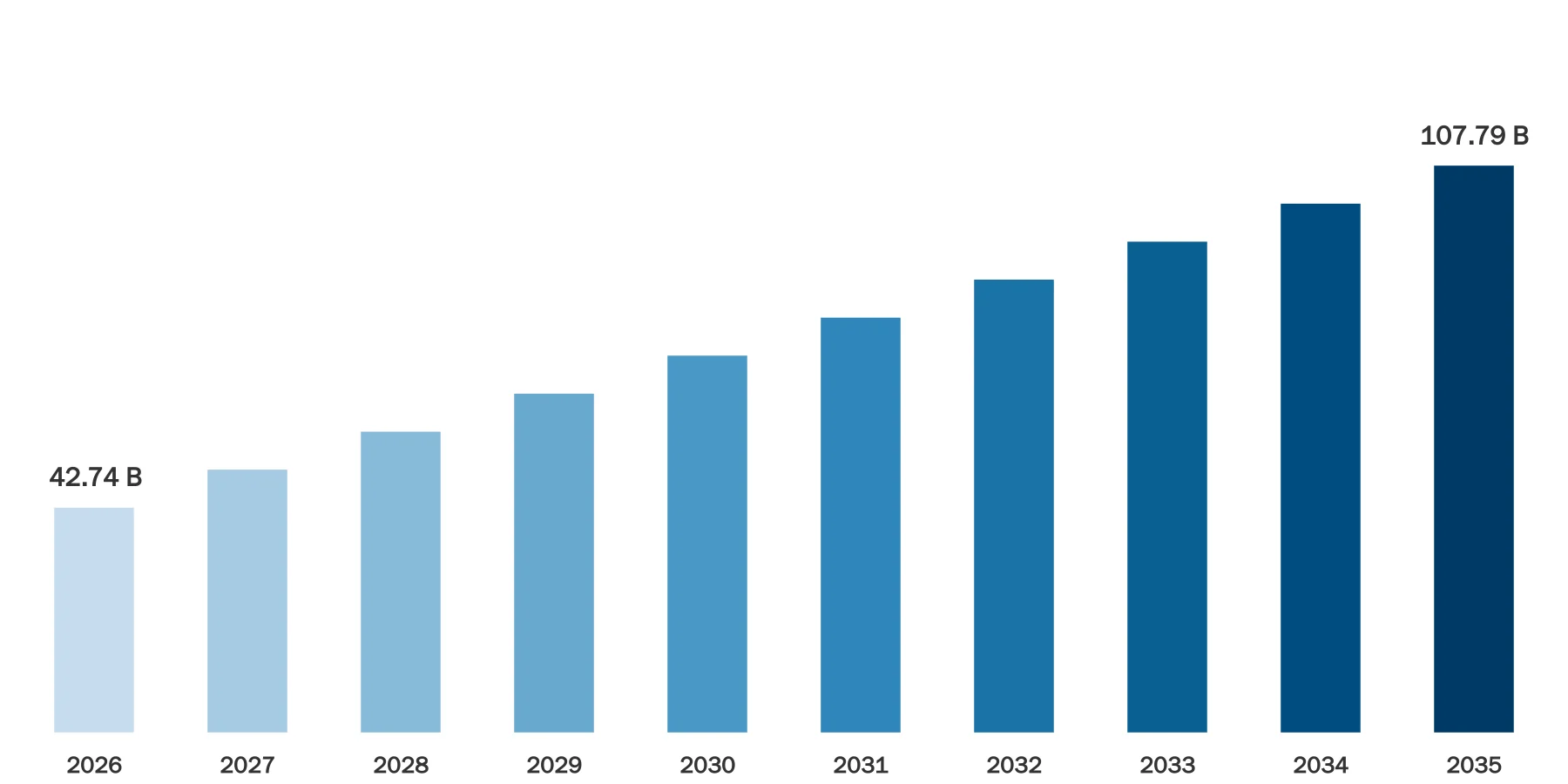
Source: Econ Market Research
Global Advanced Driver Assistance System (ADAS) Market size was USD 21.14 billion in 2023 and the market is projected to touch USD 73.63 billion by 2032, at a CAGR of 14.87% during the forecast period.
ADAS includes a range of systems and features designed to assist drivers in various aspects of driving, such as collision avoidance, lane-keeping assistance, adaptive cruise control, and parking assistance. These technologies utilize sensors, cameras, radar, and other advanced hardware to detect potential hazards and provide warnings or automatic interventions to prevent accidents or mitigate their severity. The market for ADAS is being driven by growing concerns about road safety, increased demand for automated driving technologies, and regulatory initiatives encouraging the use of safety systems in vehicles.
Automotive manufacturers, technology companies, and ADAS component and software suppliers are among the industry',s major players. The market is set apart by fierce competition, rapid technological advancements, and collaborative efforts between automotive and technology companies to develop innovative solutions. Despite challenges such as high costs, regulatory complexities, and concerns about data privacy and cybersecurity, the ADAS market is expected to grow significantly in the coming years, fuelled by advancements in Artificial Intelligence, machine learning, and sensor technologies, as well as increasing consumer awareness and acceptance of autonomous driving capabilities.
Advanced Driver Assistance System (ADAS) Dynamics
Technological advancements, such as the development of more sophisticated sensors, artificial intelligence algorithms, and connectivity solutions, propel the evolution of ADAS capabilities, allowing for more effective hazard detection, autonomous driving features, and improved user experiences. Regulatory mandates and safety standards imposed by governments and automotive organizations around the world have a significant impact on the adoption and implementation of ADAS technologies, as they strive to improve road safety and reduce accidents by integrating advanced safety systems in vehicles.
Furthermore, consumer demand for safer, more convenient, and connected driving experiences fuels the market growth, prompting automotive manufacturers to incorporate ADAS features into their vehicles to meet customer expectations and gain a competitive edge in the market. Furthermore, strategic collaborations and partnerships between automotive companies, technology firms, and suppliers facilitate the development and deployment of ADAS solutions by leveraging complementary expertise, resources, and capabilities. However, challenges such as high implementation costs, interoperability issues, regulatory complexities, and concerns about data privacy and cybersecurity pose significant hurdles to market growth and adoption.
Advanced Driver Assistance System (ADAS) Drivers
- Regulatory Mandates
To reduce road accidents and fatalities, governments around the world are enacting more stringent regulations requiring the inclusion of advanced safety features in vehicles. These regulations frequently require the integration of ADAS technologies like automatic emergency braking, lane departure warning, and adaptive cruise control. For example, the European Union',s General Safety Regulation requires all new vehicles sold in the EU to include a variety of ADAS features beginning in 2022. Such regulatory mandates not only create a legal requirement for ADAS adoption, but they also drive consumer awareness and demand for safer vehicles, thus fuelling market growth.
- Technological Advancements
Continuous advances in sensor technology, artificial intelligence, and connectivity improve the capabilities and effectiveness of ADAS systems. New sensor technologies, such as LiDAR and advanced radar systems, allow for more precise detection and interpretation of the vehicle',s surroundings, increasing the reliability and performance of ADAS features.
Furthermore, advances in AI algorithms enable more sophisticated decision-making capabilities, allowing ADAS systems to anticipate and respond to complex driving scenarios more precisely and efficiently. Furthermore, the integration of connectivity features allows for vehicle-to-vehicle communication and access to real-time traffic data, which improves the effectiveness of ADAS functions such as adaptive cruise control and traffic jam assist. These technological advancements not only improve the safety and convenience of driving but also drive market growth by expanding the scope and capabilities of ADAS systems.
Advanced Driver Assistance System (ADAS) Restraints:
- High Implementation Costs
The integration of ADAS technologies into vehicles incurs significant costs related to hardware components, software development, testing, and validation. Furthermore, the complexity of integrating these systems into existing vehicle architectures raises implementation costs, especially for traditional automakers using legacy platforms. As a result, the initial cost of ADAS-equipped vehicles remains high, limiting their adoption, particularly in price-sensitive market segments. Additionally, the ongoing maintenance and calibration requirements of ADAS systems add to the total cost of ownership, posing a barrier to widespread adoption.
- Data Privacy and Cybersecurity Concerns
To function properly, ADAS systems must collect and process large amounts of data from sensors, cameras, and other sources. However, this data collection raises privacy and security concerns because it collects sensitive information about vehicle occupants and their surroundings. Furthermore, as vehicles become more connected, they are vulnerable to cybersecurity threats such as hacking and malware attacks, which may risk the integrity and reliability of ADAS functions. Addressing these concerns requires robust data protection measures, secure communication protocols, and cybersecurity solutions to safeguard against potential risks and vulnerabilities, increasing the complexity and cost of ADAS development and implementation.
Advanced Driver Assistance System (ADAS) Opportunities:
- Rapid Urbanization and Traffic Congestion
The ongoing trend of urbanization, which has resulted in increased traffic congestion, presents significant opportunities for ADAS adoption. As urban populations grow and road networks become more congested, there is an increasing need for technologies that can improve traffic flow, reduce accidents, and improve overall transportation efficiency.
ADAS features such as adaptive cruise control, traffic jam assist, and predictive routing can help to reduce traffic congestion, improve fuel efficiency, and improve the driving experience in urban environments. Furthermore, the proliferation of electric and Autonomous Vehicles in urban areas creates additional opportunities for ADAS integration. These vehicles frequently rely on advanced safety systems to operate safely and efficiently in complex urban environments.
Segment Overview
- By System
The ADAS market is segmented by system, which includes a variety of technologies designed to improve vehicle safety and driving experience. These systems include Adaptive Cruise Control, Adaptive Front Lighting, Automatic Emergency Braking, Blind Spot Detection, Cross Traffic Alert, Driver Monitoring System, Forward Collision Warning, Intelligent Park Assist, Lane Departure Warning, Night Vision System, Pedestrian Detection System, Road Sign Recognition, and Tire Pressure Monitoring System. Each system addresses specific aspects of driving safety and convenience, using sensors, cameras, and advanced algorithms to detect potential hazards and provide warnings or interventions to prevent or reduce the severity of accidents.
- By Component
ADAS systems are made up of many different components that allow them to function and perform well. These components include camera units, LiDAR sensors, radar sensors, and ultrasonic sensors. Each component is critical to sensing the vehicle',s surroundings, detecting obstacles, and providing data input to ADAS algorithms for decision-making. Cameras capture visual information, LiDAR and Radar sensors measure distances and speeds, and Ultrasonic sensors detect objects in close proximity, all contributing to the effectiveness and reliability of ADAS functions.
- By Offering
The ADAS market is divided into two segments based on its offerings: hardware and software. Sensors, cameras, processors, and other physical components enable ADAS functionality. Software refers to the algorithms, code, and programming that govern the operation of ADAS systems, such as detection, decision-making, and control functions. Both hardware and software are essential for the development, implementation, and performance of ADAS solutions. Continuous advancements in both domains drive innovation and improve system capabilities.
- By Vehicle Type
ADAS technologies are used on a variety of vehicle types, including buses, light commercial vehicles, passenger cars, and trucks. ADAS systems, regardless of vehicle type, aim to improve the safety, convenience, and driving experience of occupants and other road users. While passenger cars frequently lead in ADAS adoption due to their widespread use and consumer demand for advanced safety features, other vehicle types, such as buses and trucks, also benefit from ADAS technologies to improve fleet safety, efficiency, and regulatory compliance.
- By Electric Vehicle Type
The ADAS market covers a wide range of electric vehicles, including battery electric vehicles, fuel cell electric vehicles, hybrid electric vehicles, and plug-in hybrid electric vehicles. ADAS technologies are critical in facilitating the transition to electric mobility by improving the safety, performance, and efficiency of electric vehicles. Whether optimizing regenerative braking in electric vehicles or providing adaptive cruise control for long-distance electric driving, ADAS systems contribute to the overall advancement and adoption of electric vehicle technology.
- By Propulsion
ADAS systems are used on vehicles with a variety of propulsion systems, including electric, petrol, and diesel. Regardless of the propulsion system, ADAS technologies provide advantages such as increased safety, efficiency, and driving experience. While electric vehicles may use ADAS features to optimize energy consumption and improve regenerative braking, gasoline and diesel vehicles benefit from ADAS functions that reduce collision risks, improve driver awareness, and improve vehicle control. As the automotive industry evolves towards electrification and alternative propulsion systems, ADAS will continue to play a critical role in shaping the future of mobility across various propulsion platforms.
Advanced Driver Assistance System (ADAS) Overview by Region
North America dominates the ADAS market, owing to stringent safety regulations, high consumer awareness, and a strong automotive industry presence. The region has advanced technological infrastructure and a mature market for ADAS solutions, with key players investing in R&,D to spur innovation and market growth. Europe is another important market for ADAS, with high safety standards, supportive regulatory policies, and a growing demand for premium vehicles equipped with advanced safety features.
The region',s emphasis on reducing road accidents and improving vehicle safety has resulted in widespread adoption of ADAS technologies across passenger cars, commercial vehicles, and public transportation fleets. In Asia Pacific, rapid urbanization, increasing vehicle sales, and rising disposable incomes are driving demand for ADAS solutions, particularly in emerging economies such as China and India. Government initiatives to improve road safety and support the adoption of electric and autonomous vehicles further bolster the growth prospects for ADAS in the region.
Additionally, partnerships between automotive manufacturers, technology companies, and government agencies are fostering innovation and accelerating market penetration of ADAS technologies. Other regions such as Latin America, the Middle East, and Africa are also witnessing growing interest in ADAS, driven by improving automotive safety standards, infrastructure development, and increasing consumer awareness of the benefits of advanced safety systems. However, market growth in these regions may be hindered by factors such as economic volatility, regulatory complexities, and infrastructure challenges.
Advanced Driver Assistance System (ADAS) Market Competitive Landscape
Established automakers like BMW, Mercedes-Benz, and Audi are investing heavily in ADAS research and development to incorporate advanced safety features into their vehicles and maintain a competitive advantage in the market. Similarly, technology giants such as Bosch, Continental, and Aptiv are using their expertise in sensors, artificial intelligence, and connectivity to create innovative ADAS solutions and form strategic alliances with automotive manufacturers.
Additionally, emerging players such as Mobileye, NVIDIA, and Velodyne LiDAR are disrupting the market with cutting-edge technologies and platforms designed specifically for autonomous driving applications. Collaborations and alliances between industry stakeholders shape the competitive landscape by sharing resources, accelerating innovation, and collectively addressing market challenges. Joint ventures, mergers, and acquisitions are common strategies employed by companies to expand their product portfolios, enhance their technological capabilities, and gain market share in the highly competitive ADAS market.
Advanced Driver Assistance System (ADAS) Key Players:
- Robert Bosch GmbH
- Continental AG
- Aptiv
- Lear Corporation
- DENSO CORPORATION
- Texas Instruments Incorporated
- Renesas Electronics Corporation
- HELLA GmbH &, Co. KG.
- Visteon Corporation
- ST Microelectronics
- Infineon Technologies AG
- Mitsubishi Electric Corporation
- Panasonic Corporation
- ROHM Co. LTD.
- MAXIM Integrated
Advanced Driver Assistance System (ADAS) Recent Developments
- March 2024, Kodiak Robotics, headquartered in California, unveiled its sixth-generation autonomous truck, which is designed to be ",driverless-ready.", The truck, a modified Kenworth T680, boasts a range of sensors including cameras, LiDAR, radar, and microphones, all powered by Nvidia GPU technology. Additionally, the company plans to integrate the advanced Ambarella CV3-AD AI domain control system-on-chip (SoC) to further enhance the truck',s sensor capabilities and machine-learning capabilities.
Advanced Driver Assistance System (ADAS) Report Segmentation
Advanced Driver Assistance System (ADAS) Market Report Scope & Segmentation
| Attributes | Details |
|---|---|
Market Size (Current) | US$ 42.74 Billion in 2026 |
Market Size (Forecast) | US$ 107.79 Billion in 2035 |
Growth Rate | CAGR of 10.84% from 2026 to 2035 |
Forecast Period | 2026 – 2035 |
Base Year | 2025 |
Historical Data Available | Yes |
Regional Scope | Global |
Segments Covered | By System Type
By Component
By Vehicle Type
|
Frequently Asked Questions
Common questions about this report
The study period covers historical insights and forecast projections for the period 2026-2035.
About the Author
Market research expert with years of industry experience

Dipali Bhingare serves as the Market Research Director at Econ Market Research. With a focus on translating complex global economic shifts into actionable business intelligence, she oversees the strategic direction of comprehensive market studies. Her work empowers organizations to navigate volatile industries through data-driven forecasting and deep-dive competitive analysis.
Related Reports
Explore more market insights from the same category