

Acrolein Market
Acrolein Market Size, Share, Trends, Growth, and Industry Analysis, By Application (Methionine, Pesticides, Water Treatment Agent, Others), By Process (Glycerol Dehydration Method, Propylene Oxidation Method), Regional Analysis and Forecast Period 2026-2035
Acrolein Market Overview
As per Econ Market Research analysis, Global Acrolein Market size stood at US$ 1.71 Billion in 2026 and is projected to reach US$ 2.01 Billion by 2035, growing at a CAGR of 2.03% over the forecast period 2026–2035. 2025 is taken as the base year.
Acrolein Market Size 2025-2035 (USD Billion)

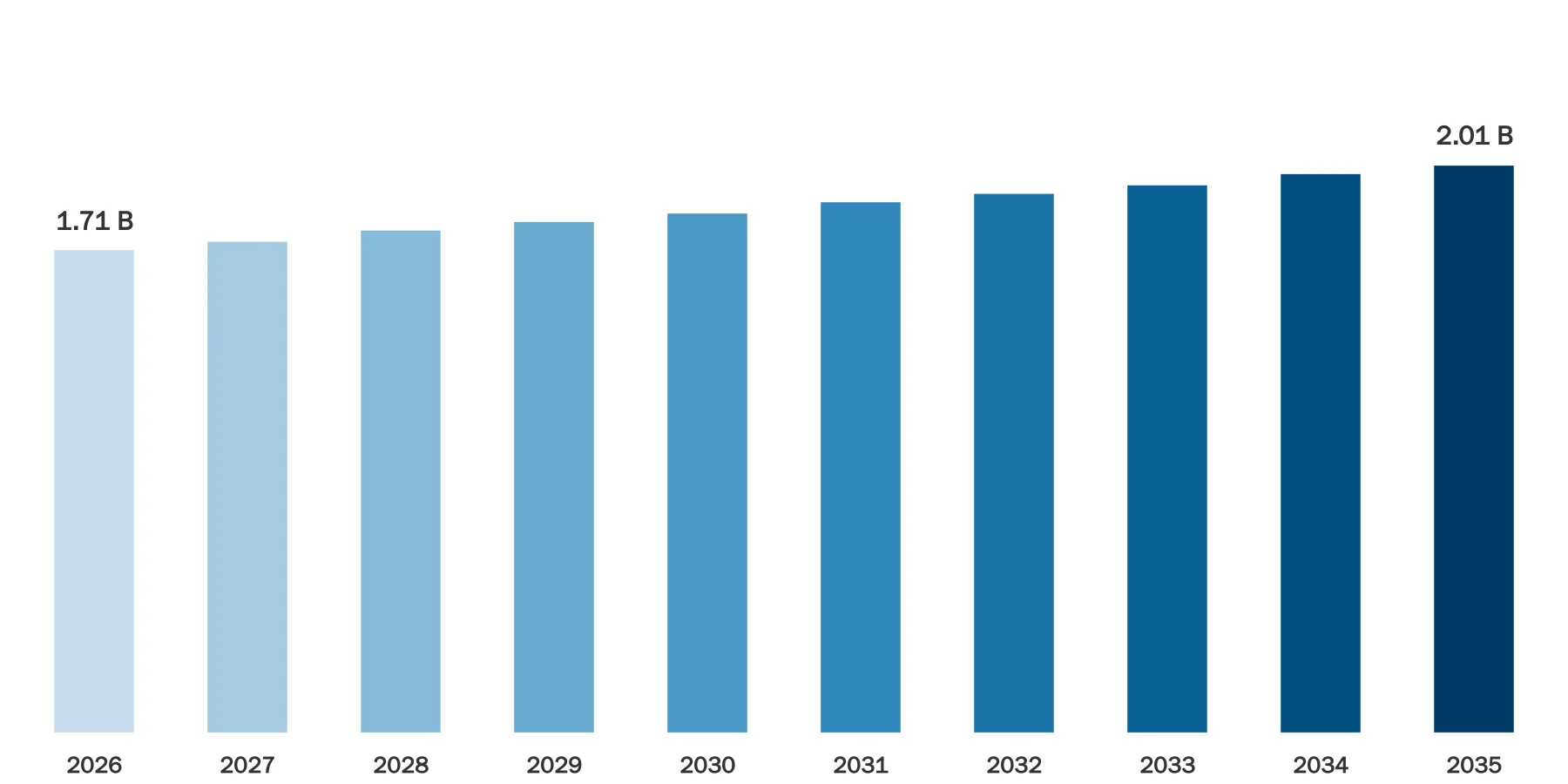
Source: Econ Market Research
Acrolein, known for its strong smell and combustible properties, is utilized in multiple sectors such as agriculture, healthcare, and chemical production. Its adaptability makes it an essential element in creating different compounds, playing a significant role in the expansion of industries globally. The global acrolein market has been experiencing steady growth in recent years, driven by rising demand from key industries like polymer manufacturing, herbicides, and pharmaceuticals. Factors like rapid industrialization, technological innovations, and increased research and development efforts have also contributed to this growth. Even with obstacles like environmental issues and regulatory limitations, the market is expected to keep growing with the help of innovation and sustainable practices. This will allow it to meet industry demands while also following environmental rules and safety guidelines.
Acrolein Dynamics
The global acrolein market is influenced by various factors such as supply and demand dynamics, technological advancements, regulations, and economic trends. One of the main drivers of market growth is the growing demand from industries like agriculture, healthcare, and chemical manufacturing. The use of acrolein as a precursor in the production of chemicals like acrylic acid and glycerol is also contributing to market expansion. Factors like population growth, urbanization, and changing consumer preferences also play a role in influencing the market for products derived from acrolein.
However, the acrolein market is currently facing challenges due to stringent environmental regulations and health concerns related to its use. Regulatory agencies around the world are implementing tougher guidelines on emissions and levels of exposure to acrolein, prompting companies to focus on implementing eco-friendly practices and safety precautions in their production processes. In addition, fluctuations in the prices of raw materials, particularly propylene a crucial ingredient in the production of acrolein, are also impacting the market. Even though there are hurdles, the market is still pushing for progress. Companies are actively working on creating sustainable practices and implementing new technologies to reduce environmental harm and meet regulatory standards.
Acrolein Drivers
Increasing Demand from End-User Industries
The demand for acrolein in the global market is rising due to its use in various industries such as agriculture, healthcare, and chemical manufacturing. Acrolein is an essential component in the production of herbicides, pharmaceuticals, and polymers.
The increasing global population and urbanization are leading to a higher demand for agricultural products and pharmaceuticals, which in turn drives the need for acrolein. Moreover, the growth of the chemical manufacturing industry, especially in developing countries, is also fuelling the demand for acrolein.
Technological Advancements
The advancement of technology is crucial for the growth of the acrolein market. Ongoing research and development have resulted in more efficient production processes that help cut costs and lessen environmental harm. With the help of advanced technologies, manufacturers can produce acrolein in a more environmentally friendly manner by using alternative materials and reducing emissions. Additionally, technological progress in downstream applications like creating new polymers and pharmaceuticals from acrolein create opportunities for market expansion.
Acrolein Restraints:
Stringent Environmental Regulations
One of the main challenges for the acrolein market is the stringent environmental regulations in place. Acrolein is a highly reactive compound that can be harmful to health, prompting governing bodies to set tough emission limits and workplace exposure guidelines. Adhering to these rules involves investing in pollution control and safety measures, which raises production expenses for companies. Additionally, the reputation risks associated with acrolein emissions deter market expansion.
Volatility in Raw Material Prices
The acrolein market is influenced by changes in the prices of raw materials, specifically propylene, which is essential for producing acrolein. Fluctuations in propylene prices due to fluctuations in crude oil prices and supply-demand dynamics can result in price volatility, affecting the profitability of acrolein manufacturers. The instability in raw material prices makes it difficult for companies to predict production costs accurately and remain competitive in the market, hindering market growth.
Acrolein Opportunities:
Rising Adoption of Bio-based Acrolein
The rise in sustainability and environmental awareness is creating a big opportunity for the acrolein market. The use of bio-based acrolein, made from renewable sources like glycerol or bioethanol, is an eco-friendlier option compared to traditional petroleum-based acrolein. Bio-based acrolein helps reduce dependence on fossil fuels and minimizes environmental harm, which can benefit manufacturers in regions with stringent environmental laws and appeal to consumers seeking eco-conscious products.
Segment Overview
By Production Method
By production method, the acrolein market is segmented into glycerol or propylene, with other methods contributing to a smaller portion of the market. The production of acrolein from glycerol and propylene is done primarily through two methods, each with their own benefits in terms of cost, efficiency, and environmental impact. Glycerol oxidation is a sustainable way to produce bio-based acrolein, while propylene oxidation is favoured for its existing infrastructure and higher output.
By Application
By Application, the acrolein market is segmented into herbicides production, glues and resins, acrylic acid production, specialty chemicals, and others. The production of herbicides is a major use for acrolein, as there is a rising need for agricultural products and efficient weed control solutions. Acrolein is also important in making glues and resins due to its reactive and sticky properties. Its versatility is evident in its role in acrylic acid production and specialty chemicals, making it a valuable component in the chemical manufacturing industry.
By End-Use Industry
By end-use, the acrolein market is segmented into pharmaceuticals, agriculture, chemicals, plastics, and others, reflecting its broad market reach and indispensable role in various sectors. Acrolein is used in pharmaceuticals to create key ingredients for medications across various therapeutic areas. It is also essential in agriculture for herbicides that protect crops and manage weeds, boosting agricultural output. Additionally, acrolein is utilized in the chemicals and plastics sectors to produce a wide range of chemicals, polymers, and plasticizers to meet various industrial demands.
By Sales Channel
By Sales channels, the acrolein market is segmented into offline and online channels, providing customers with flexibility and convenience in procurement. Offline sales channels include traditional distribution networks, direct sales, and retail outlets, catering to customers', immediate needs and preferences. In contrast, purchasing products online provides customers with easy access and convenience, as they can browse acrolein items from various suppliers on digital platforms. Both traditional physical stores and online stores work together to ensure that acrolein products are widely available and efficiently distributed to customers in different locations.
Acrolein Overview by Region
The global acrolein market exhibits a diverse regional landscape, with key regions including North America, Europe, Asia Pacific, Latin America, and the Middle East and Africa. North America and Europe hold significant market shares, driven by established chemical manufacturing industries and stringent environmental regulations promoting sustainable production practices.
In these regions, increasing demand from end-user industries such as pharmaceuticals, agriculture, and chemicals further fuels market growth. The Asia Pacific region is experiencing significant growth, due to the rapid industrialization, urbanization, and expanding agricultural activities in countries like China, India, and Southeast Asian nations. Government initiatives promoting industrial growth and investment in infrastructure development are also contributing to the increasing demand for acrolein in the region. Latin America, the Middle East, and Africa also offer growth opportunities due to the growing chemical manufacturing sectors and the adoption of agricultural technologies.
Acrolein Market Competitive Landscape
Companies such as Dow Chemical Company, Evonik Industries AG, and Arkema SA dominate the market with their extensive product portfolios and strong distribution networks. These players invest significantly in research and development to introduce advanced production technologies and develop sustainable acrolein Derivatives to meet evolving consumer demands and regulatory requirements. Moreover, strategic collaborations with raw material suppliers and downstream industries enhance market penetration and ensure a steady supply chain. Additionally, emerging players are entering the market, intensifying competition through aggressive pricing strategies and product differentiation.
Acrolein Market Leading Companies:
Dow Chemical Company
Evonik Industries AG
Arkema SA
Sumitomo Chemical Co., Ltd.
BASF SE
Mitsubishi Chemical Corporation
Wacker Chemie AG
Merck KGaA
China Petroleum &, Chemical Corporation (Sinopec)
Formosa Plastics Corporation
INEOS Group Holdings S.A.
Sasol Limited
LG Chem Ltd.
The Shell Oil Company
Kaneka Corporation
Acrolein Recent Developments
Nov 2022, Arkema unveiled a noteworthy development in its distinctive sustainable portfolio. Leveraging these monomers, Arkema can now deliver tailored acrylic additives and resins featuring certified bio-attributions for diverse applications.
Acrolein Report Segmentation
Acrolein Market Report Scope & Segmentation
| Attributes | Details |
|---|---|
Market Size (Current) | US$ 1.71 Billion in 2026 |
Market Size (Forecast) | US$ 2.01 Billion in 2035 |
Growth Rate | CAGR of 2.03% from 2026 to 2035 |
Forecast Period | 2026 – 2035 |
Base Year | 2025 |
Historical Data Available | Yes |
Regional Scope | Global |
Segments Covered | By Application
By Process
|
Frequently Asked Questions
Common questions about this report
The study period covers historical insights and forecast projections for the period 2026-2035.
About the Author
Market research expert with years of industry experience

Related Reports
Explore more market insights from the same category