

4PL Logistics Market
4PL Logistics Market Size, Share, Trends, Growth, and Industry Analysis, By Type (Synergy Plus Operating Model, Industry Innovator Model, Solution Integrator Model), By End-User Industry (Retail and E-commerce, Manufacturing, Healthcare and Pharmaceuticals, Automotive, Food and Beverages), Regional Analysis and Forecast Period 2026-2035
4PL Logistics Market Overview
As per Econ Market Research analysis, the Global 4PL Logistics Market valuation stood at US$ 79.57 Billion in 2026 and is expected to reach US$ 146.01 Billion by 2035, growing at a steady CAGR of 6.9% from 2026 to 2035. 2025 serves as the base year.
4PL Logistics Market Size 2025-2035 (USD Billion)

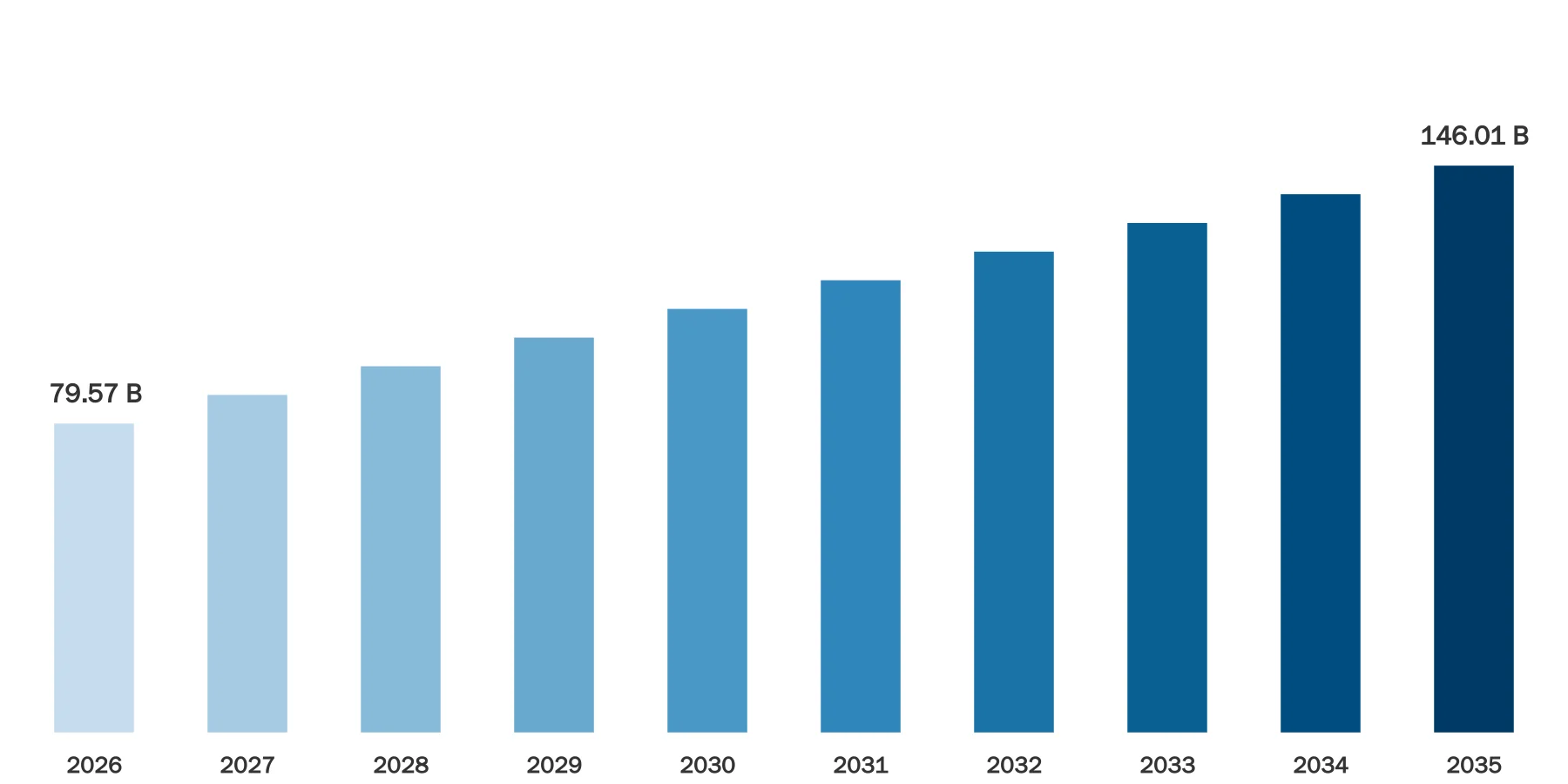
Source: Econ Market Research
The global Fourth Party Logistics (4PL) market is the outsourcing of an entire supply chain of a company to a single provider. In contrast with the 3PL model of logistics, in 3PL, third party logistics providers are entrusted specifically with activities such as transportation, warehousing, and handling, while 4PL assimilates all logistics activities and sources into one service: dealing with suppliers, transportation, and inventory, and information flows, which in turn lead to better efficiency and effectiveness.
Demand for 4PL services has risen dramatically because business organizations have made efforts in streamlining their operations and sticking to core competencies. Companies appreciate the experience 4PL providers can give them by offering innovative solutions, advanced technology, and a strategic approach to logistics management. Globalization, growth in e-commerce, and better visibility and control over supply chains have influenced this market. Increased use of advanced digital technologies, such as Artificial Intelligence and Data Analytics, further enables 4PL providers to optimize logistics processes.
Dynamic Insights
One of the significant push factors is the increase in complexity of supply chains from globalization and the rapid emergence of e-commerce. To achieve this, companies will look for integrated logistics service providers that can perform and manage various functions in efficient ways, making 4PL vendors an essential partner for achieving streamlined operations. Further, the increasing demand for reduced costs and better visibility on the supply chain triggers firms to opt for 4PL services, since vendors utilize advanced technologies and analytics to improve decision-making processes and operational efficiency.
However, market growth faces challenges such as investment in technology and infrastructure. Companies might be hesitant to shift to 4PL solutions due to the fear of losing control over logistics operations or service interruption in the midst of transition. Competition for established 3PL providers also exists since some businesses may like sticking with the traditional model instead of integrated solutions. Despite these challenges above, the rising concern on sustainability and increasing demand for more green logistics present new opportunities for 4PL service providers to compete and win customers who want more green services.
Drivers Insights
Growing Demand for Integrated Supply Chain Solutions
With the globalization of markets and the rapid growth of e-commerce, the complexity of global supply chains has increased exponentially. Companies are now looking for integrated logistics solutions that will help streamline their operations while increasing efficiency and reducing costs. 4PL providers offer integrated services encompassing transportation, warehousing, inventory management, and information technology, thereby enabling companies to optimize their logistics operations.
Outsourcing these services to one provider allows organizations the freedom to focus on its core competencies while offering them a chance to derive benefits of expertise and technologies from a 4PL provider. This increasing trend of 4PL services in a logistics market would be based on the trend that an increasing number of companies start to realize advantages in unified supply chain management.
Technological Advancements and Digital Transformation
The digital technologies, ranging from artificial intelligence (AI), the Internet of Things (IoT), to big data analytics, will revolutionize logistics. Through these technologies, 4PL providers can track visibility more easily, observe real-time data, and make sound decisions that optimize the logistics processes. Advanced tracking systems with predictive analytics empower companies to control their supply chains more efficiently by responding fast to change in the market and by satisfying customer demand. Leverage of technology is possible with the improvement of the operation as well as customer satisfaction by giving correct and timely information. The more businesses that take on aspects of digital transformation, requiring 4PL services that add these advanced technologies, will spur market expansion.
Restraints Insights
High Implementation Costs
While the benefits of 4PL logistics are compelling, the initial investment required to implement such integrated systems can be a significant barrier for many companies. Transitioning from traditional logistics models to a 4PL framework often involves substantial costs related to technology upgrades, training, and infrastructure changes. Smaller businesses, in particular, may struggle to allocate the necessary resources for this transition, leading to reluctance in adopting 4PL solutions. This high cost of implementation can deter potential clients, limiting market growth and making it a critical restraint for the industry.
Concerns Over Control and Dependency
Companies often hesitate to adopt 4PL services due to fears of losing control over their logistics operations. Outsourcing the management of the entire supply chain to a single provider can create dependency, leading businesses to worry about the potential risks associated with service disruptions or changes in the provider',s performance.
Additionally, some organizations may feel uncomfortable sharing sensitive data with external partners, fearing that it could compromise their competitive advantage. These concerns can limit the willingness of companies to fully embrace 4PL logistics, posing a restraint on market growth.
Opportunities Insights
Focus on Sustainability and Green Logistics
As environmental concerns become increasingly critical, businesses are actively seeking sustainable logistics solutions to minimize their carbon footprint. 4PL providers have the opportunity to differentiate themselves by offering eco-friendly logistics services, such as optimizing transportation routes to reduce emissions or utilizing green technologies in their operations.
By aligning with the sustainability goals of their clients, 4PL providers can tap into a growing market segment that prioritizes environmental responsibility. This focus on sustainability presents a unique opportunity for the industry to innovate and attract clients looking for greener supply chain solutions.
Segment Analysis
By Type
The 4PL logistics market has three major categories, which are Synergy Plus Operating Model, Industry Innovator Model, and Solution Integrator Model. Synergy Plus Operating Model basically focuses on partnering and collaborating with other members of the supply chain, it strives to enhance the communication and coordination between and among participants. In this model, logistics operation is expected to be totally integrated to make coordination easy and to enable the resource sharing between entities. The Industry Innovator Model puts more focus on the technological advancement and innovative practices in the logistics sector.
Providers adopting this model apply all the advanced technologies like AI, machine learning, and data analytics to realize the optimization of the supply chain process and enhance the capabilities of decision-making. Finally, the Solution Integrator Model emphasizes the delivery of unique solutions that specifically respond to the needs of the clients. This model brings together several logistics functions and technologies under one harmonious service in order to ensure that clients obtain customized support based on their operational goals.
By End-user
The 4PL logistics market services the various end-user industries such as manufacturing, retail, healthcare, automotive, and so on. Manufacturers are significant 4PL service users. Businesses operating this kind of production need strategically planned supply chain activities to support complex production operations and inventory management. Therefore, manufacturers can have their logistics streamlined in terms of supply and distribution by teaming up with a 4PL provider so that raw materials as well as finished products get delivered properly within time.
The retail industry is also in need of additional 4PL services. The growth of e-commerce and the demand for expedited delivery are among the reasons why retailers need holistic logistics solutions to enhance the order fulfilment and distribution cycle. In the health industry, 4PL operators are very important in pharmaceuticals and medical supplies logistics since there are very stringent rules and the product has to be kept intact at all points of the supply chain. The car manufacturing industry uses 4PL services because most of its supply chains are spread across the globe. Other industries such as food and beverages, electronics, and construction utilize 4PL solutions to optimize their logistics and operations.
Regional Analysis
North America is at the lead, due to an advanced logistics infrastructure and a strong focus on the adoption of technology. The United States is one of the top logistics innovation hubs, as most companies have begun to outsource supply chain management in order to gain better efficiency and cut costs. The presence of major 4PL providers in this region and the maturity of the e-commerce sector provide a further boost to growth in this region.
With a strong emphasis on sustainability and compliance with regulation, 4PL logistics markets in Europe are gaining pace. Using integrated logistics solutions to help achieve environment goals and address the complicated regulation on trade by the countries of Europe also drives in this region. E-commerce and a need for effective cross-border logistics are the other drivers.
The 4PL logistics market is growing at a faster pace in the Asia-Pacific region, which is dominated by booming economies such as China and India. There is an increasing rise of the manufacturing sector in the region, and the increased demand for efficient logistics solutions from consumers is creating a huge area for 4PL providers. Digital transformation and investments in infrastructure will also enhance supply chain capabilities and fuel growth in the market.
Meanwhile, in Latin America and the Middle East and Africa, the 4PL logistics market is still in its infancy, but with growing awareness of the advantages of integrated logistics solutions. These regions have vast growth potential as companies look to streamline their supply chains and enhance operational efficiency as part of economic development and globalization.
Competitive Landscape
Some of the key players are large logistics companies such as DHL Supply Chain, Kuehne + Nagel, and XPO Logistics, which have recently scaled up their services to fully encompass supply chain management. These companies use more sophisticated technologies such as AI, data analytics, and automation to optimize logistics procedures while offering real-time visibility to clients.
Their well-structured networks and in-depth knowledge of managing complicated supply chains make them some of the leading 4PL companies. Except for these established giants, newer niche providers and start-ups now emerge in the market catering to specific industries or revolutionary solutions. The companies may highlight agility, customization, and specialized services that correspond to the client',s different needs.
The more one competes, the closer collaboration and strategic partnerships bring the companies closer together while helping them augment their respective service offerings and reach farflung geographies. In addition, the development of e-commerce and the demand for speedy delivery of products required huge investment in technology and infrastructure by logistic providers, which made the system dynamic, where adaptability and innovation are the driving forces for success.
List of Key Players:
XPO Logistics, Inc.
GEFCO Group
CEVA Logistics AG
Logistics Plus Inc.
DB Schenker
Deutsche Post AG
DAMCO
United Parcel Service, Inc.
GEODIS
Allyn International Services, Inc.
Recent Developments:
April 2024, XPO, a prominent provider of innovative and sustainable end-to-end logistics solutions in Europe, has announced a new three-year partnership with UPL, a global leader in crop protection. Under this collaboration, XPO will deliver a comprehensive fourth-party logistics (4PL) solution to UPL. With a sales presence in over 130 countries and several production sites, including key hubs in France and Belgium, UPL offers solutions for the entire agricultural ecosystem.
Global 4PL Logistics Report Segmentation
4PL Logistics Market Report Scope & Segmentation
| Attributes | Details |
|---|---|
Market Size (Current) | US$ 79.57 Billion in 2026 |
Market Size (Forecast) | US$ 146.01 Billion in 2035 |
Growth Rate | CAGR of 6.9% from 2026 to 2035 |
Forecast Period | 2026 – 2035 |
Base Year | 2025 |
Historical Data Available | Yes |
Regional Scope | Global |
Segments Covered | By Type
By End-User Industry
|
Frequently Asked Questions
Common questions about this report
The study period covers historical insights and forecast projections for the period 2026-2035.
About the Author
Market research expert with years of industry experience

Dipali Bhingare serves as the Market Research Director at Econ Market Research. With a focus on translating complex global economic shifts into actionable business intelligence, she oversees the strategic direction of comprehensive market studies. Her work empowers organizations to navigate volatile industries through data-driven forecasting and deep-dive competitive analysis.
Related Reports
Explore more market insights from the same category